
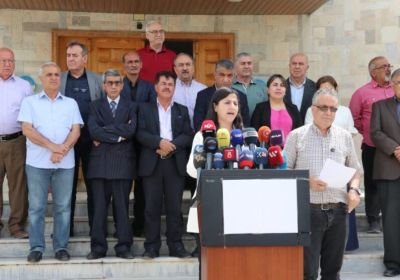
Sarah Glynn examines two recent blows to democracy in the Kurdish region of the Middle East.
Sarah Glynn examines two recent blows to democracy in the Kurdish region of the Middle East.
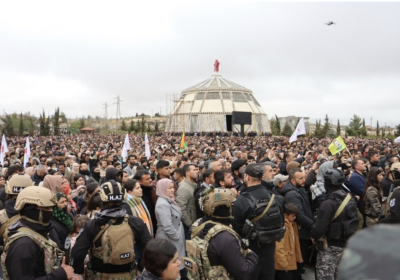
Peter Boyle pays tribute to Salih Muslim, one of the key leaders of the Rojava revolution in northeast Syria, who died in Erbil, Iraq, where he was being treated for kidney failure.
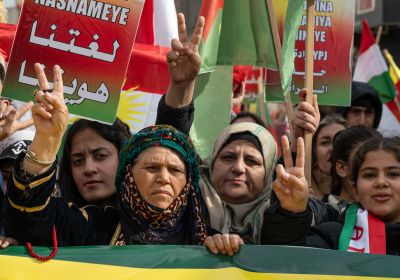
Sarah Glynn reports on the situation on the ground in Syria and Turkey, following the ceasefire and integration agreement signed by the Syrian Transitional Government and the Autonomous Administration of North and East Syria and Syrian Democratic Forces.
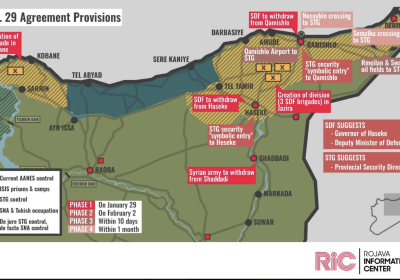
An agreement was made under pressure between Rojava’s Syrian Democratic Forces and the United States-backed Syrian Transitional Government (STG) for a permanent ceasefire and integration of Rojava into the STG. Peter Boyle reports.
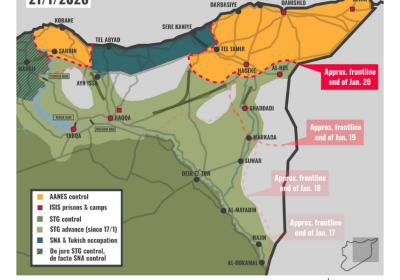
Sarah Glynn writes that as activists across the world were arguing that another world was possible, far away, in the middle of a warzone, the people of Rojava were resisting Islamic State and building a different society that prioritised community over economic interests. That society is in mortal danger today.
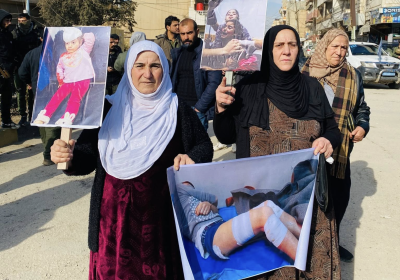
Armed factions affiliated with the Damascus government unleashed suicide drones, heavy shelling, convoys of tanks and armoured military vehicles against civilians in the Sheikh Maqsoud and Ashrafieh neighbourhoods of Aleppo in northern Syria, reports Hawzhin Azeez.
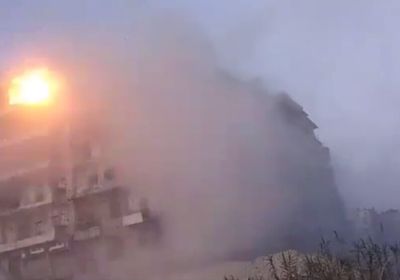
Ongoing small-scale attacks against the autonomous Kurdish-majority neighbourhoods of Aleppo in Northern Syria have taken on a new and lethal dimension, reports Sarah Glynn.

Greens Senator David Shoebridge became the first Australian parliamentarian to visit the Democratic Autonomous Administration of North and East Syria (also known as Rojava). He spoke with Green Left’s Peter Boyle about the visit.

Rojava revolutionary leading figure Salih Muslim told Green Left’s Peter Boyle that Ahmed al-Sharaa’s Syrian Transitional Government, under pressure from Turkey, was retreating from a previously agreed process to unify the country.
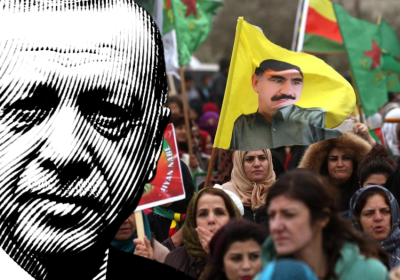
It has been six months since imprisoned Kurdish leader Abdullah Öcalan’s call for the disarmament and dissolution of the Kurdistan Workers’ Party, giving rise to hopes of a new “peace process”, writes Sarah Glynn. But are the Kurds any closer to seeing a peaceful future in Turkey and beyond?
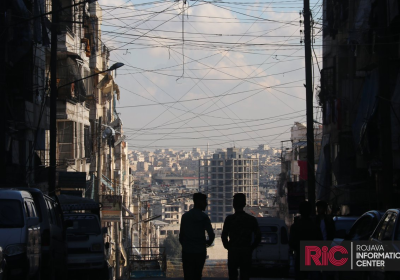
There have been clashes between the Syrian Democratic Forces and Syrian Caretaker Government forces in parts of northeast Syria, while drones have been flying over Kurdish majority neighbourhoods in Aleppo, reports the Rojava Information Center.
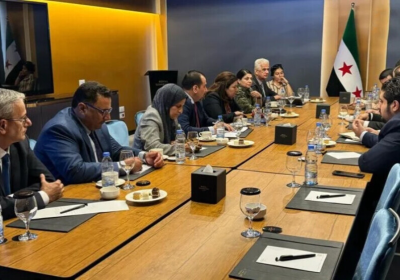
A senior delegation from the Autonomous Administration of North and East Syria (AANES/Rojava) had its first official meeting with the central government of Syria, on June 1, reports Peter Boyle.