
While human suffering can elicit folk to give generously, governments are not necessarily so inclined, as we can see in the US’ illegal war on Iran.
On April 1, David Milliband, President and CEO of the International Rescue Committee (IRC) and former British Foreign Secretary, warned of a “ticking food time bomb”. “If the Ukraine shock drove hunger to record highs within weeks, what is now unfolding threatens to be exponentially worse. The window to avert a massive global hunger crisis is rapidly closing.”
The conflict in Iran, Milliband said, had “unleashed a triple emergency: a surge in humanitarian need, a global economic shock, and a system already stretched to breaking point by more than 60 simultaneous conflicts”.
The IRC notes the plight of specific states: Sudan, threatened by having over half of its fertilisers coming from the Gulf; Kenya, with 40% of its fertiliser complement and 90% of wheat coming from the same region, in addition to serving a a re-export hub for Ethiopia, South Sudan, and Uganda. In Somalia, desperately needed therapeutic food and other critical nutrition supplies lie stranded.
The World Food Program’s March analysis postulated a grim estimate: Almost 45 million more people could succumb to acute food insecurity or worse (designated IPC3+ under the Integrated Food Security Phase Classification) if the war did not end by the middle of the year and if oil prices hovered above US$100 a barrel. “This would add to the 318 million people around the world who are already food insecure.”
An agreement similar to that of the Black Sea Grain Initiative, reached in July 2022 some four months after the start of the Ukraine War, has been touted as a model.
The initiative, brokered by the United Nations and Türkiye, and which lasted until July 2023, allowed the export of commercial food and fertiliser, including ammonia, from three Ukrainian Black Sea ports: Odesa, Chornomorsk and Yuzhny/Pivdennyi. Until Russia’s withdrawal from the scheme in July 2023, some 32 million metric tonnes of grain were exported.
A Joint Coordination Centre was established in Istanbul, including representatives from Russia, Ukraine, Türkiye and the UN to oversee the implementation of the agreement.
Ukrainian vessels would initially guide cargo ships into the international waters of the Black Sea, avoiding mined locations. These vessels would then make their way towards Istanbul through a stipulated humanitarian corridor, with ships heading to and from Ukrainian ports inspected by members of the JCC team to verify the absence of military equipment.
In addition to the demilitarised maritime corridors, the arrangement included a written undertaking by the parties not to target commercial shipping, alongside demarcated buffer zones to limit the risk of military engagement.
Kaja Kallas, the European Union’s High Representative for Foreign Affairs and Security Policy, was one of the first to suggest some variant of the Black Sea Initiative, which would involve a secure maritime corridor through the Strait of Hormuz with UN invigilation.
UN Secretary-General António Guterres has drawn on it as a template, suggesting one vital area of exports — fertiliser — be initially addressed. (Kallas has similarly warned that “if there is lack of fertilisers this year, there is going to be also [sic] food deprivation next year”.)
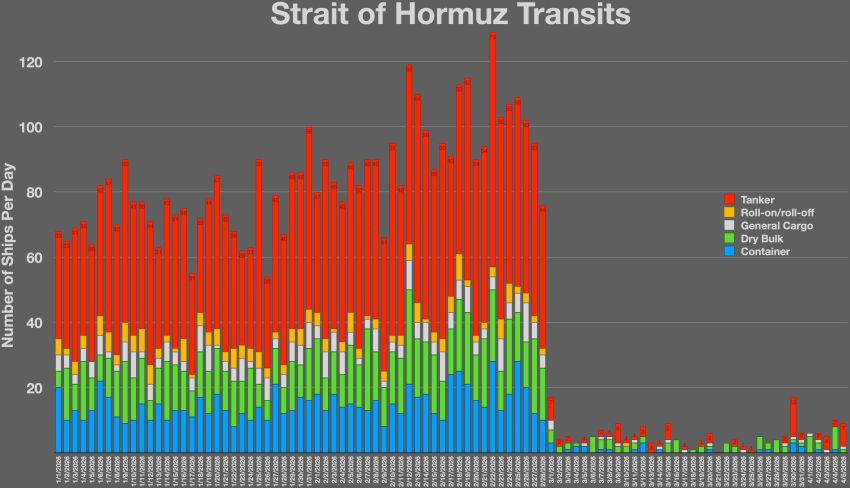
According to the confidential report, entitled “UN Operational Mechanism for the Strait of Hormuz”, the closure of the strait since March 2 “has triggered a critical disruption to global fertilizer supply chains, affecting more than one-quarter of globally trade[d] volumes”.
This presented “a systemic risk to global food production, particularly in import-dependent regions across Africa and South Asia”.
A preliminary step to opening Hormuz, it is thought, would be to restore the traffic of an essential commodity to build confidence for a broader easing. Given that gas is a vital aspect to fertiliser manufacturing, this would be an imperfect start.
While Guterres’ suggestion is admirable, comparisons between the Black Sea arrangements and the Strait of Hormuz run into evident limits.
The waterway is narrow and heavily militarised. Its essential character to the global economy is undisputed, seeing as one-fifth of the world’s oil supply moves through it alongside large volumes of petrochemicals and liquified gas. Add to that the aforementioned fertilisers (a third of the globe’s seaborne fertiliser trade passes through the Strait) this slim opening has become Tehran’s greatest bargaining chip.
Mostafa Ahmed of the Al Habtoor Research Centre outlines further differences.
The Black Sea Initiative was marked by a common restraint among parties, which ended once Russia felt it no longer aligned with its national interests. It was also of limited geographical scope, characterised by an inspection mechanism based in a neutral country and pertinent to the trade of a humanitarian commodity.
“By contrast, the Strait of Hormuz lacks these facilitating factors, as energy resources are classified as core economic drivers underpinning strategic capabilities, thereby rendering them legitimate military targets in the context of an open conflict,” Ahmed said.
Even if some arrangement, similar to the Black Sea Initiative, was to get off the ground, it would only haphazardly deal with a crisis that is increasingly crippling for vulnerable global populations.
Aid budgets, most notably that of USAID, have been slashed, while the arms industry is having its pockets stuffed with contracts and cash. The timer of the ticking food bomb is at no risk of stopping anytime soon.
[Binoy Kampmark currently lectures at RMIT University.]