
The 73rd Sydney Film Festival, running from June 3–14, features 248 films from 81 countries.
Included in the program are films about First Nations resistance, a Palestinian uprising and communities seeking justice. The following is a selection of films that may be of interest to Green Left readers.
* * *
Ceremony (2026)
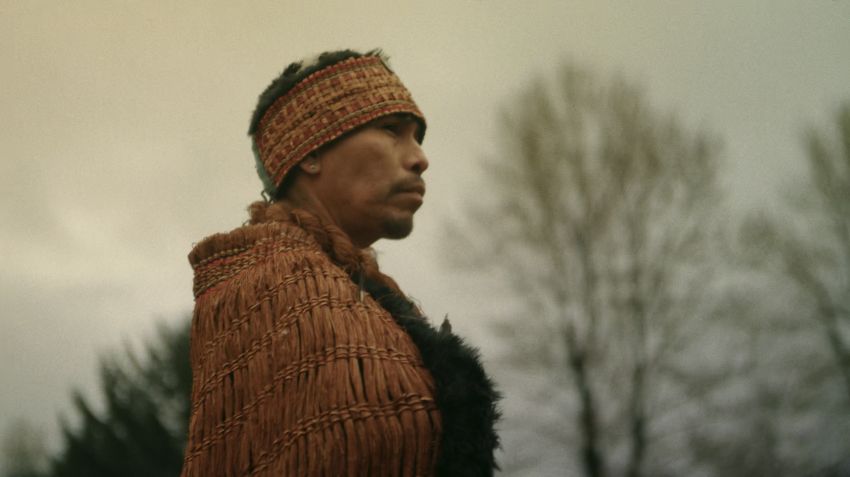
Nuxalk filmmaker Banchi Hanuse’s latest documentary beautifully captures Nuxalk resistance and revival in the Bella Coola valley in British Columbia, Canada. It centres around the voices on local community radio and attempts to restore the presence of ooligan — a fish used for food and medicine — which inexplicably disappeared decades ago.
Hanuse weaves together stunning scenic shots, archival footage and captivating animations to tell a compelling story of Nuxalk survival and resistance.
Palestine 36 (2025)
Set during the era of British colonial rule in Palestine, this historical drama chronicles the 1936–39 Arab revolt, which started with a six-month general strike and was followed by an armed uprising.
Directed by Palestinian filmmaker Annemarie Jacir, the film captures Palestinian resistance and the brutality of British colonial rule. Jacir is also the founder of Philistine Films, an independent production company in Palestine and Jordan that supports independent Arab filmmakers in the region.
The film was shot in Jordan and Palestine, navigating the difficulties of filming in territory under Zionist occupation. It won Best Film at the Tokyo International Film Festival and was officially submitted as Palestine’s entry for the Oscars.
Sukundimi Walks Before Me (2026)
This documentary follows First Nations Sepik resistance to a massive open-cut gold and copper mine along the Sepik River in Papua New Guinea.
The Frieda River Project — proposed by Australia-headquartered Chinese-owned company PanAust — would have irreparable environmental and social impacts, threatening the livelihoods of the 400,000 people in the Sepik River’s catchment area.
Yumburra (2026)
Follows First Nations writer Bruce Pascoe living on his farm on Yuin Country in regional Victoria, where he grows native grains and revives First Nations farming practices.
Pascoe faced a racist backlash in some of the mainstream media, political establishment and academia to his book Dark Emu, which challenged the colonial narratives of First Nations land management and food production.
Landmarks (2025)
This documentary follows the protracted investigation into the murder of First Nations Chuschagasta leader Javier Chocobar, killed in 2009 while defending his community’s land in rural Argentina.
Argentine filmmaker Lucrecia Martel’s first documentary centres the act of violence within centuries of dispossession, resistance and exploitation.
As current far-right President Javier Milei seeks to open up vast swaths of Argentina — including Indigenous lands — to mining and agribusiness companies, local communities face increasingly violent threats to their safety and livelihoods.
Steal This Story, Please! (2025)
This documentary explores the life and career of Amy Goodman — the legendary United States journalist and co-founder of Democracy Now!.
Everybody to Kenmure Street (2026)
Drawing on mobile phone footage, news coverage and interviews, this documentary captures community resistance to the Home Office’s attempts to detain two Sikh men in Glasgow in 2021.
Árru (2026)
Set in the northern part of the Scandinavian Peninsula, this drama tells the story of a Sámi reindeer herder confronting a mining project encroaching on her lands.
[View the full Sydney Film Festival program here.]