
Person to person
70-minute panoramic video
25th Biennale of Sydney
Art Gallery of New South Wales until June 14
Free entry
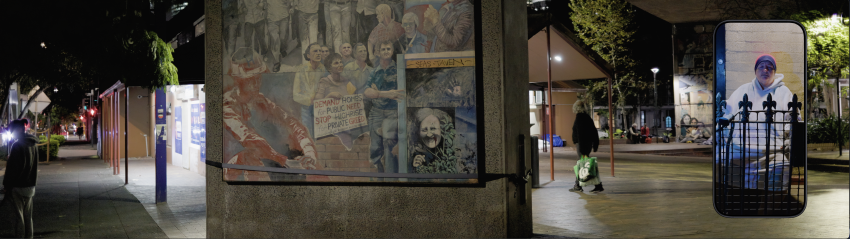
Person to person, a panoramic video exhibit in the 2026 Sydney Biennale by artists Merilyn Fairskye and Michiel Dolk, shares the rich history of Woolloomooloo told through first-hand stories of local residents.
Woolloomooloo is a pocket of public housing, nestled next to what has become the playgrounds and luxury apartments of the rich on Sydney Harbour.
The Art Gallery of NSW sits on a sandstone cliff directly overlooking the suburb. Its residents look up at the gallery but, over the years, most have not set foot in it. The juxtaposition of classes is stark.
Fairskye and Dolk’s powerful video reveals insights that could be valuable to other public housing communities in inner-Sydney battling the relentless drive by developers and governments to privatise what they see as prime real estate.
For both, this video revisited their earlier artistic engagement with the Woolloomooloo community in the late 1970s where they painted a series of iconic murals, mounted on the concrete pylons of the then newly-constructed Eastern suburbs rail line.
The mural idea was enthusiastically supported by the Woolloomooloo Residents Action Group, which had been formed out of a successful struggle in the 1970s against violent attempts by developers and landlords to evict residents.
Militant trade unionists, such as Jack Mundey from the Builders Labourers Federation, became involved and imposed Green Bans. Eventually, a tripartite agreement between the Gough Whitlam Labor federal government, the NSW government and Sydney City Council gave rise to the Woolloomooloo public housing estate.
The mural project — which portrayed the rich history of this working-class neighbourhood — was completed in 1982, after three years of work.
Fairskye told Green Left that having their history recorded through these murals was very important to the community. “It gives them a sense of ownership, that this is my place, I am part of this place with other people.”
The City of Sydney council has been refurbishing the supports of the 45-year-old murals because, Fairskye said, the community does not want to see the murals go “even though we thought they would only last for 10 years”.
“They have become part of the fabric of Woolloomooloo because they tell the story of Woolloomooloo.
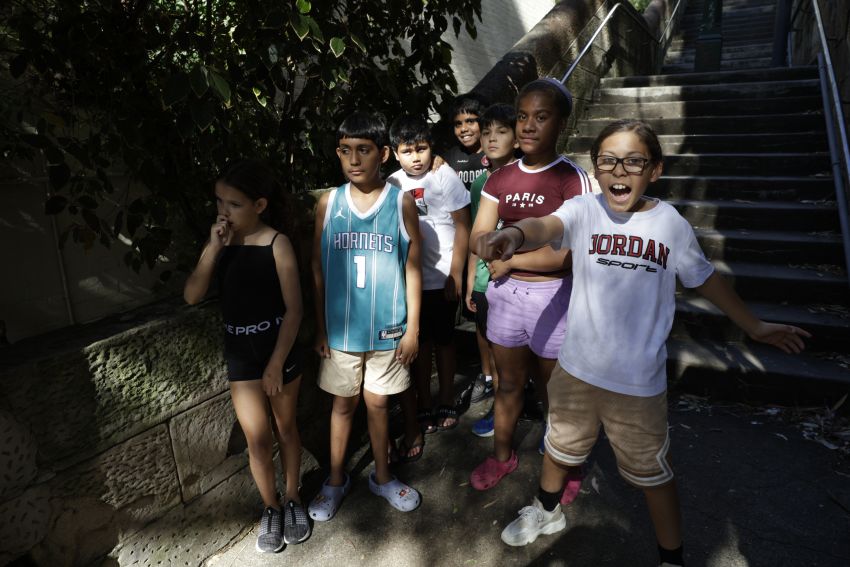
“Historically, Woolloomooloo is a strong working-class suburb. The waterfront has played a really important part. There are strong migrant communities there as well. And so, although the population down there has changed somewhat since that time, you still find that it’s a very diverse community.
“There the issues around housing and homelessness, which were so important at the time, are still really important…
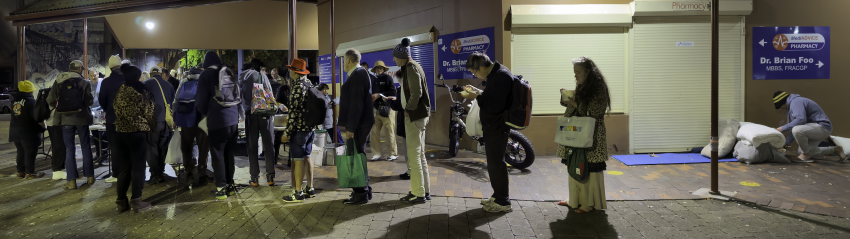
“Apart from the people who live in public housing, Woolloomooloo has a very large homeless population, some of whom reside at the Matthew Talbot Hostel and others who reside around Tom Uren Square and Walla Mulla Reserve.
“There’s a huge discrepancy between life for those people in Woolloomooloo and those who live on Finger Wharf in those incredible [luxury] apartments.”
Some of the residents interviewed in Person to person have come to Woolloomooloo many years after the epic struggles depicted in the iconic murals, but their individual stories are now part of that bigger story.