
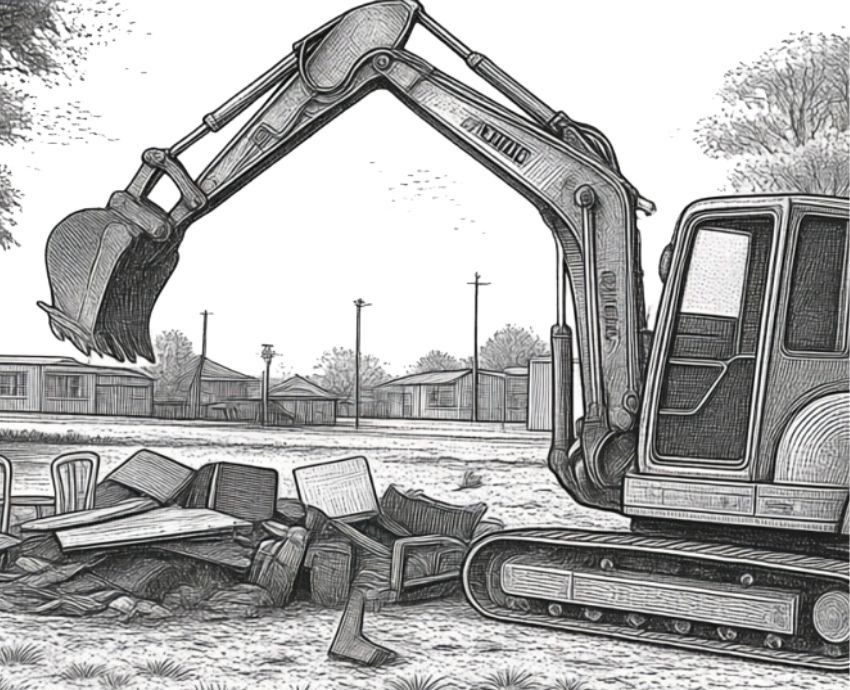
The Queensland Supreme Court has ruled that the Moreton Bay Regional Council (MBRC) violated people’s human rights by removing them from public land and disposing of their tents and property.
Justice Paul Smith found on March 6 that “the applicant’s human rights were breached”, saying “the time for compliance in the notices issued was not reasonable”.
The legal challenge by Kallangur residents surviving homelessness was mounted with the support of Basic Rights Queensland. They successfully secured an injunction against MBRC, preventing it from acting on further eviction notices in August last year. Beau Haywood, founder of not-for-profit Nourish Street, also participated in the court challenge.
The Human Rights Commission (HRC) and Queensland Attorney-General joined the case as third parties, with the former supporting the applicants’ position that their human rights were violated. However, Attorney-General Gim Del Villar rejected the notion that council had violated people’s human rights.
Smith found that council officers had not exercised “discretion” over whether an offence had been committed and had failed to refer the homeless people to the MBRC and Department of Housing.
He said council officers used pre-filled notices and did not consider the individuals’ circumstances before serving them a move-on notice.
The court found that the council had removed and disposed of property, including the ashes of a couple’s deceased daughter, without consent. It said MBRC had done this within a “wholly unfair” time frame and breached the applicant’s human rights by unlawfully issuing notices.
The MBRC and council officers argued that the homeless people in question consented to being moved on. The judge found much of this “consent” was coerced.
Homelessness researcher Cameron Parsell told the ABC on March 23 about MBRC’s practice of asking armed law enforcement officers to step in and said the average person did not have much understanding of their democratic rights. “The police and council know that when they use their presence to advise them, the regular citizen doesn’t understand the full nature of the law.”
Records show that while some homeless people were given a few days’ temporary accommodation, or placed on wait-lists for social housing, others were declined assistance because they did not have the required identification. No one was provided with social housing.
The applicants argued that property worth tens of thousands of dollars including tents, phones, generators, cooking equipment and irreplaceable sentimental items were destroyed.
The Supreme Court finding comes as Queensland councils use their powers to displace and dispossess unhoused people on public land. If people camping on public land in Brisbane, the Gold Coast and the Moreton Bay Region do not consent to moving on after being issued compliance notices they can be fined.
MBRC CEO Scott Waters did not apologise for the MBRC’s unlawful actions or human rights violations. Instead, he said “it does not change [the] City of Moreton Bay’s Camping on Public Land local laws” and “the Human Rights Act 2019 (QLD) is not a license to do what is otherwise unlawful”.
Notably, the judge did not rule against councils issuing further evictions. Councils still have the right to issue move-on notices and fines, with the support of police. It remains to be seen how they will respond and what relief will be ordered for the MBRC victims.
Meanwhile, QShelter, the peak body for housing and homelessness, has asked the reactionary Brisbane Lord Mayor Adrian Schrinner to be a keynote speaker at its CEO leaders forum and lunch on June 24. The decision was announced two days after the Supreme Court found that that the MBRC’s actions were human rights violations.