
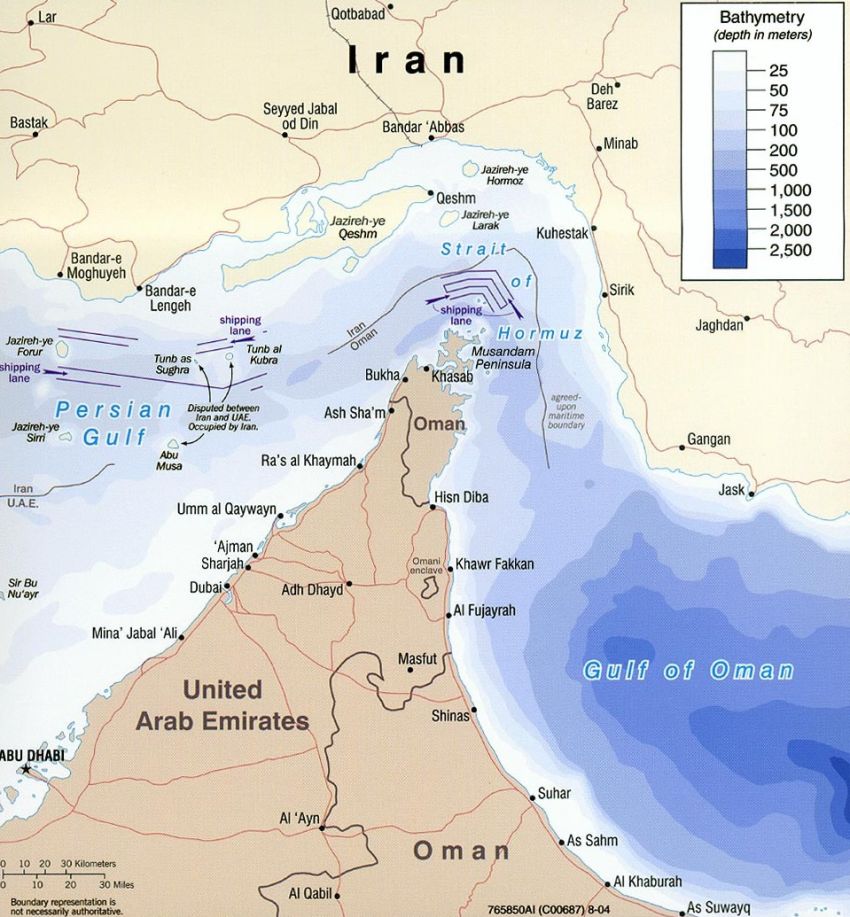
The closure of virtually all commercial traffic through the Strait of Hormuz because of the Iran war is not just affecting oil and gas supplies, which may push prices beyond the 2022 peak following the Russian invasion of Ukraine.
There are other important products that have also been snared, such as fertilisers, which play an important role in agriculture. Prices, at the time of writing, are already biting. Egyptian urea prices have risen by 25%, reaching $625 per metric tonne, up from $484 to $490 between February 17–23.
According to the North Dakota State University’s Agricultural Trade Monitor, the Gulf accounts for about 43% of seaborne urea exports, approximately 44% of seaborne sulphur, more than a quarter of traded ammonia and far from negligible quantities of phosphates. The United States-Israel illegal war, launched on February 28, has had immediate effects. “Within the first week of the crisis, major Gulf producers began declaring force majeure and reducing operations across urea, ammonia, and sulfur,” Agricultural Trade Monitor reported.
In the March report, the authors note that, unlike 2022, when Russian fertilisers were rerouted, “limited alternative routes” present themselves with a closed strait. Risks for the US could be identified in urea, Mono-Ammonium Phosphate and Di-Ammonium Phosphate (DAP) fertilisers.
Serious risks present themselves to such heavily reliant fertiliser importers as Brazil, given its reliance on nitrogen and phosphate. The country imports more than 80% of its fertilisers.
“The Hormuz closure simultaneously removes direct Gulf supply to Brazil and constrains Morocco’s ability to substitute for it,” the authors note. This also involves the Chinese market, which, while self-sufficient in many respects, still relies on Brazil, which, in turn, is highly dependent on urea from the Middle East. Both need the fertilisers to grow soybeans that are consumed by livestock, such as pigs and cows.
India is also vulnerable. It is the largest importer of DAP products, accounting for 28.7% of the international market. Its major suppliers — Saudi Arabia (24%) and Morocco (22%) — face the same maritime access problem via Hormuz and the Red Sea. Similarly with urea, India imports about $2.2 billion worth, accounting for 7.2% of global imports and 20–25% of domestic needs. Major suppliers, such as Oman (15%) and Saudi Arabia (9.5%), are also in the zone of conflict and supply.
Given that the country has 30 urea manufacturing plants that require gas, or naphtha feedstock, disruptions in liquid natural gas supply will drive up production costs and are already reducing capacity.
The continued closure of the strait would also restrict the supply of global sulphur, “raising costs for phosphate producers in China, Morocco, and Indonesia, countries that depend on Gulf sulfur such as feedstock, and constraining global phosphate supply at a time when alternative sources are already limited”.
There are cascading effects of this fertiliser choke in the Hormuz. It means that fertiliser producers are unable to exploit vital ingredients. Take, for instance, the case of Egypt’s urea plants: The gas supply upon which the country’s fertiliser production requires was cut off with Israel shutting down offshore gas fields. This will necessitate diving into the ever-dearer LNG market.
With gas supplies from Qatar severed, fertiliser firms in India, Bangladesh and Pakistan have begun to cease production.
If US President Donald Trump thought it could be spared domestic grievances on the agricultural front, the president of the American Farm Bureau Federation president Zippy Duvall has disabused him.
In a March 9 letter of praise and sorrow to Trump, Duvall reminded him that global fertiliser markets, like oil, were “highly vulnerable to disruptions in maritime transit routes, especially through the Strait of Hormuz, a critical shipping corridor for key fertilizer materials and finished fertilizer”.
The halt of energy production in the Middle East would also “affect the price and availability of many downstream products farmers depend upon”. Such shocks in the supply chain would push “already record-high input prices even higher at a time when farm margins are already extremely tight and many farmers are under water”.
Duvall went on to urge Trump to “use your authority to take proactive steps to safeguard fertilizer supply chains and reduce the risk of market disruptions that could threaten American agriculture”.
These included deploying the US Navy to shield maritime suppliers of fertiliser shipments through the Strait of Hormuz (the improbability and feasibility of this does not seem to have dawned on Duvall), providing insurance coverage, ensuring appropriate domestic port, rail and barge capacity “to expeditiously deliver fertilizer inputs to rural America” in timely fashion and using his presidential power to “suspend countervailing duties on imported fertilizer products to moderate price increases” on a temporary basis.
Historian Adam Tooze makes the essential point that, if you want to schedule conflict, do it so as to avoid clashes with the agricultural cycle. By disrupting the cycle and causing a rise in staples, food security is imperilled and social unrest is sown.
It is abundantly clear that those driving the war on Iran have shown themselves contemptible and inept in appreciating that fact. The consequences of international disorder in agriculture and food are being borne globally.
[Binoy Kampmark lectures at RMIT University.]