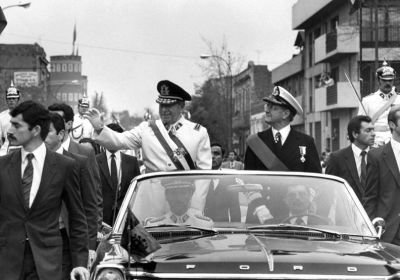
Peter Boyle interviewed Florencia Melgar, a former SBS journalist about her research into Australia's involvement in the 1973 military coup against the progressive government of Salvador Allende in Chile.
Watch the full interview here.
***
Australian environmentalists welcomed the October announcement that mining giant BHP was abandoning its plans for a coal export rail and port development at Abbot Point in Queensland.
However, the company is simultaneously involved in a giant new coal export development on Kalimantan in Indonesia.
The formation of the Labor Party — created as part of a global movement to form mass workers’ parties in the 1890’s — differed markedly from the formation of social democratic parties in mainland Europe. The tendency in these countries was for the formation of workers’ political parties to precede the formation of a mass union movement which the parties then encouraged.
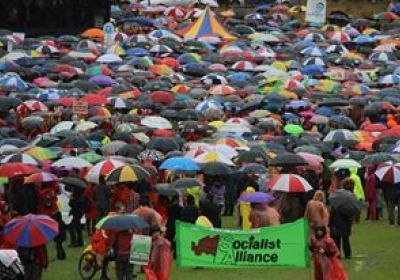
After attending the national day of action on climate change, organised by GetUp on November 17, Sally Rawsthorne wrote in the Guardian that “fringe dwellers” like the Socialist Alliance and the Green Left Weekly participating in the rally “does climate action a disservice”.
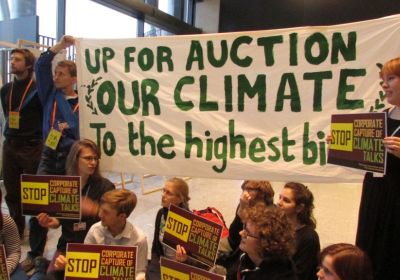
At the recent UN climate talks in Poland, poor nations and NGOs singled out the Australian delegation for doing the most to block progress on a new deal to cut carbon emissions.
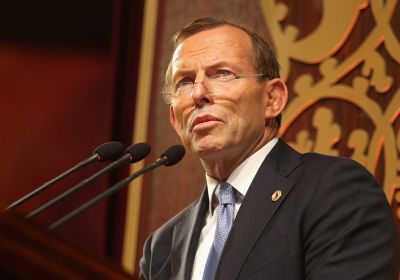
At the Commonwealth Heads of Government Meeting (CHOGM) in Colombo on November 15 — boycotted by India and Canada in protest against the Sri Lankan regime's crimes against humanity towards the Tamil people — Australian Prime Minister Tony Abbott said of the regime's crimes: "Sometimes in difficult circumstances, difficult things happen.”
Since capitalism began, socialists have debated how to bring to an end to class divisions and make society more fair and just.
Early on, a split developed between those who thought revolution was necessary to overthrow capitalism, and others who thought a socialist society could be created gradually through parliamentary reforms.
Some socialist parties started with radical politics but gradually became part of the system and gave up on calling for revolution.
Imagine if we found out exactly who was systematically destroying the habitability of Earth? If we had their names and addresses? Wouldn't a responsible society make them stop the destruction?
Climate researcher and author Richard Heede at the Climate Accountability Institute in Colorado has done a study which found that just 90 companies — among them Chevron, Exxon, BHP, Rio Tinto and BP — have been responsible for producing two-thirds of all global warming-causing emissions.
It's long been a favoured wish of many environmentalists to go off the grid, to be self-sufficient in energy and other services, and avoid the corporate utilities and their coal-powered electricity. The ambition for freedom from energy bills and fossil-fuel electricity is understandable.
And now in the age of relatively cheap solar panels (which weren't around in the 1970s), you can live off the grid and use a huge battery attached to a large array of solar PV (photovoltaic) panels, to maintain a hi-tech lifestyle on clean solar energy.
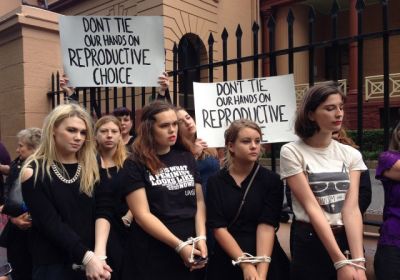
On the same day that Tasmania decriminalised abortion, the New South Wales parliament took a big step backwards for women’s rights. The Legislative Assembly voted 63 to 26 for a bill aimed at giving 20-week-old foetuses the same legal rights as human beings.
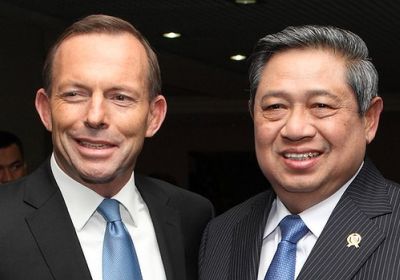
The Socialist Alliance condemns the violation of Indonesia's national sovereignty through the actions of the Australian government in tapping the mobile phone of Indonesian president Susilo Bambang Yudhoyono and nine of his closest advisors, including his wife.
These actions are a reflection of how Western nations such as Australia treat poor nations with neo-colonial contempt.
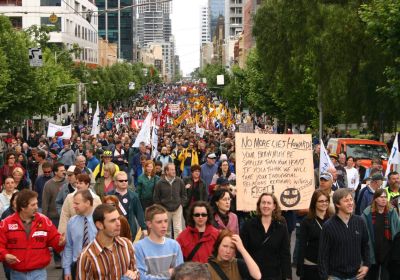
Over the years, I have heard many left-wing activists say that mass peaceful protests do not achieve anything. Rather, “militant actions” which “take it up to the ruling class” are more important.
But for smaller direct actions to have any real political significance, they have to be connected to a patient and democratic approach to building mass movements that can win reforms. Smaller direct actions that are not tied to this political aim are a posture.