
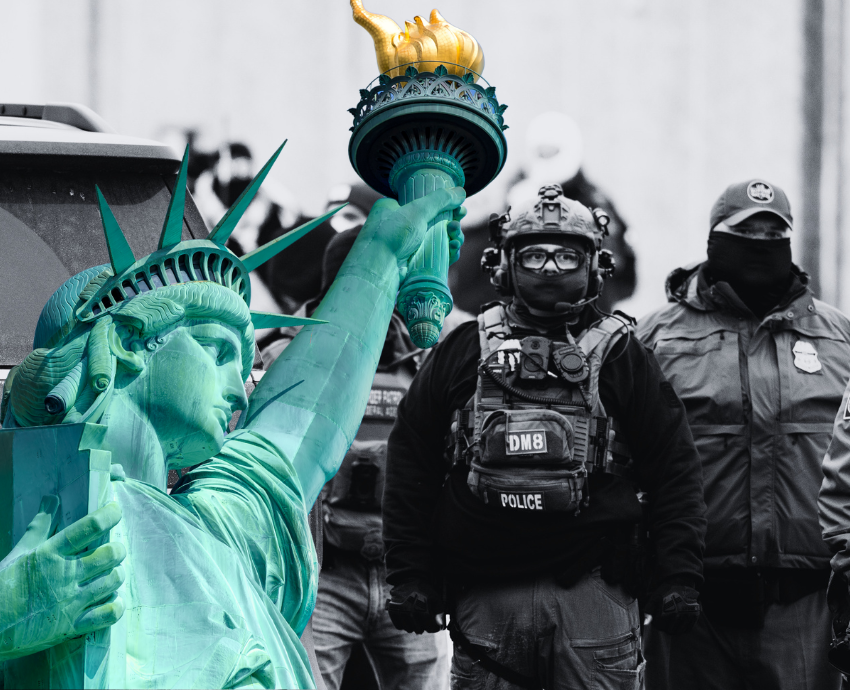
The United States Supreme Court ruled on June 30 that President Donald Trump could not end birthright citizenship by Executive Order. In practical terms, the Court upheld the plain language of the 14th Amendment that children born in the US are and remain US citizens by birth.
Trump's Order said that US-born children would not automatically be citizens if their parents were in the country illegally, temporarily, or were not lawful permanent residents. The courts blocked the Order before it could take effect.
The Supreme Court ultimately agreed that the Order was unconstitutional. While the vote was 6 to 3, Vice President JD Vance claimed it was actually 5 to 4, based on conservative Justice Brett Kavanaugh’s partial dissent. Kavanaugh agreed with the court’s judgement but dissented in part, arguing that the executive order was unlawful under federal law, but did not violate the constitution.
As reported in the Guardian, Kavanaugh wrote in his opinion: “Congress could – consistent with the Fourteenth Amendment – amend §1401(a) or otherwise enact new legislation establishing exceptions to birthright citizenship for children born to foreign citizens unlawfully or temporarily in the country.”
Scholars and experts on the Constitution reject Kavanaugh’s argument, which would give Trump the green light to pursue his white nationalist agenda.
According to the American Civil Liberties Union, “Congress cannot repeal [part of the Constitution] by simply passing a new bill. Amending the Constitution would require a two-thirds vote in both the House and Senate, and also ratification by three-quarters of the states. The effort to erase the citizenship guarantee will never clear those hurdles — for very good reasons.”
On the first day of his second presidential term — January 20, last year— Trump signed the Executive Order redefining who can be a citizen, before launching a campaign to arrest, detain and expel Brown and Black immigrants — legal and undocumented. His anti-immigration, white nationalist campaign has accelerated ever since, with Immigration and Customs Enforcement (ICE) agents now entering hospitals looking for “illegal” immigrants.
Three far-right Justices, Clarence Thomas, Samuel Alito, and Neil Gorsuch dissented, supporting Trump’s cancellation of birthright citizenship, arguing in essence that a clearly stated, long-affirmed Constitutional right can be annulled — by the Supreme Court ruling that it doesn’t say what it says.
Based on that twisted logic, every other right — from free speech, freedom of the press to non-establishment of state religion — could also be targeted.
The far-right, white nationalists who run the Trump White House are up in arms at the decision, and plan to push hard to kill equality. They openly reject a multiracial/multinational democratic state and plan to reverse African Americans’ democratic gains since the US Civil War — not just the 1963 Civil Rights revolution.
When George Washington became the first US President in 1789, he brought nine enslaved persons to the Presidential House in Philadelphia. Thomas Jefferson (1801-09) also owned hundreds of slaves while President.
‘Major victory’ or ‘speed bump’?
While civil and democratic rights supporters believe the court ruling is a major victory, to white nationalists it is more of a “speed bump” along the road to reestablishing a White Republic.
The Trump regime has immediately filed complaints about “birth tourism” and women flying in to the country to have their babies. The aim is to generate fear among their white base. But, how many families can do this without serious resources? The Justice department claims only 35,000 a year.
Thus, it is more accurate to describe the Court’s birthright citizenship ruling as less than definitive.
The Supreme Court’s 1896 Plessy v. Ferguson ruling established Jim Crow by legalising racial segregation. In other words, Black Americans were citizens, but with limits.
During the Civil War, President Abraham Lincoln did not support abolishing slavery until it was clear it was the only way to defeat the Confederacy in the South. That was why he had to issue the 1863 Emancipation Proclamation. (Karl Marx said in London, at the outset of the war, that this was the North’s only path to victory.)
Understanding that this is a setback but not a crushing defeat for the racist forces is important for organising the next stage in the fight back. Only a strategy of mass resistance and rebellion can stop them.
This compares to the liberal establishment leadership — including elected Black officials — which promotes status quo politics, waiting for elections while being out-organised by the right. Or worse, focuses their fire on left critics, such as democratic socialists.
The 14th Amendment
The 14th Amendment to the Constitution was adopted after the Civil War (1861–65).
The Court relied on the Amendment's Citizenship Clause and longstanding legal precedent, especially the 1898 case United States vs Wong Kim Ark. This decision has long been understood to protect birthright citizenship for people born on US soil.
Section 1 reads: “All persons born or naturalized in the United States, and subject to the authority thereof, are citizens of the United States and of the state wherein they reside. Representatives shall be apportioned among the several states according to their respective numbers, counting the whole number of persons in each state, excluding Indians not taxed.”
Section 2 reads: “No person shall be a Senator or Representative in Congress, or elector of President and Vice President, or hold any office, civil or military, under the United States, or under any state, who, having previously taken an oath, as a member of Congress, or as an officer of the United States, or as a member of any state legislature, or as an executive or judicial officer of any state, to support the Constitution of the United States, shall have engaged in insurrection or rebellion against the same, or given aid or comfort to the enemies thereof.”
Section 3 reads: “The validity of the public debt of the United States, authorized by law, including debts incurred for payment of pensions and bounties for services in suppressing insurrection or rebellion, shall not be questioned.”
In the final fourth section, it reads: “The Congress shall have power to enforce, by appropriate legislation, the provisions of this article.”
It was ratified on July 9, 1868, and is a crucial part of the Constitution that addresses citizenship rights and equal protection under the law. The Court’s extremist minority, however, openly declares this ruling should be repealed.
The Court’s decisions the day before its birthright ruling show it is leaning Trump’s way. Ending the legal temporary protected status of Haitian and Syrian migrants, among others, shows that.
What the majority opinion said
Being born in the United States generally makes you a citizen.
A president cannot rewrite that rule on his own through an Executive Order.
The phrase "subject to the authority of" in the 14th Amendment – which exempts children born to foreign diplomats stationed on US territory – does not let the government exclude broad categories of US-born children just because their parents are undocumented or in the country temporarily.
The Court’s decision affirms the separation of powers, too, because it says the president cannot override constitutional citizenship rules unilaterally.
The dissenting justices would have allowed Trump’s restrictions to take effect. They argued for a reading of the 14th Amendment more sympathetic to the administration's claim that not all US-born children are automatically covered.
Thomas issued 91 pages of argument (longer by far than the whole Constitution) trying to make this claim.
Constitutional experts had hoped for a 9-0 ruling based on all readings of the 14thAmendment, or at worst a 7-2 decision. But 6-3 with one vote backing Trump’s aim was too close.
Nevertheless, the Court reaffirmed birthright citizenship, and the President cannot cancel that by executive fiat.
On the 250th anniversary
On the 250th anniversary of the country’s founding, the “White Republic” wing of the ruling class wants to return to the white supremacist norms of 1776, which were already so deeply embedded in colonial practice that they didn’t even need to be explicitly stated.
What made this country unique at its founding was that it was created as a Republic, not a new monarchy.
Today’s conception of the US as a “multiracial democracy” is a product of generations of hard struggle and social evolution, including through a second armed revolution to end slavery.
Those who reject that goal openly seek to turn back those gains.
(One important caveat: This is a high-stakes legal topic, so if you need advice about a specific immigration situation, see a qualified immigration lawyer for advice.)