
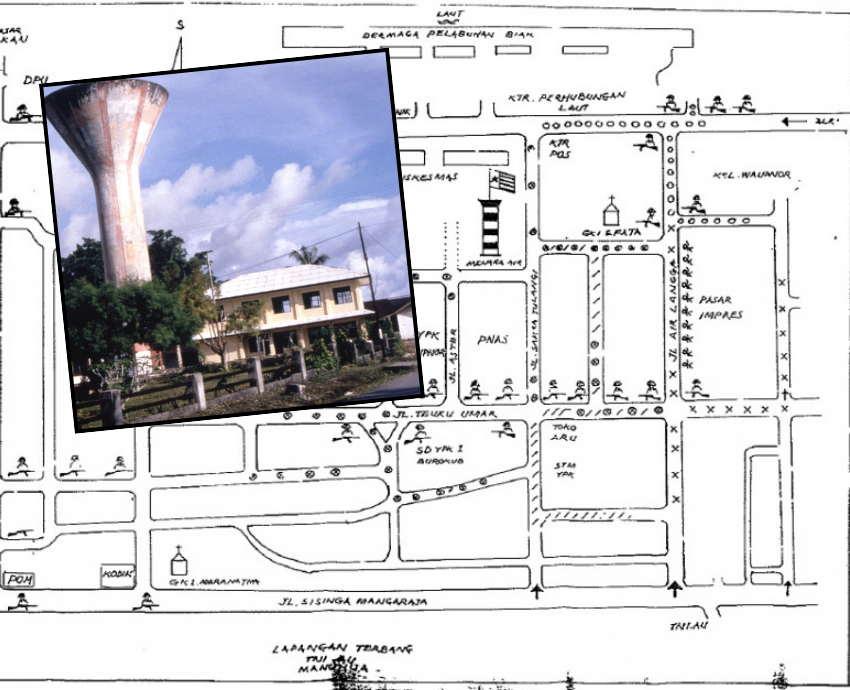
Indonesian security forces massacred scores of people in Biak, West Papua, on July 6, 1988. Victims included women and children who had gathered for a peaceful rally at the base of a water tower flying the Morning Star flag — West Papuans’ symbol of independence.
According to a statement released by the Australia-West Papua Association (AWPA) on July 5, activists and local people had started gathering beneath the tower four days earlier, singing songs and holding traditional dances. As the rally continued, many more people in the area joined in with numbers reaching up to 500.
Although the Australian government knew about the massacre, it failed to condemn the Indonesian military for the atrocities, said AWPA.
Shortly after the massacre, Dan Weadon, an Australian military attaché and intelligence officer from Australia’s Jakarta embassy, visited Biak.
West Papuans handed the officer photographic evidence of the massacre. The photos were distributed to his superiors within defence, but they never saw the light of day.
Evidence gained under a freedom of information request, by West Papuan supporter Anthony Craig, suggests the photos have since been destroyed by the defence department, despite consistent calls for a proper investigation into the atrocity, said AWPA.
One survivor of the massacre told academic and author Eben Kirksey in 2003: “During the initial attack, the troops assembled around us in a U formation. There were Brimob police in riot gear, army troops (Kopasgad), a company of soldiers from the local Kodim barracks, as well as navy personnel. They formed a letter U around us and then shot at us repeatedly while we were still under the water tower. They kept shooting, telling us to head down to the dock. We were herded down to the dock. So at around 6:30am, I was led by two Indonesian military officers directly to a naval ship. The ship has a number on its side, 534.”
In its statement, AWPA spokesperson Joe Collins said that in the twenty-eight years since the Biak massacre, “not only has no military personnel ever been brought to justice, but the killing of Papuans in the territory continues and the conflict is escalating”.
The Indonesian occupying forces continue to intimidate, arrest and kill West Papuans.
There are ongoing clashes between the West Papuan National Liberation Army (TPNPB) and the Indonesian military, with casualties on both sides. As a result of these clashes, said AWPA, the Indonesian security forces carry out operations in the area causing local people to flee their villages in fear for their lives.
These internal refugees are bearing the brunt of the conflict. According to data released by Human Rights Monitor, there are more than 122,000 internally displaced persons in West Papua as at June this year.
Collins said that as the situation in West Papua deteriorates, “we can expect more Papuans to flee from their villages for safety”.
US pilot killed
In a recent incident, United States pilot Nicholas F Gosselin was killed and the Associated Mission Aviation (AMA) plane he was flying was destroyed on July 2. The incident occurred at the Kampung Balinggama airfield, in the Sobaham District, Yahukimo Regency, in the Papua Mountains Province, said AWPA.
TPNPB spokesperson Sebby Sambom said TPNPB members from the Yahukimo Regional Command were responsible; pointing out that the TPNPB had previously prohibited all civilian aircraft from entering the region.
Sambon said the group believes that civilian aircraft are regularly being used to transport Indonesian troops and military logistics into Papua’s interior to support military operations. However, the AMA and the Indonesian military have denied this.
Collins said: “What is of real concern now is that the military might conduct another security force operation to hunt for the TPNPB members in the area, which will only result in more internal refugees and more villagers arrested and intimidated.”
Indonesia’s Coordinating Minister for Political and Security Affairs Djamari Chaniago condemned the TPNPB attack and said his ministry would encourage the Indonesian Defense Forces (TNI) and the National Police (Polri) to pursue the perpetrators and take firm action.
ANTARA News reported that lieutenant general Lucky Avianto, commander of the Indonesian Joint Regional Defense Command (Kogabwilhan) III, said that the TNI will deploy additional security personnel to several vulnerable locations in Papua following the fatal shooting.
Statements such as this are not helpful and only create anxiety in the Papuan population, Collins said.
“If Canberra was reluctant to raise the massacre with Jakarta 28 years ago, nothing has really changed and Canberra is still reluctant to raise the human rights situation in West Papua with Jakarta.”
[For more information on the Biak massacre, visit The Biak Massacre Citizens Tribunal.]