-
It’s wrong to think that we can campaign to stop climate change in the same way we might campaign to end a war. All the evidence says we are well past that stage now. That is, even if by some impossible, magical course of events all carbon pollution on Earth was stopped tomorrow, we’d still be in really, really deep trouble. So many greenhouse gases have been pumped into the Earth’s atmosphere that we have rushed far past the safe upper limit — the famous 350 parts per million of CO2, the number that climate action group 350.org took for its name. -
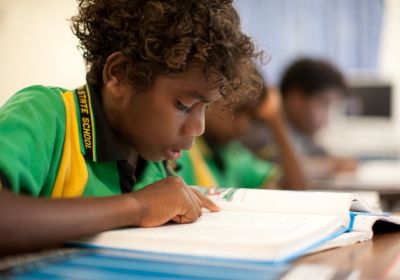
Ninety two percent of Indigenous languages are fading or extinct. Australia has suffered the largest and most rapid known loss of languages and past government policies have been largely to blame. This is clearly outlined in the Our Land: Our Languages report which was released by the House of Representatives Standing Committee on Aboriginal and Torres Strait Islander Affairs late last year. -
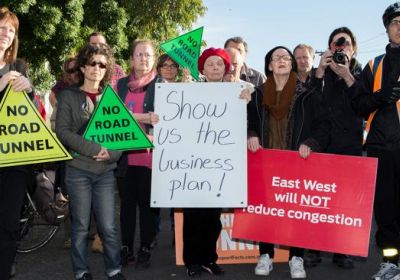
Communities in the firing line of the East-West Link road in Melbourne have been agitating not merely against the tunnel, but for a shift of transport priorities to public transport. Labor politicians, including Richard Wynn in the City of Yarra, have supported the campaign, and promised an alternative transport plan. -
This is the last issue of Green Left Weekly for the year. We are taking a break for a few weeks and the next issue will be out on January 22. Early next year, GLW will be celebrating its 1000th issue. This is a huge milestone for an independent newspaper that does not rely on advertising to survive. Instead, it is the support of hundreds of people who write for, distribute and donate money to the paper year after year that keeps it going. -
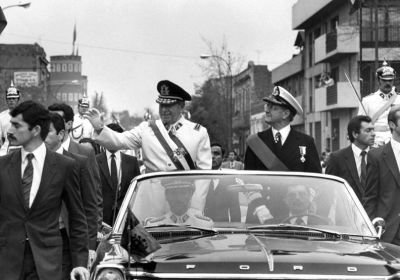
Peter Boyle interviewed Florencia Melgar, a former SBS journalist about her research into Australia's involvement in the 1973 military coup against the progressive government of Salvador Allende in Chile. Watch the full interview here. *** -
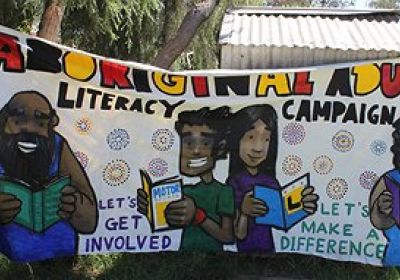
Twenty-two people from Bourke and Enngonia are about to graduate from the first intake of the Yes I Can adult literacy campaign classes. This new way of learning literacy for adults originated in Cuba and now operates in 28 countries round the world. It came to Bourke and Enngonia after a successful trial last year in Wilcannia. Now it is set to spread further across the region. Jack Beetson, the national campaign coordinator, is overjoyed at the success in Bourke and Enngonia. -
The Grattan Institute and the Productivity Commission both released reports on November 22 into the affect an ageing population will have on Australia’s economy. The Grattan Institute proposed that the pension age should be raised to 70, owner-occupiers should not be exempted from the Age Pension asset tests — meaning people could be forced to sell their home when they retire — and GST should be applied to fresh food. The Productivity Commission suggests access to the Age Pension and retirement should be linked to life expectancy — to continue rising as people live longer. -
When Japanese forces occupied French Indochina in 1941, it was not entirely without French opposition. But for the most part it was close to business-as-usual for the French in Vietnam. Japan left the French colonial administration intact, beholden now to Tokyo rather than Paris. It was oppression-as-usual for the Vietnamese, 2 million of whom Japanese forces starved to death in 1944. -
Where has the year gone? It feels like 2013 has rushed past like the high-speed train we still don't have in wealthy 21st century Australia. And now, with just a month to go, we have the urgent task of catching up with the Green Left Fighting Fund. Our target for the year is $250,000, but so far only $160,338 has been raised. We will need some generous donations from our supporters to help us get there over the next four weeks. -
As a mother and her baby fight to avoid the “rat-infested” Nauru refugee camp, a Fairfax-Nielsen poll showed half of Australian voters disapprove of the Coalition government's refugee policy. The poll also showed Prime Minister Tony Abbott has come to the end of what has been described as the shortest “honeymoon period” of a PM in history. Abbott's popularity took an unprecedented dive — with a personal approval rating of 1%, believed to be fuelled by his attitude to the “diplomatic stand-off” with Indonesia over substantial spying allegations.
-
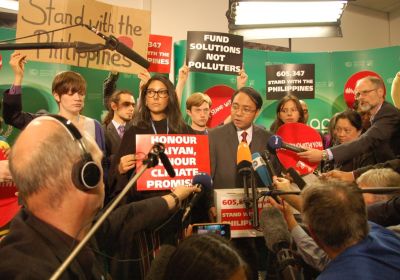
Finally, Aussie pride is back after a dominant display in a crucial international contest. Sure, our side came in for criticism for aggressive bullying and disrespectful behaviour towards the opposition, but you can't argue with results. True, this was nothing so crucial to the fate of humanity as an Ashes Test. It was merely the United Nations Warsaw climate talks that ended on November 23 with no agreement for rich nations to severely cut the greenhouse emissions fuelling climate change or offer compensation to poor nations bearing the brunt of its increasingly devastating effects. -
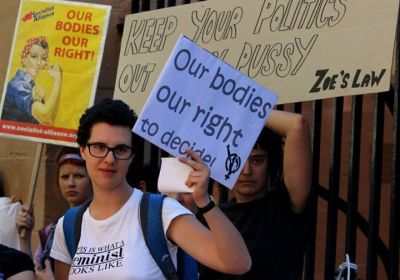
A new battleground has opened over the introduction of “foetal personhood” laws as the anti-choice lobby tries to use these laws to roll back women’s reproductive rights. A private member’s bill giving legal rights to foetuses older than 20 weeks or weighing more than 400 grams passed the New South Wales lower house on November 21 by a large margin. A similar bill was introduced in the South Australian Legislative Council on November 27 by right-wing Christian party Family First. It lost by one vote. The Western Australian parliament considered a “foetal homicide” law last year.