
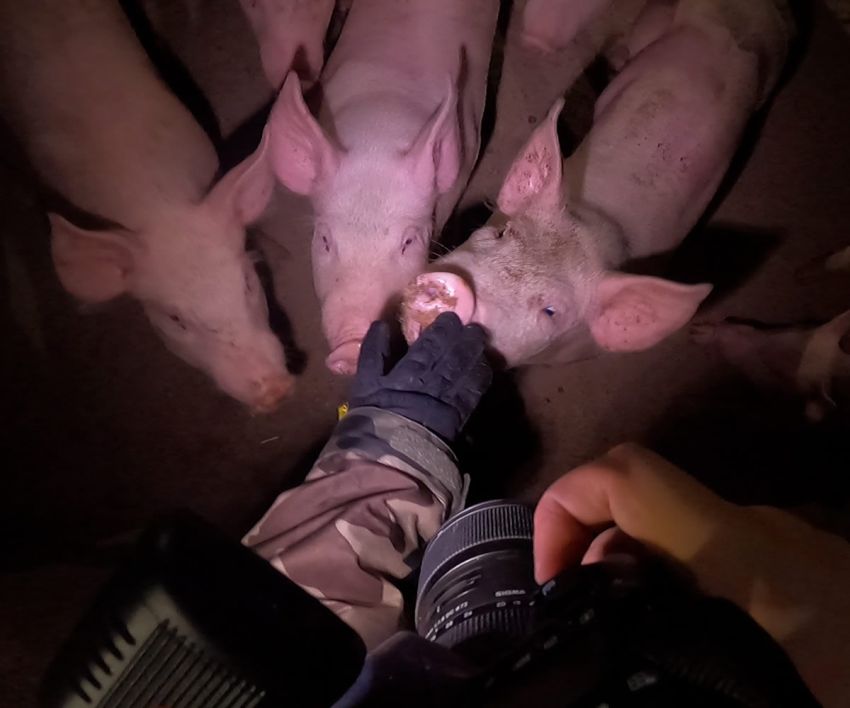
The Human Rights Law Centre and Alliance for Journalists’ Freedom have become involved in a High Court case over undercover footage filmed inside a Victorian slaughterhouse.
The contention is whether information obtained by activists, journalists or whistleblowers through unlawful entry can be claimed by the target organisation and stop the public seeing it.
The case, currently before the High Court, raises broader questions about corporate power, secrecy and who gets to control information in society. The outcome could affect far more than animal rights activists.
Members of Farm Transparency Project secretly filmed inside a goat slaughterhouse in regional Victoria in early 2024 and captured disturbing scenes of animals in distress as they were slaughtered. The company operating the facility is now attempting to use copyright law to gain control of the footage and prevent it from being publicly distributed.
Corporations routinely present themselves as transparent and accountable, yet many industries depend on the public not seeing what happens behind closed doors.
Industrial-scale slaughterhouses are a clear example. Most people are shielded from the realities of how animals are treated inside these facilities, even though millions of animals are killed every year.
This case matters because undercover investigations have long played an important role in exposing exploitation that powerful interests would prefer to keep hidden. From workers’ struggles for rights and conditions to corporate vandalism of the environment and systemic violence against animals, social movements have often relied on whistleblowers, investigative journalists and activists to reveal damaging facts the public would otherwise never see.
If corporations can use copyright claims to suppress evidence gathered by campaigners or whistleblowers, it creates another weapon for powerful industries to silence criticism and avoid scrutiny. That danger extends well beyond slaughterhouses.
The case also highlights deeper problems with Australia’s media system. Much of the corporate media is owned by large undemocratic organisations, driven by profit and commercial interests.
Investigations that challenge entrenched economic power often struggle for coverage, and independent journalists and grassroots organisations face increasing legal and financial pressure.
Animals, of course, have almost no voice within this system. They are treated as property and commodities, their suffering hidden behind industry marketing and carefully managed public relations. When footage occasionally breaks through the secrecy, many are disturbed by what they see.
Whatever your views on activists’ whistleblowing tactics, we cannot stand by while the laws punish those who expose violence and protect those carrying it out.
The High Court’s decision, the date for which is not set, will have implications not only for animal rights advocates, but for anyone concerned about transparency, accountability and the ability of ordinary people to challenge powerful corporate interests.