
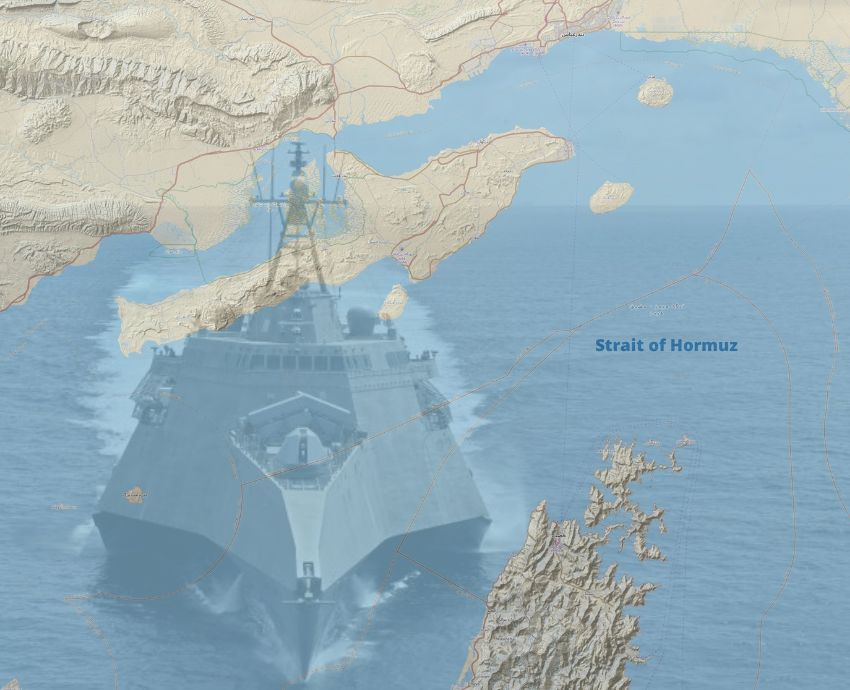
United States President Donald Trump announced on April 12 a military blockade of the Strait of Hormuz, “effective immediately”, to block ships from reaching Iranian ports. The US military claimed that its warships had forced 10 vessels to turn around in the first 24 hours of the blockade.
In response, senior Iranian military commander Ali Abdollahi Aliabadi warned that Iran would block all exports and imports across the region, including the Gulf of Oman and the Red Sea, should the US blockade continue.
About 20% of the world’s oil passed through the Strait of Hormuz before Israel and the US began their illegal attacks on Iran in late February. A significant proportion of the world’s fertiliser supply also passes through the waterway and disruptions are impacting global food production.
Iranian and US officials were engaged in face-to-face negotiations in Islamabad, Pakistan, on April 12. The talks ended without an agreement and uncertainty over the previously agreed two-week ceasefire, due to expire on April 22.
The US refused to agree to Iran’s conditions, which included compensation for damage from US-Israeli strikes and the release of Iran’s frozen assets. Since then, the US and Iran have reportedly been in indirect talks aimed at reaching agreement.
The US and Israel’s attacks on Iran killed more than 2000 people and injured thousands more since February 28. The bombings have targeted houses, schools, universities and healthcare infrastructure.
On the first day of the war, US missiles hit Shajareh Tayyebeh girls’ school in Minab, southern Iran, killing 156 people, including 120 school children.
The same day the Iran war ceasefire was announced, on April 7, Israel launched massive strikes across Lebanon. Israeli attacks have killed more than 2000 people and displaced at least 1 million — more than a fifth of Lebanon’s population.