
Organised crime group Los Ardillos attacked Nahua indigenous towns in Guerrero state, Mexico, last month, with an onslaught of drones, guns and fire that lasted days.
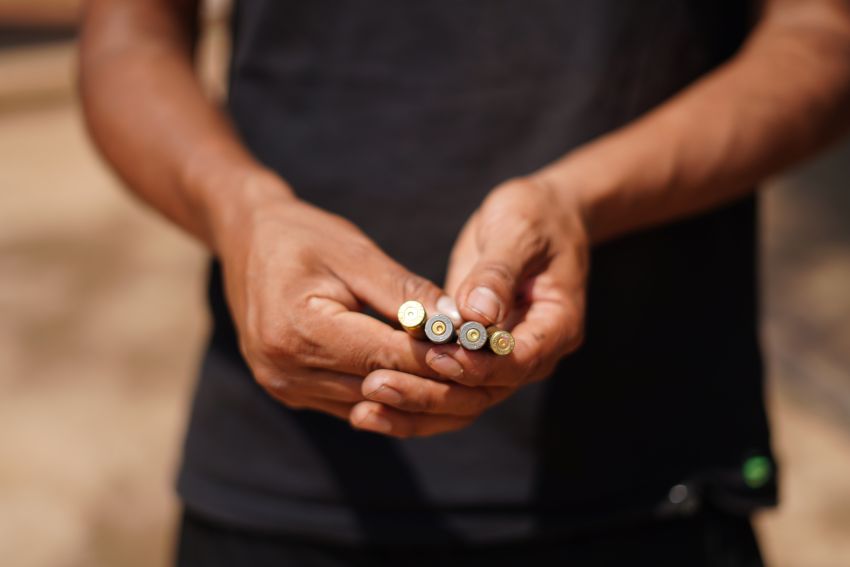
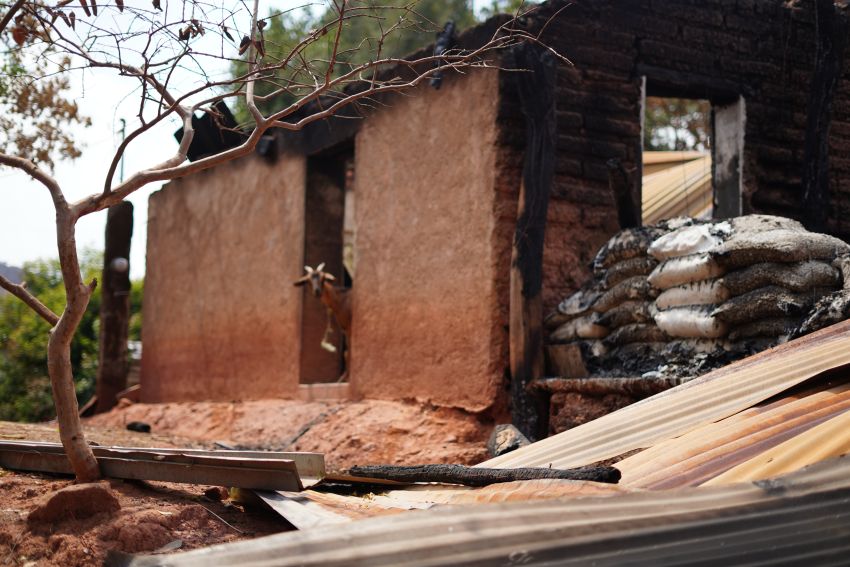
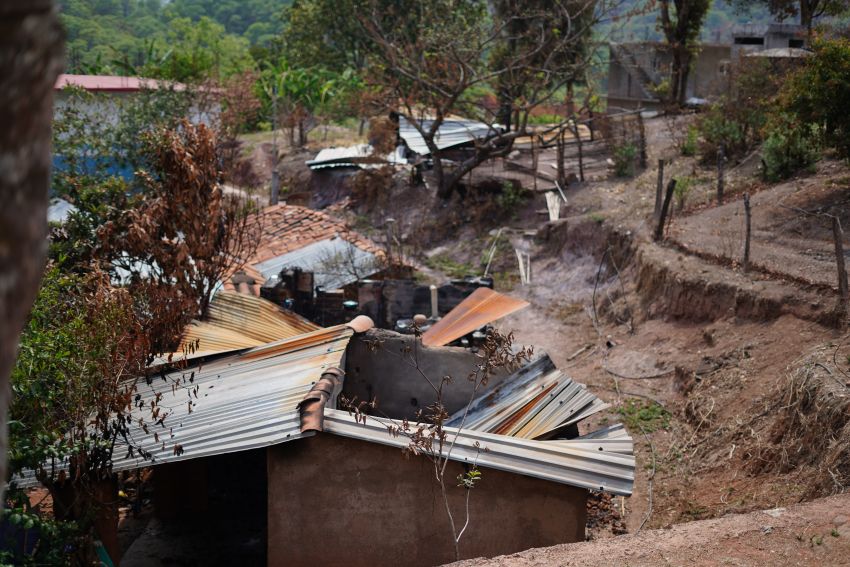
Almost two weeks later, the towns I visited were still completely abandoned. Bullet casings littered the ground and corn crops and houses had been torched. Chickens, goats, pigs and turkeys wandered hungrily, left behind by owners who had fled.
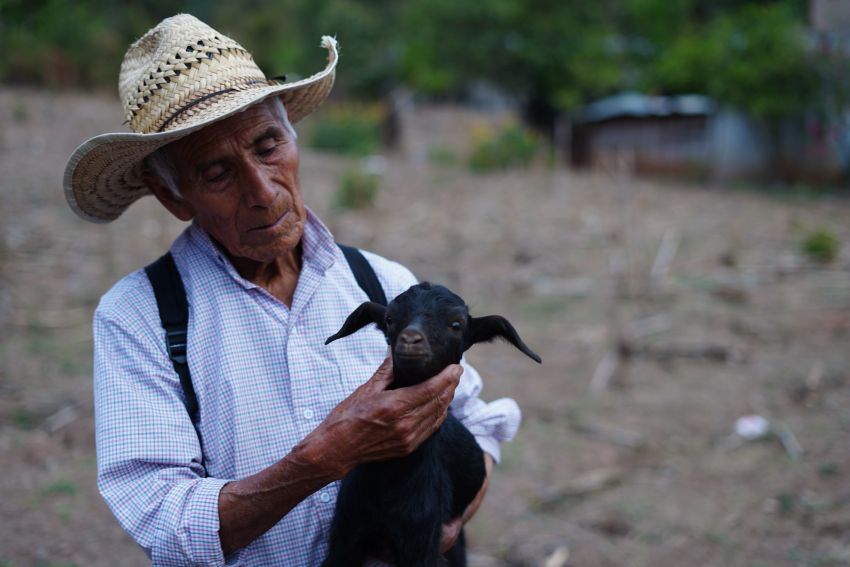
Sixto Mendoza Lindo, a resident of Alcozacán, one of the attacked towns, and a member of the People’s Indigenous Council of Guerrero (CIPOG-EZ), told me: “[Los Ardillos] came, more than a hundred of them, in military attire and carrying machine guns, minimis [mini machine guns], and 50-calibre rifles, in armoured vehicles. They attacked us with drones and explosives.”
The attack began on May 6 and lasted until May 10, when Los Ardillos then set fire to most of the homes and buildings in the communities of Tula and Xicotlán, while continuing to attack Acahuehuetán and Alcozacán. The attacks displaced about 1000–2000 people.
There used to be 24 towns in that part of the Lower Mountain region of Guerrero state. Now, due to such attacks, there are only 12.
About 100 community police (CRAC-PF) defended the towns from the organised criminals. Three were killed, but only buried on May 20, due to delays by state authorities.
This latest violence is part of a broader national situation, where organised crime groups aim to clear the land — usually indigenous territory — in order to expand their control in a region. This typically involves the voluntary or forced collaboration of local authorities. Using weapons and ammunition made in the United States, organised criminals gain control of supply routes and displace and dispossess communities in order to protect mining interests (often transnational) and other profitable resources.
“I hid in my home for four days while the shooting went on, then I fled, carrying my baby, when they set the hilltop on fire,” a woman from Xicotlán told me, her name withheld for her safety. She speaks very quietly, expressionless, her hands in her lap.
“The government arrived, they saw the hill on fire and then they left. I thought, the fire is close by, if I don’t leave now, they’ll burn me alive. I left because of my husband, my kids. Otherwise, it would be better that they burn me, because my house has been burnt down and I’ve lost everything,” she said.
“I had just bought a [corn] mill ... and we had two motorbikes. They were both torched. We had three beds and they were burnt. I had 12 sacks of corn, and that was burnt. They killed our 16 sheep, shot them. I had hens and chicks — who knows where they went. I had bought my children new hats for the [Mothers’ Day] events. It was all burnt. My dried chilli, my plates, my lemon trees and corn.”
Another man, his name also withheld for his safety, described to me how he and his three children, wife and mother fled into the mountains when the burning started. The government, he said, has told him he can go home, “but I don’t have a home to go back to”. He also said the government had said they’d be provided with some supplies, “but until now, we haven’t received anything”.
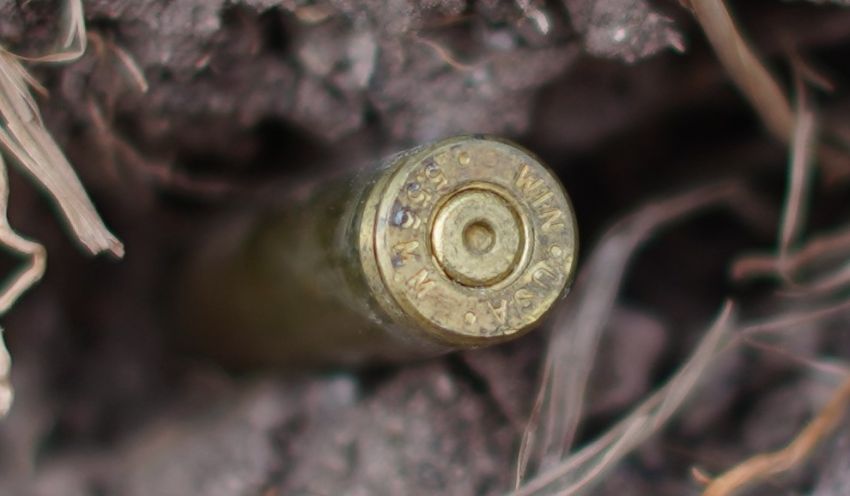
Walking around Xicotlán, the bullets I find have different inscriptions on the headstamps. Some say “WIN USA” — meaning they were made by Winchester Repeating Arms Company, headquartered in New Haven, US. Others are inscribed “MAXX Tech” a Bosnian company with sales in the US.
There are so many casings, someone else from the observation mission that I was part of collects them in a large coffee cup. It is clear that no institutions have come to investigate or collect evidence.
Organised crime wants control
Los Ardillos have about 2000 members and were formed two decades ago.
Led by Celso Ortega Jiménez, they are one of the larger organised crime groups in Guerrero state, based on the number of municipalities they control, their economic capacity and their political influence.
After the price of opium dropped, they and other groups shifted to theft, extorting farmers, taxi drivers and small and large business owners, as well as controlling public transport.
In Guerrero and elsewhere, organised crime groups usually try to first co-opt communities “by offering support, security and even resources like cars, or a band, for a festival”, said Prisco Rodriguez Morelos, a member of the CIPOG-EZ and resident of the nearby town of Zacapexco.
“Once they are inside [the community], they are difficult to get rid of,” he told me.
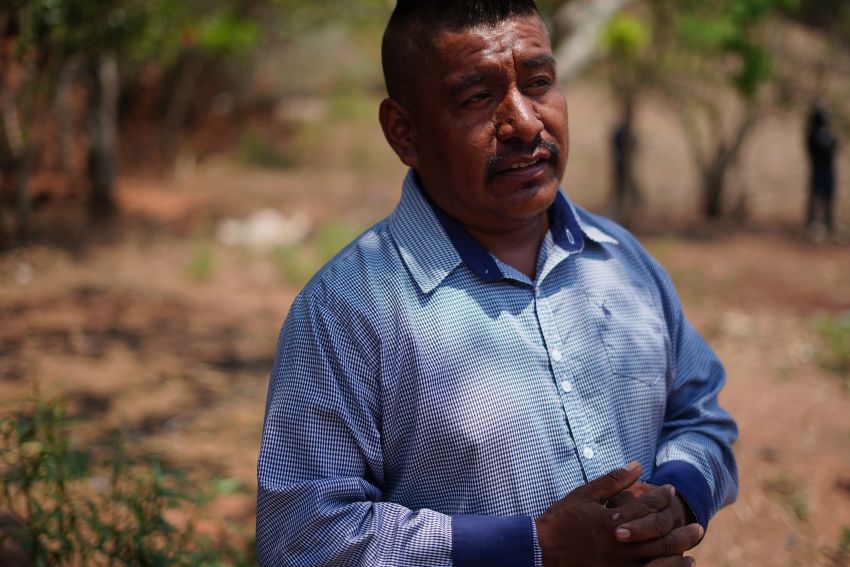
However, these Lower Mountain communities rejected Los Ardillos and denounced them, so they are being attacked. Local governments have never detained any of the Los Ardillos members nor investigated them, Rodriguez said, “We went to the public prosecutor, to follow up on our demands, but they said the files had been lost.”
So far, in this very small region of Guerrero, 81 people have been killed and 25 disappeared. In 2020, 10 musicians and their crew from Alcozacán were murdered by Los Ardillos, and in 2024, Los Ardillos killed and decapitated the mayor of the closest city, Chilpancingo, six days after he took office.
“[Los Ardillos] want to control everything. Once they do that, nobody can speak up, nobody can talk about who they have killed and disappeared,” said Rodriguez, adding that there are profitable resources in the area, like gold and water. “They want to displace us or kill us, because we are getting in the way.”
There are also highly sought-after minerals like lithium and silver in this region, Mendoza told me later that night. “And we don’t want these minerals to be exploited, because when they do that, they destroy everything.”
Just 45 kilometres from the attacked towns is Equinox Gold’s Los Filos mine — one of the largest gold mines in the world. It was closed in December last year due to environmental damage and not respecting community agreements. Nevertheless, Equinox merged this month with Orla Mining — another Canadian gold miner.
Orla owns Camino Rojo, which in April was found to have used organised crime groups to threaten workers so they would leave their union.
Indigenous dispossession across Mexico
A Nahua community in Aquila, Michoacán state, was attacked and five people killed on May 28. This follows drone and explosives attacks by the Jalisco New Generation Cartel (CJNG) against another Nahua community in nearby Santa María Ostula. Schools were evacuated and residents fled.
“There is an undeclared war against the original peoples of Mexico, to displace them from their territories,” the community said in a statement.
In Oaxaca state in February, indigenous and small farmer communities denounced a new “cartel” of big business and real estate moguls, using weapons and falsified deeds to seize beaches and ecological reserves of high tourist value.
In mid May, also in Guerrero state, a Me’phaa indigenous community, San Pedro Huitzapula, was under fire for 22 days by hundreds of armed people linked to Los Ardillos. Two people were killed and many houses destroyed, with people fleeing to the mountains.
The list goes on. In Sevina, Michoacán, on May 17, the CJNG killed two Kuarichas — elected indigenous community police. Tzeltal people in Chiapas are also fleeing murder, violent evictions and forced recruitment.
‘Made in the USA’
The organised crime groups committing these atrocities don’t just use US bullets and weapons made by US companies. Organised crime has grown exponentially since the US began its so-called War on Drugs in Mexico and its Merida Initiative — growing by 900% from 2006–12.
There are now 130,000 forcibly disappeared people in Mexico, and 432,000 people were killed between 2006 and 2023. A national survey estimated that in 2024 alone, 320,000 families or people had changed homes because of organised crime.
The Winchester bullet casings I found come from a company that has a contract with the Pentagon whereby the US army gets a few cents for each bullet sold to the public. Bloomberg found this has led to about US$30 billion going to the US Department of War each year.
Other investigations have found that the US army and private contractors running Winchester’s Lake City Army Ammunition Plant have allowed ammunition from the plant to fall into the hands of Mexican cartels.
According to the Mexican government’s civil action against US gun manufacturers, which was filed in 2021 and rejected by the US Supreme Court last year, 70–90% of guns recovered in crime scenes in Mexico come from the US, and there is a direct correlation between the number of guns manufactured in the US and the number of homicides in Mexico.
The Mexican government argued in that case that “the flow of guns into Mexico and the resulting illicit use, is a foreseeable result of deliberate and knowing decisions to design, market, distribute and sell guns in ways they know with virtual certainty will supply criminals in Mexico”. The US Supreme Court said US manufacturers aren’t legally liable.
More than half a million guns are trafficked from the US into Mexico annually.
Mexican government collusion
Either through inaction or through direct ties, the local, state and national governments also have, to different extents, some responsibility for the events in the Lower Mountain region of Guerrero.
Rodriguez lists Los Ardillos members with relatives in the local government. “That’s why they know about any action by the government [the police or military] — they’re told in advance. And so of course, they’ll never be caught.”
The current mayor of the municipality of Chilapa, where the recent events took place, Mercedes Carballo Chino, is a sister-in-law of Ortega Jiménez, the head of Los Ardillos. The organised crime group also funds local candidates in order to control local politics — a situation tolerated by the Morena state government.
The National Indigenous Council (CNI) further alleges that the Guerrero state governor Evelyn Salgado Pineda provides protection for Los Ardillos, as Los Ardillos members have “positioned themselves near military installations without any intervention to stop them”.
“The national and state prosecutor’s offices know where [Los Ardillos] live, where they operate. But they don’t do anything because they are colluding. Just to campaign for votes, they have to have the narcos onside,” said a community police officer.
Organised self-defence
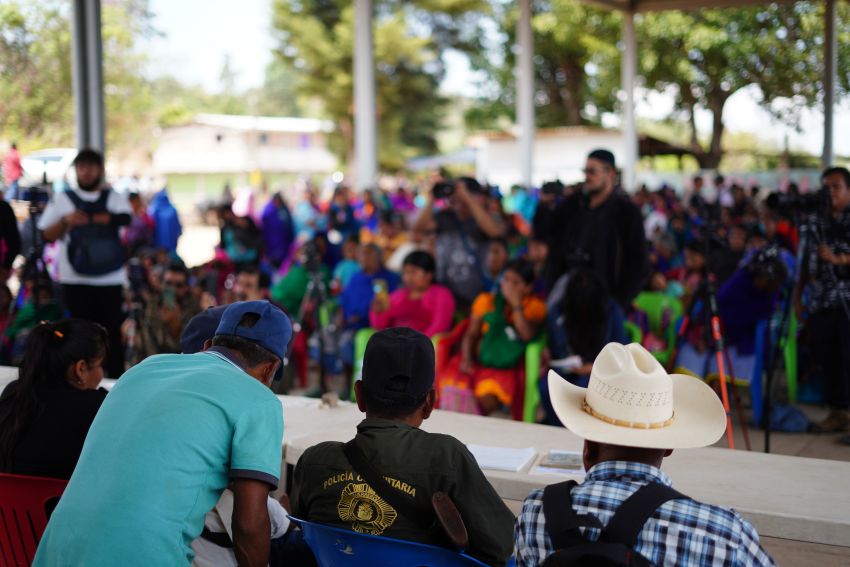
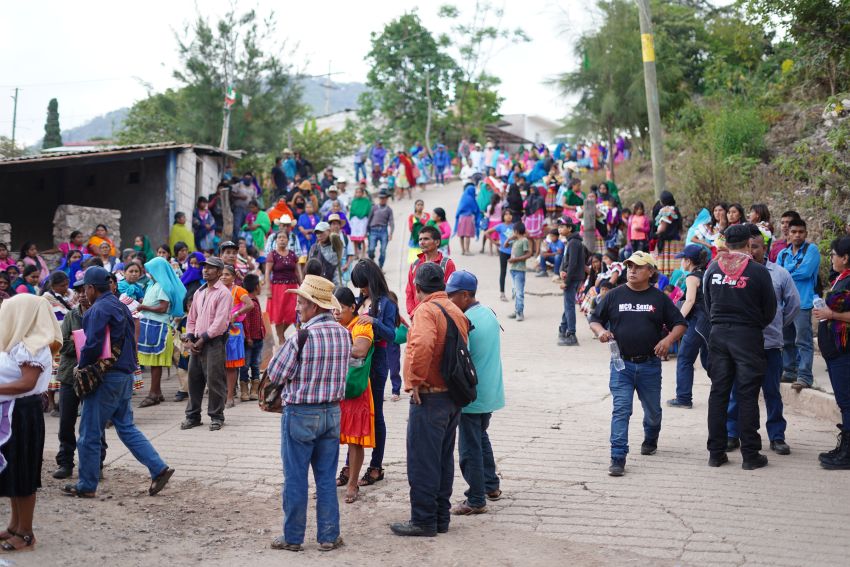
The communities in the mountain region of Guerrero began to organise their own community police as their only viable self defence in 2014, David Sanchez Luna, a community police officer, explained to press at a community assembly on May 23.
“That was when the organised crime groups started to extort us, try to subject us to their decisions. The head of Los Ardillos even offered us trucks and weapons in exchange for being able to travel through here. We created the community police because the three levels of government [local, state and national] weren’t doing anything, while our loved ones were in danger,” he said.
“We armed ourselves in order to defend our land, our heritage, our culture,” Mendoza told me. He said that the police are chosen by a community assembly and serve for just one year. “We also run workshops, teach the children and the youth about their rights,” he said.
However, the attacks by organised crime, beyond the killing of innocent people and mass displacement, also destroy or weaken such community organisation and collective self-defence, leaving the Nahua people of Guerrero state even more vulnerable.
For now, “The first thing we need is justice,” Mendoza said. It’s something I heard from multiple people I talked to. They want the criminals to be detained.
“We demand that the government stop pretending, and that if it does eventually do something, it shouldn’t override the will of the people. We’re being very clear: we don’t want a military base in our community because we are not criminals. The criminals are Los Ardillos ... We demand respect for our self-determination as indigenous peoples,” the communities of the region noted in a joint statement.