
Following a spate of hate crimes against LGBTIQ people in New South Wales and nationally NSW Premier Chris Minns has introduced new laws to recognise anti-LGBTIQ hate crimes and toughen sentencing for “gay bashings” and related crimes.
These laws are a step towards more legal protections for LGBTIQ people as NSW currently has no criminal offences which specifically cover acts of violence motivated by anti-LGBTIQ hate. Courts can decide to impose tougher sentencing if they deem that the crimes were motivated by hatred or prejudice as an “aggravating factor”.
However, not everyone agrees this is enough to end anti-LGBTIQ violence and some have proposed alternatives.
The Crimes Legislation Amendment (Hate Crimes) Bill 2026, introduced on March 17, which has only passed the Legislative Assembly, updates the Crimes Act 1900 by amending sections regarding “publicly threatening or inciting violence on grounds of race, religion, sexual orientation, gender identity or intersex or HIV/AIDS status”.
It raises the penalty from three to five years in prison and doubles the fine to $22,000. Another aggravated form of this offence will be added, for which perpetrators will face up to seven year’s prison and a $44,000 fine.
The proposed law aims to address the uptick in filmed violence against gay men. According to police data, this is often done by “radicalised” teenagers with links to the far right or the Islamic State, who lure their victims under false pretenses, only to bash them.
The bill inserts a new offence of procuring victims by making “false or misleading representation to the victim with the intent to commit a serious assault offence or a robbery offence against the victim”. This would carry a maximum penalty of 5 years imprisonment.
The bill also seeks to amend the 2024 “Post and Boast” laws, section 154K of the Crimes Act 1900, which made it an offence to braggingly disseminate footage of criminal behaviour online, adding an extra two-year prison time penalty. Currently, it only applies to motor vehicle or break-and-enter offences, but the amendment would extend this to serious assault and robbery. Further amendments will make it easier for the police or courts to define instances of hate as an aggravating factor in sentencing.
This update to protections is needed, especially when the far right is trying to influence young men against LGBTIQ people, women’s rights, immigration and First Nations’ rights.
NSW Police recorded 197 incidents of LGBTIQ hate-related violence, from 2023–25, with 48% of offences carried out by men under the age of 18.
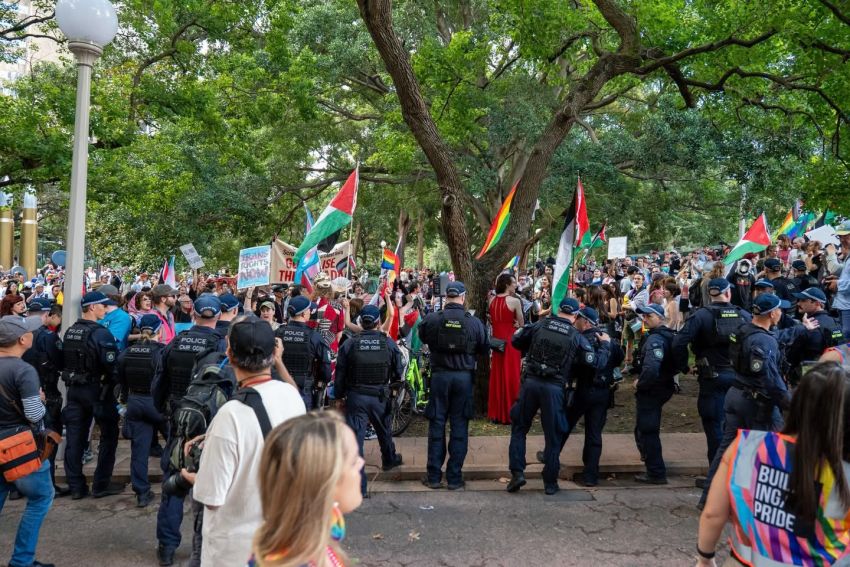
LGBTIQ rights activist and Pride in Protest member Luc Velez said people should be “a bit sceptical of Minns’ law-and-order approach to rising homophobia, transphobia and queerphobia”, due to the history of criminal law being used to inflict harm or ignoring the concerns of queer people.
Velez said the proposal relies on LGBTIQ people reporting incidents of violence to the police, which many would be reluctant to do because of NSW Police’s historical and current homophobia and transphobia.
Violence against LGBTIQ people is severely under-reported, inadequately investigated and insufficiently prosecuted.
Velez instead called for an approach that “centres the reforms queer people are actually campaigning for” such as “anti-discrimination reform and expanding queer education”. He said these would go a lot further to address underlying reactionary ideologies behind homophobic violence.
“These laws are only a first step,” longtime LGBTIQ campaigner Rachel Evans told Green Left. She said that a more serious approach to eliminating bigotry and hatred requires more than a law-and-order focus.
“The rise of the far right means we need, more than ever, to reinstate Safer Schools — the pro-LGBTIQ and anti-bullying program in all educational settings — and ensure pro-rainbow community programs, such as local drag story times from councils continue. We also need the funds to properly resource victims of hate crimes, and for perpetrators so they have a chance for rehabilitation.
“We also need police to end their targeting of LGBTIQ people; this means an end to strip searches at music events and compensation for the victims of these police assaults.”
Equality Australia said the reforms “fail to address the widespread verbal abuse, threats, online harassment and doxxing that many LGBTIQ+ people experience, sometimes on a daily basis”. They added that hate speech laws should “protect all communities targeted because of who they are — not just some” and said early intervention is needed to address hate “before it escalates into physical violence”.