
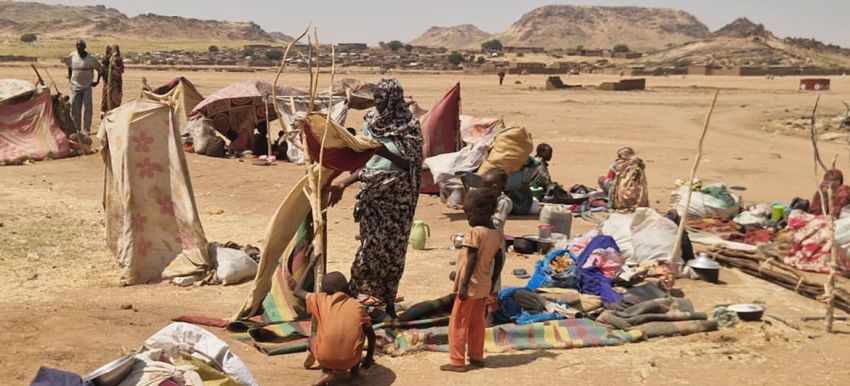
In Australia, kids wake up with real dreams. Their only worry is about school, weekend plans, sports, or what outfit they’re wearing that day. Their innocence is protected. Their childhood is allowed to exist. However, I’m reminded of how different life is for the innocent children in my home country, Sudan.
Sometimes it feels like my only guilt of being Sudanese is coming from a land so rich in resources that powerful people feel entitled to it.
Sudan’s war started decades ago. It didn’t start from hatred between people; it started from greed. Our home country is rich in gold, oil, iron, uranium and many resources. But unfortunately, these resources are the reason the country is bleeding.
Many think of this as a war, but it’s a genocide. Homes are raided, families are killed in front of each other, and children have been starving in El Fasher, which has been under complete siege for more than 500 days. The United Nations documented that at least 3384 civilians have been killed in the past six months alone.
The scale of violence is so large that it can be seen in satellite images. More than one kilometre of bloodstained streets have been detected from satellite views, showing how widespread the killings are.
Everyone sees the wealth, the luxury and the glittering skylines of some countries, but few notice the cost behind it.
Sudan’s war is being fuelled by outside regimes that supply the militia, known as the Janjaweed or Rapid Support Forces, with weapons and money in exchange for our natural resources. These nations profit from our suffering while millions of Sudanese people starve, flee and fight to survive. They maintain their luxurious life based on the same resources our people are being killed for, becoming richer and more admired, while Sudan is left bleeding in silence.
We don’t need reports to know this; our eyes and losses tell the truth. The world sees wealth, but not the people dying behind the scenes to create it.
Despite all the suffering, one of the most disturbing parts of this war is the way Janjaweed fighters record this genocide. They film themselves shooting innocent civilians in the street as if they’re playing a video game. They brag, laugh and celebrate the lives that are being taken. Some even talk about having a “kill count” like it’s something to be proud of.
These videos spread across social media, not because the world cared enough for them, but because these soldiers want to show off what they’ve done, like it’s some accomplishment. They turned the cruelty into entertainment, and it shows how deeply heartless some humans can be.
After 500 days of pure torture, El Fasher has become an epicentre of child suffering, with malnutrition, diseases and violence taking young lives every day. Imagine being killed just because you were seen carrying food home for your starving family; that’s the reality children have to face in El Fasher every single day.
Many eat the dried skin of dead animals just to survive. Their music is the echoes of gunshots, their hiding places become graves they dig and bury themselves under, just so the Janjaweed fighters won’t find them and kill them, for solely existing. An entire generation is being raised in fear instead of hope.
My grandmother (Maryam A Eldeen), more than 80 years old, was forced to flee El Fasher to escape the horrific violence of the Janjaweed after her house was bombarded and destroyed. She was pulled from the wreckage and left with no choice but to leave the house that she had lived in for more than 64 years.
My entire family has been torn apart. We’ve lost all contact with them, including my aunts, uncles, cousins, etc. They’ve scattered with no way to know if they’re safe or, let alone, alive. All I can do is keep them in my prayers, hope they survived, and hold onto the belief that one day we’ll be reunited.
Sudan deserves more than pity. It deserves justice. It deserves peace. Bring back the old Sudan. The Sudan, where neighbours shared meals, children played in the streets without fear and where families gathered with laughter instead of gunfire. We remember Sudan, its warmth, unity and beauty.
When I see those Australian kids dreaming, laughing and building their futures, I don’t feel envy, I feel grief for what children back home had stolen from them.
Maybe one day, with enough voices and enough action, all the victims — whether they’re young, old, male or female — will wake up to a normal life again, without running from bullets, meals without desperation and nights where silence means safety, not danger.
Your strength and solidarity give the Sudanese people hope during a time of darkness. With your continuous support, we can stand against the cruelty of the Janjaweed and work to restore true Sudanese values and peace.
[Maab Suliman is a high school student living on Kaurna Yerta Country in Adelaide.]