
A Refugee Action Collective (RAC) forum on November 17 heard that refugees sent to Nauru by the Australian government are suffering physical and mental health problems.
Katie Shafar, a nurse who worked on Nauru in 2015, said she saw “crimes against humanity” during her time there. She said the living conditions were designed to bring about “decline and death”.
Shafar described a family comprising a man, woman and a nine-year-old living in a hut about two by three metres in size. Although the temperature was very hot, sometimes reaching 45°C, they often ran out of water. When the woman had to go to hospital, she was not allowed a translator.
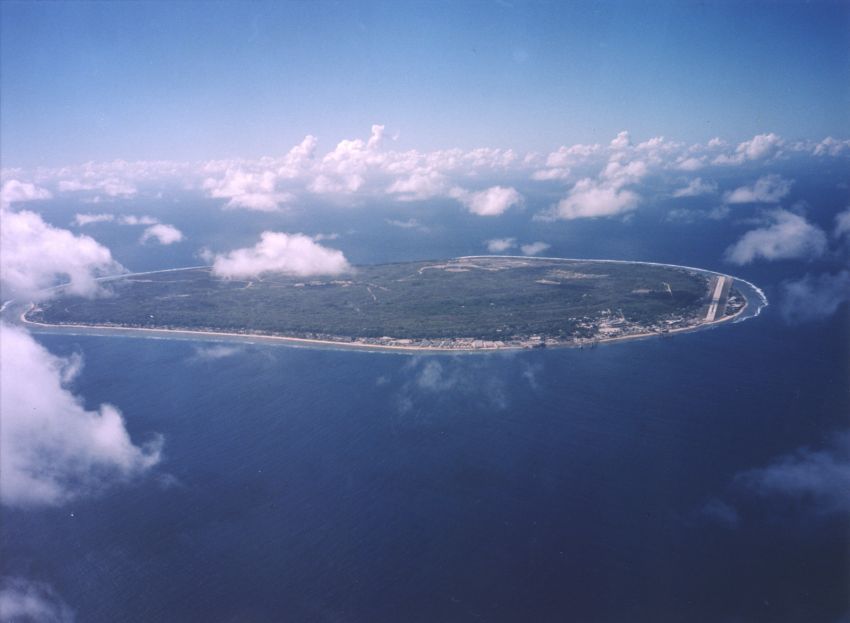
Shafar said that conditions were also bad for Nauruan people. The phosphate has been mined out, leaving a wasteland and massive unemployment. While a few were rich, most were living in “abject poverty”. Food was very expensive, with a bag of apples costing $20.
There was a lot of family violence and rape, Shafir said, with refugees fearful of being attacked.
Shafar said that after seeing how refugees were being treated in Nauru, she was “ashamed to be Australian”.
Heidi Abdel-Raouf, from the Asylum Seeker Resource Centre, said that not much has changed on Nauru over the past 10 years. There was a temporary interruption in 2023, when refugees were taken off Nauru, but a few months later, refugees who had come to Christmas Island by boat were sent to Nauru. The exact number is unknown because the Department of Home Affairs has stopped providing the data. About 90 men are living in the Nauruan community and a small number are being held in closed detention.
“The longer they are there, the more unwell they become”, said Abdel-Raouf. A few were sent to Australia for medical treatment, but then sent back to Nauru.
Some asylum seekers have been officially recognised as refugees, but there are no options for resettlement, as they are not allowed to come to Australia. Abdel-Raouf said being forced to remain on the island amounts to indefinite detention.
They receive a small allowance but not enough to buy fresh food. There is no clean water.
The International Organisation for Migration is pressing the refugees to return to the countries from which they fled. Some have, and there is no information about their fate.
The refugees also suffer from health problems, including heart complaints, dental problems, anxiety, depression and post-traumatic stress disorder.
They not only face violence and threats from locals — the police do not protect them.
Kieran Magee, from RAC, said their treatment amounts to “deliberate torture” by the Australian government.
Magee said a new group was being sent to Nauru. These people have served time in prison for being convicted of a crime but were put into immigration detention.
When the High Court ruled that indefinite detention was illegal, the government began sending them to Nauru.
Politicians, helped by the mainstream media, are running a campaign to try and make out that these people are a danger to society. Magee said 70,000 people are released from prison every year after serving their sentences.
The 220 people currently in immigration detention are a tiny number by comparison. As with all former prisoners, the aim should be rehabilitation. Labor wants to “look tough”, Magee said, copying the Coalition’s policies.
The public funds being paid by Australia to Nauru in return for it accepting refugees have not benefited the Nauruan people, he said. A few have been enriched; guards are now paid more than teachers and some professionals have been diverted to the detention system.
Magee said these policies can be changed, pointing to some past victories by the refugee movement, including the campaign to remove children from Nauru and ending detention on Nauru altogether for a period of time. He urged everyone to talk to friends, family members and workmates and to show refugees had support by attending rallies when they’re called.