
The illness of Venezuelan President Hugo Chavez has created uncertainty over the future direction of his government, and specifically its commitment to revolutionary change and socialism.
Throughout the 14 years of his presidency, the key to Chavez’s political success was the constant deepening of the process of change, which invigorated the rank-and-file of his movement.
-
-
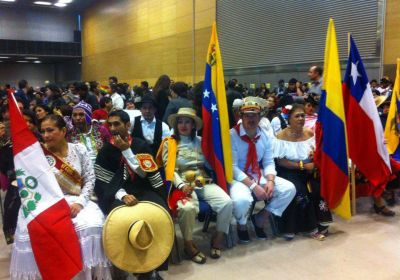 About 7000 people joined the “International Meeting with Social Movements” festival in Barcelona on December 9, which features Bolivia's left-wing President President Evo Morales, the Andean nation;'s first ever indigenous president. The event was largely attended by the Bolivian diaspora, many of whom travelled hours from Madrid and Valencia. However, flags of Catalonia, Palestine and Argentina reflected a broad internationalist gathering.
 -
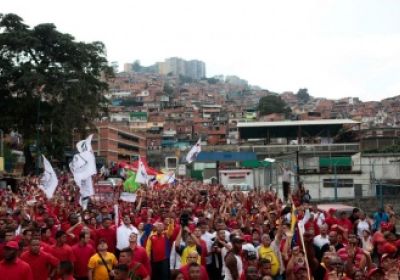
Venezuela's Vice-President Nicolas Maduro and government ministers marched with up to one million people on January 23 to defend the Bolivarian revolution, which has signficantly reduced poverty and promoted new forms of participatory democracy, on the country's Democracy Day. The right-wing opposition march turned out to be a small rally. Further, sectors of the far right have called on the armed forces to resist what they referred to as the “invasion” of “Castro-communism” in Venezuela.
-
In an effort to assert control over national resources Bolivia has nationalized two Spanish electricity distribution companies. The measure, on the eve of a new year, comes as an example of initiatives to secure the interests of people. Reuters reported on December 29 that the nationalisation that day of two electricity distribution companies owned by Spanish utility Iberdrola were “the latest move by leftist President Evo Morales to assert control over the country's resources”.
-
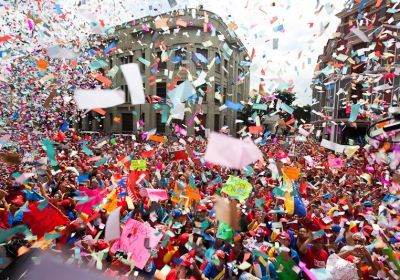 Venezuela's US-funded opposition and the international corporate media has used President Hugo Chavez's serious health issues to run a campaign against the Venezuelan government. In particular, the opposition has claimed that the failure of Chavez, who is recovering from surgery in Cuba, to be sworn-in by the National Assembly by the originally scheduled date of January 10 means he is no longer president. Chavez was re-elected president for a six year term in October with more than 55% of the vote.
 -
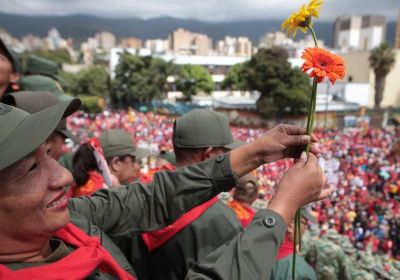 Tens of thousands of supporters gathered in Caracas today for a huge rally in support of Venezuela's ill President Hugo Chavez. The gathering was in response to the controversy surrounding his absence on January 10, the date set for his inauguration day after he was re-elected for a new six-year term in October.
 -
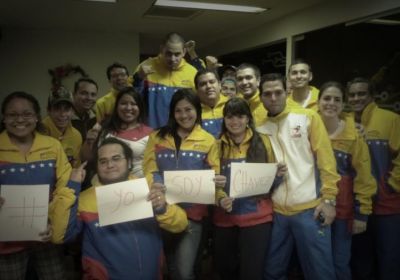 The Venezuelan government has responded to opposition and private media accusations that it is being “mysterious” regarding information on Chavez’s health situation, and has called such statements as well as rumours being spread on social networks “psychological warfare”.
 -
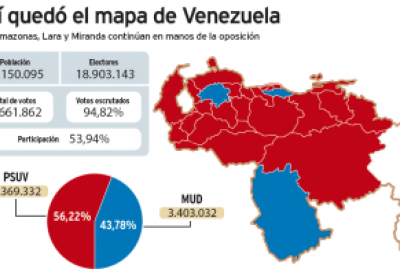 Venezuelans went to the polls for the second time this year on December 16, and delivered another overwhelming victory to President Hugo Chavez’s United Socialist Party of Venezuela (PSUV). Chavez is leading a process of social change, known as the Bolivarian revolution, that has halved poverty in the oil-rich nation and promoted participatory democracy. After presidential elections returned Chavez with more than 55% of the vote, the PSUV increased its majority of state governorships and legislatures.
 -
 Venezuela Analysis is the main English-language website, read around the world, providing serious news and analysis on the Bolivarian revolution under way int he Latin American nation. Green Left strongly supports VA's work, regularly reprints its articles and is proud of its collaboration with the site. Below, is an appeal for financial support from VA to ensure it continues to get out the real story of the inspiring struggle of Venezuela's people for "socialism of the 21st century" * * *
 -
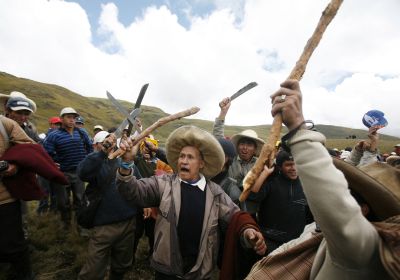 One year has passed since the community of Cajamarc, in Peru's northern highlands, rose up against the “Conga” copper and gold mine, a US$5 billion mega-project proposed by the World Bank-backed Newmont-Buenaventura consortium. The unified cry of the protesters is still: “Conga no way!” The region bordering the mine site is home to an agricultural population that relies on the natural highland water system. Destroying this precious and fragile asset would end the viability of their existence.
 -
President Hugo Chavez announced on public television on the night of December 8 that he would return to Cuba to receive surgery for new malignant cells, and that vice-president Nicolas Maduro will be in charge during his absence. Chavez said Cuban doctors informed him that the area where he has previously been affected will need to be operated on again, as new malignant cells have appeared. He also said that “there are always risks in processes like this” and that “if anything happens to me that hinders me [from performing as president]”, Maduro was his preference to replace him.
-
Venezuela has abolished entrance visas for Palestinian visitors among a set of new agreements with the Middle Eastern country. Venezuela became the first country to abolish visas for Palestinians carrying civil or diplomatic passports as part of talks in early December in Caracas between representatives of the two countries. Venezuela also committed itself to build a new hospital in Palestinian territory and made new agreements in the areas of health, education and tourism.