
President Hugo Chavez announced on public television on the night of December 8 that he would return to Cuba to receive surgery for new malignant cells, and that vice-president Nicolas Maduro will be in charge during his absence.
Chavez said Cuban doctors informed him that the area where he has previously been affected will need to be operated on again, as new malignant cells have appeared.
He also said that “there are always risks in processes like this” and that “if anything happens to me that hinders me [from performing as president]”, Maduro was his preference to replace him.
-
-
Venezuela has abolished entrance visas for Palestinian visitors among a set of new agreements with the Middle Eastern country. Venezuela became the first country to abolish visas for Palestinians carrying civil or diplomatic passports as part of talks in early December in Caracas between representatives of the two countries. Venezuela also committed itself to build a new hospital in Palestinian territory and made new agreements in the areas of health, education and tourism.
-
 Despite securing a comfortable victory in October's presidential elections, the United Socialist Party of Venezuela (PSUV) is set for a harder struggle in crucial regional elections on December 16. However, even opposition polls show PSUV is likely to keepcontrol of most governorships. The issue is whether the opposition Democratic Unity Roundtable (MUD) can win or hold key seats, or the PSUV can build on the momentum from the presidential vote and important social gains.
 -
Christine Assange discusses WikiLeaks, Julian Assange, her time in Ecuador, the nature of the United States, the Australian government's lack of support for the rights of her son, the mainstream media, the need for alternatives and more.
-
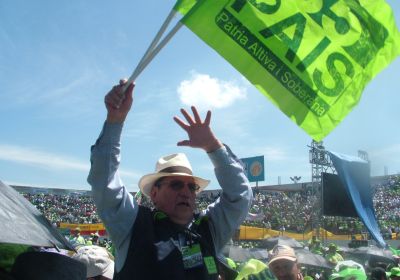 About 25,000 people squished themselves into the sports stadium of Chillogallo, the most populated area of Quito, to launch the candidates of President Rafael Correa’s Alianza PAIS (Country Alliance, or AP) on November 10. Elections are scheduled for next February for the presidency and National Assembly.
 -
Messages of support for Julian Assange from some of the 300 people at Green Left Weekly's 'defend WikiLeaks' dinner in November 10. Special guest was passionate advocate Christine Assange, the mother of the WikiLeaks founder, who gives a warm message to her son.
-
About 300 students from the Paraguayan National University and the private Catholic University marched to the national police headquarters in Asuncion on October 25 to protest the new Law of Higher Education (LES). The law passed through the lower house of the Paraguayan Congress three weeks earlier, and is currently before the Upper House. During the protest, Romilio Gonzalez and Johana Orihuela, members of the Popular University Movement, spoke to Green Left Weekly. “This is one of a number of actions we are carrying out,” Orihuela said.
-
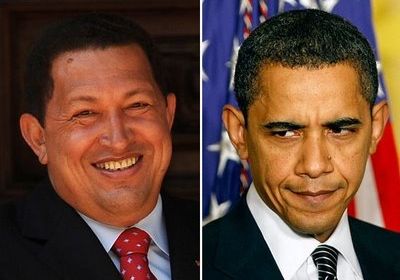 If the mainstream Western media is to be believed, the world witnessed a shining example of true democracy in action in the United States on November 6. In the Washington Post, Dan Balz described the US presidential race as a “contest of competing visions”. Apparently, democracy is epitomised by a race between two representatives of the 1% fighting to impose “competing” agendas that ― with differences of nuance ― bear more similarities to each other than to public opinion.
 -
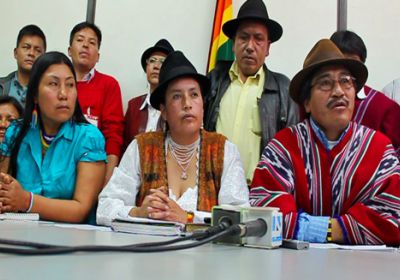
Ecuadorian president Rafael Correa counts on a high level of support at home. But internationally, he has been criticed for policies on development, the environment and indigenous peoples.
-
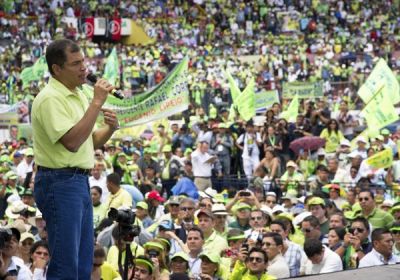
While European governments continue to impose policies aimed at making working people pay for a crisis they did not cause, the Ecuadorian government of Rafael Correa has taken a different course.
-
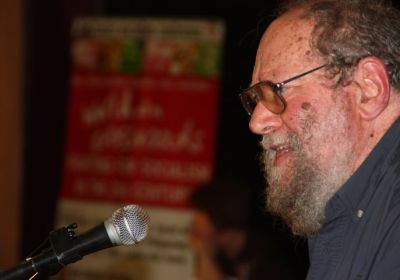 Michael Lebowitz is a professor emeritus of economics at Simon Fraser University in Vancouver and an award-winning author. His most recent book is The Contradictions of “Real” Socialism. He was director of the Program in Transformative Practice and Human Development, Centro Internacional Miranda, in Caracas from 2006-2011.
 -
In a show of force, about 10,000 supporters of the Frente Guasu attended a rally addressed by the party’s leader, ex-president of Paraguay Fernando Lugo, in the regional city of Coronel Ovideo on October 25. Lugo was deposed in June in a parliamentary coup. Lugo's removal was organised by right-wing forces opposed to progressive changes that threatening to challenge the interests of the traditional oligarchy and US imperialism.