As climate change compels us to reduce carbon emissions, urban gardens that provide locally produced food are becoming an increasingly important model. The African Food Project is an urban, organic farm that grows traditional African vegetables for the African community around the outer western suburb of Blacktown.
-
-
Sand mining on Stradbroke Island, offshore from Brisbane, will be phased out by 2027, under a new plan announced by the Queensland state government on June 20. Most of the island will become national park and development of ecotourism will be the main industry. -
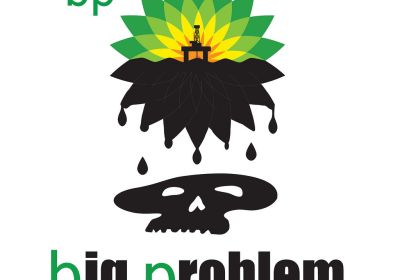
The world’s worst ever oil spill is also the biggest methane leak in human history, US government scientists have said. The US Geological Survey’s “flow team” has estimated between 4.5 billion to 9 billion cubic feet of natural gas have escaped from BP’s Deepwater Horizon rig since it exploded in April, Associated Press said on June 19. John Kessler, an oceanographer at the Texas A&M University, told AP the leak was “the most vigorous methane eruption in modern human history”. Scientists think methane makes up 40% to 70% of what is spilling from the damaged BP rig. -
In July, Socialist Alliance election candidates will be taking a trip to the Northern Territory to personally witness conditions under the federal government's intervention into Aboriginal communities. SA youth candidates — and Resistance members — Jess Moore, Zane Alcorn and Ewan Saunders will join Indigenous activists, students, community groups and campaigners from across the country in Alice Springs for an important gathering of intervention-affected Aboriginal communities.
-
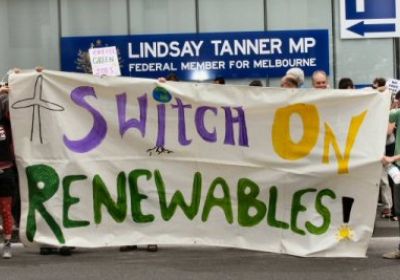
In late June, two important events related to renewable energy took place. On June 24, the Senate passed changes to the government's renewable energy target, removing the bias towards small-scale energy systems that put many wind farm projects on hold. The scheme set a 20% renewable energy target by 2020. -
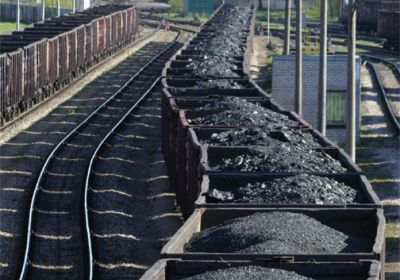
NASA climate scientist James Hansen has called them “factories of death”. British columnist George Monbiot has said “everything now hinges” on stopping them. US climate writer Bill McKibben is prepared to be arrested to have them shut down. But Australian state governments don’t get it — they are still enchanted by coal-fired power stations. Climate campaigners say Australia should urgently replace existing coal-fired power plants with renewable energy, but 12 new “death factories” are slated to be built in Australia over the next few years. -
The Canadian province of Alberta is well known as a climate-destroying behemoth. The tar sands developments in its north are the single largest source of greenhouse gas emissions on the planet. Less well known are the ambitions of its neighbouring province, British Columbia. It shares similar fossil fuel reserves and ambitions as Alberta. Vast coal and natural gas reserves are being opened at breakneck speed. Construction is underway or planned for accompanying road, rail, pipeline and supertanker transport routes. -
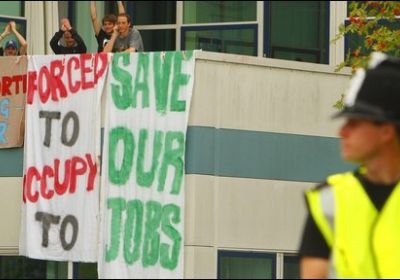
Attempts by Tahmoor mineworkers to negotiate with mining giant Xstrata have collapsed yet again after the company refused to budge during mediated talks in May. For 20 months, the Construction, Forestry, Mining, Energy Union (CFMEU), has been trying to negotiate an agreement. -
Kiama Municipal Council will sign an open letter to the NSW government calling for no new coal-fired power stations. Greenpeace, who initiated the letter campaign, says the NSW government plans to approve two new coal power stations in Lithgow and the Hunter Valley. If built, they would spew over 20 million tonnes of greenhouse pollution into the atmosphere each year. Kiama Deputy Mayor, and Greens candidate for Gilmore, Ben van der Wijngaart moved the resolution, which was carried only after Mayor Sandra McCarthy, an independent, used her casting vote in favour.
-
Muckaty Voices is a 10-minute video documentary that tells the story of the Muckaty traditional owners opposed to a radioactive waste dump on their country. Traditional Owner Dianne Stokes said: “We made the video throughout the Warlmanpa land. It is all of the Milwayi story. Along with that, we have some songs and dances to represent the country. “Martin Ferguson has avoided us and ignored our letters, but he knows very well how we feel. He has been arrogant and secretive and he thinks he has gotten away with his plan, but in fact he has a big fight on his hands.”
-
Multinational oil companies in Nigeria spill more oil every year than has been spilled by BP in the Gulf of Mexico. Unlike the gulf disaster, most people are unaware of this ecological crime. There have been major spills in Nigeria since BP’s Deepwater Horizon rig exploded on April 20, but they have received hardly any attention from the international media. A May 12 explosion at a Shell installation turned 39 hectares of the Niger Delta into an oil slick, BBC News said on June 15. Two weeks earlier, an Exxon Mobil oil pipeline ruptured. It spewed a million litres a day for a week.
-
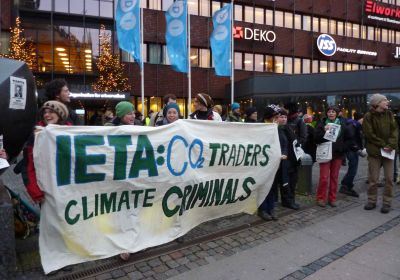
On June 11 at the close of climate talks in Bonn, Germany, UN climate chief Yvo de Boer tried to put a positive spin on the outcome. “This all in all is a big step forward making much more possible in Cancun”, he said, referring to the next big climate conference that takes place in Mexico in November. However, big step or not, the conference outcomes kept the world sprinting headlong towards a climate catastrophe.