
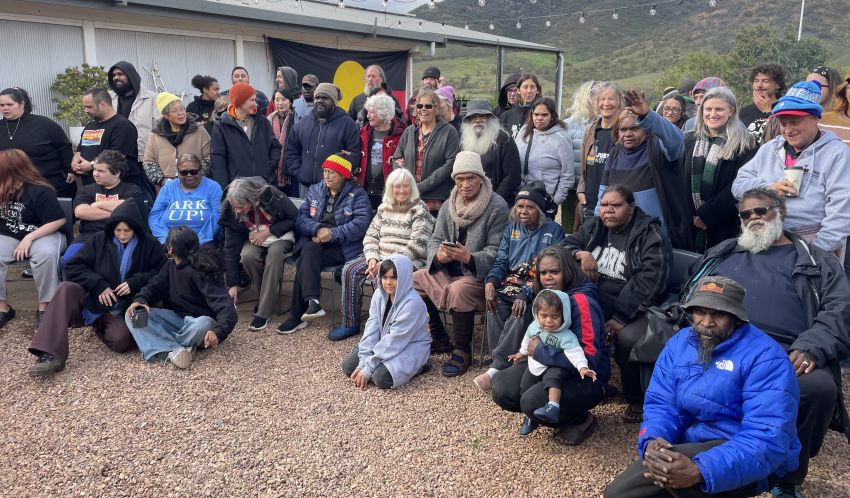
Amid South Australia’s dramatic Flinders Ranges, more than 60 members and supporters of the Australian Nuclear Free Alliance (ANFA) gathered for this year’s national gathering over August 14–16.
First Nations environmental activists have always made up a strong component of the ANFA, which was originally formed in 1997 as the Alliance Against Uranium.
At this year’s ANFA gathering, people from First Nations communities in multiple states and the Northern Territory explained how mining companies have pressed ahead with minerals extraction and processing, despite protests from native title holders.
A particular target of the activists’ wrath has been BHP’s Olympic Dam copper, gold and uranium operation in far northern SA.
We heard how BHP draws large quantities of water from the Great Artesian Basin, causing the flow from iconic mound springs to diminish — or cease. The springs are of vital cultural significance to the local Arabana people.
The AUKUS pact was a further topic of discussion, particularly its nuclearisation of Australia’s submarine fleet.
Yankunyjatjara woman Karina Lester, a commissioner of the AUKUS Public Inquiry, reported on its progress and the dangers posed by the AUKUS agreement.
Closely associated with AUKUS is the unresolved question of how to dispose of the nuclear waste. Speakers explained how remote First Nations lands in SA, Western Australia and the NT are being eyed by AUKUS supporters as storage sites for the highly radioactive waste from the submarine reactors.
Nuclear explosions and the resultant radioactive fallout were painful historical memories for more than a few attendees at the ANFA gathering.
Two representatives from Japanese anti-nuclear organisations spoke about the continuing impacts of the nuclear bombing of Hiroshima and Nagasaki, as well as of the 2011 Fukushima disaster.
Other speakers included First Nations people from far western SA, who recounted family memories of the British nuclear bombs detonated in the region in the early 1950s.
Anti-nuclear activists Aunty Sue Coleman-Haseldine, from Ceduna, and Roslyn Peters, from the Yalata First Nations community, spoke with passion of how family members were rounded up and forcibly trucked from their homelands. In some cases, people living near the test sites were not contacted, and they suffered lingering damage from radiation poisoning.
Attendees elected a committee to lead ANFA’s activities for the coming year. The gathering ended with a collective statement that included support for “any communities being pressured to take nuclear waste and to call out any secretive proposals such as those disguised as salt mining”.