
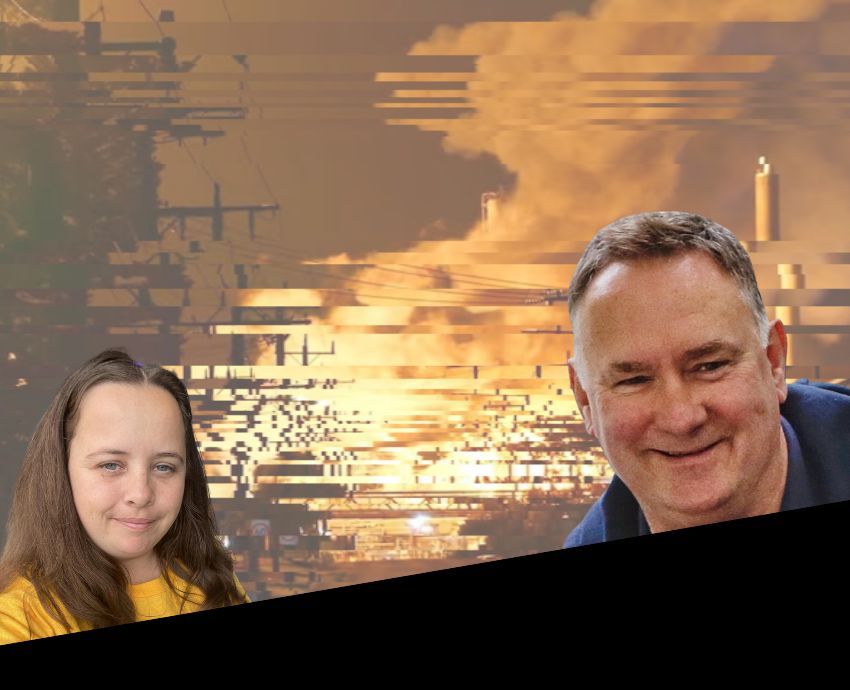
United Firefighters Union Victoria (UFU) secretary Peter Marshall said the fire at the Viva Energy Australia refinery, which started on April 15 after 11pm, was not unexpected and “could have gone horribly wrong”.
The Viva Refinery, in the northern suburbs, is one of only two in Australia. It produces more than 50% of Victoria’s fuel and about 10% of the country’s supply. Even without the illegal war blocking fuel supplies coming through the Strait of Hormuz, the fire has caused widespread alarm for many reasons.
Marshall said the problems include “a 1950s facility … working at full capacity against the backdrop of the fuel crisis”.
Its cause has been attributed to a gas leak, which ignited and burned for 13 hours before being extinguished.
Reports about whether the fire will have an impact on fuel supply and prices, amid ongoing supply and cost pressures, have been contradictory.
Viva Energy manufactures petrol, diesel, liquefied petroleum gas, aviation fuel, marine fuel oil, low aromatic fuel and plastic feedstock including for the Australian Defence Force.
Sarah Hathway, who is standing in the Victorian elections for Socialist Alliance in Lara, said she was not surprised the fire was due to equipment failures.
“Viva Energy does not have a great reputation for safety or maintenance,” Hathway told Green Left. She said more than 300 workers walked off the job in 2016 due to safety concerns. Viva Energy then asked the Supreme Court to issue an injunction ordering the union officials to close down the picket line, which was continued by community members for 10 days.
“Locals were angry as Viva Energy was trying to sack the onsite firefighting staff, putting workers and the surrounding suburbs of Norlane and Corio at risk,” Hathway said.
“The community is incredibly lucky that noone has been seriously injured by the fire. If nothing else, it is a reminder about the ongoing risk this ageing facility poses to the community.
“The fuel shortage and this fire are reminders that Australia needs to step up the transition away from fossil fuels. This must include job guarantees for workers employed in the petroleum and fossil fuel industries that they will have sustainable employment in green jobs.”
Hathway criticised the lack of serious action by state and federal governments towards decarbonisation. “If they had acted, we would not be so reliant on fuel from overseas and have to rely on ageing and dangerous infrastructure.”
The federal Labor government approved Viva Energy’s proposal for a new gas import terminal in Corio Bay on April 9, despite years of community opposition because of environmental concerns for the bay and safety concerns, given that LNG tankers would be making their way to the import terminal in close proximity to residents.
The new terminal requires the dredging of close to half a million cubic metres of Corio Bay, close to internationally significant Ramsar wetlands.
Hathway said this and a second proposed gas import terminal in Port Phillip Bay pose a “significant threat to climate, health, household budgets”. She said Socialist Alliance has long been campaigning for an “equitable renewable energy transition”.