
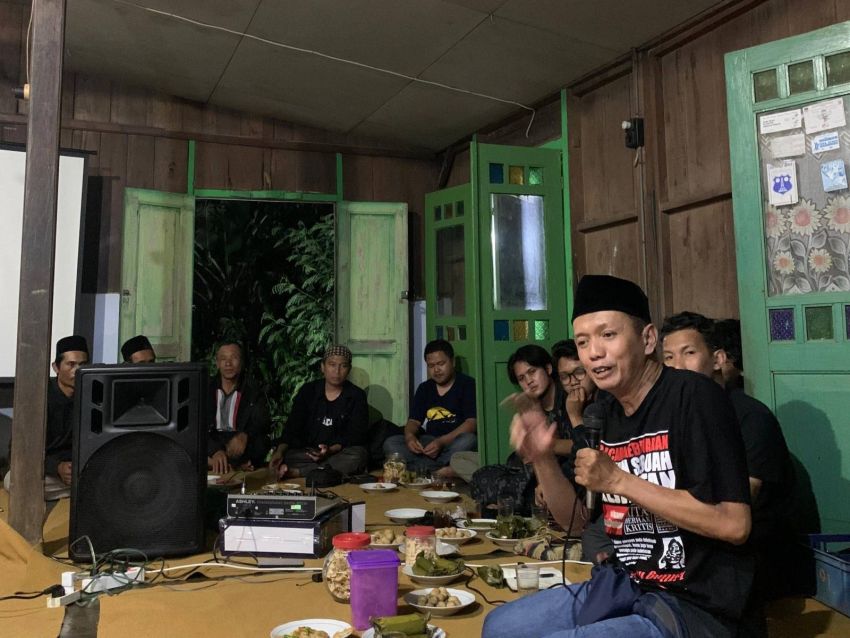
In a follow-up interview with Indonesia’s youth activists, Green Left spoke to Ramzy and Romadon, from Salatiga in Central Java, about what sparked them to become activists and the political developments occurring at a local and regional level. Both have been active in the student media group Dinamika (Dynamics) and in the Indonesian youth struggle front, Student Solidarity for Democracy and Aksi Kamisan (Thursday actions in solidarity with victims of human rights abuses).
As in other cities, Salatiga activists face increased repression, surveillance and other forms of intimidation, including doxing by military and police after the mass mobilisations of late August and early September.
Following the August 29 protests, the military put on a show of force by mobilising troops in front of the three university campuses in Salatiga. Students at the state Islamic university face ongoing intimidation from campus authorities for organising Aksi Kamisan actions, with Dinamika being singled out for reprimand by university officials.
Police intelligence officers have accused Dinamika of funding the Kamisan activities, and individual activists, including Ramzy, face daily harassment from police intelligence officers through phone calls and visits to their homes and offices of their organisations.
Students from the local Christian and state Islamic universities staged a mass representation of students to local parliament on September 1, after their street demonstrations were banned and the military sealed off public access to the local parliament building and town square. Facing off local members of parliament and the heads of police and military commands, students demanded the local parliamentarians sign a statement to the national parliament affirming the democratic rights of citizens to demonstrate and to be protected by security forces and not attacked by them.
Despite the risks, these activists continue to mobilise in campaigns to defend local market traders facing evictions, for ecologically sustainable waste disposal facilities and in defence of local activists facing individual cases of repression.
Activist journey
A striking feature of the stories of many young working- and lower middle-class activists today is how their process of political radicalisation emerged while they were at high school.
Ramzy and Romadon first participated in national-scale demonstrations in 2019 and 2020, joining large groups of high school students and voicing open criticism of the previous Joko Widodo (Jokowi)-led government. As previously reported, these mobilisations began in opposition to the stripping of the anti-corruption commission’s powers in 2019 and the omnibus “job creation” law passed during the 2020 COVID-19 pandemic.
Ramzy initially radicalised through reading left-wing literature by authors such as Pramoedya Ananto Toer and Franz Magnis Suseno, while Romadon joined a local mosque’s high school-aged youth group, attending national demonstrations in Jakarta with others from the group.
They further radicalised as university students, getting active in the student press and student representative councils. They came into contact with organised left-wing groups and ideologies through the Lingkar Studi Sosialis (Socialist Study Circle) from Jogjakarta, anti-authoritarian (anarchist) students as well as the Front Perjuangan Pemuda Indonesia (Indonesian Youth Struggle Front, FPPI) and Solidaritas Mahasiswauntuk Demokrasi (Student Solidarity for Democracy, SMUD).
Being housed in the state Islamic university’s boarding house (asrama) exposed Romadon to attempts by the university to control students’ ideas and movements. He observed how the university routinely exploited the free labour of third- and fourth-year students, who were obliged to corral first-year students into activities that commenced with a 4am call to prayer and finished after 9pm.
Romadon, along with other students in the boarding house, organised a year group protest demanding transparency on how their Rp250,000 (A$22.91) a month boarding school fee was being used for the benefit of students, while exposing the exploitation of senior students through their unpaid labour.
Student-community solidarity
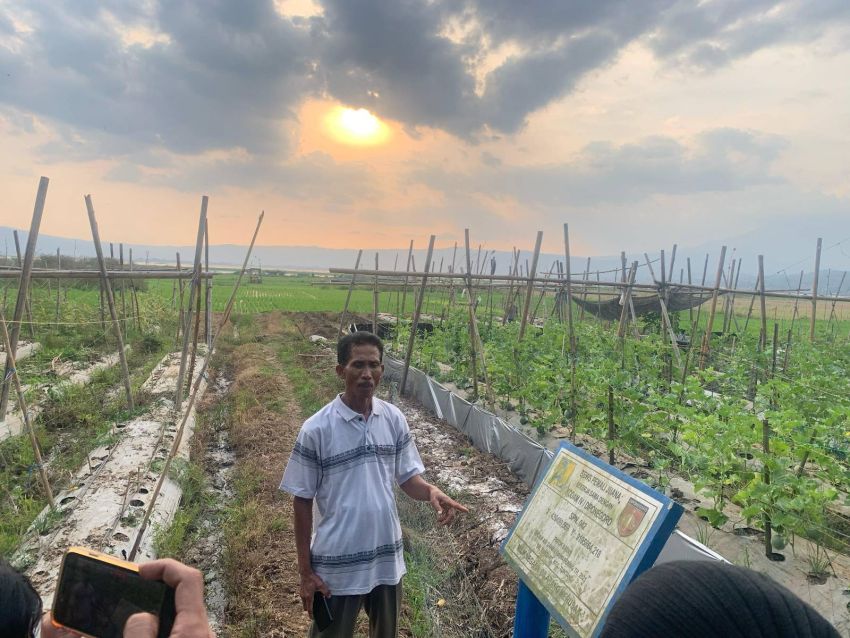
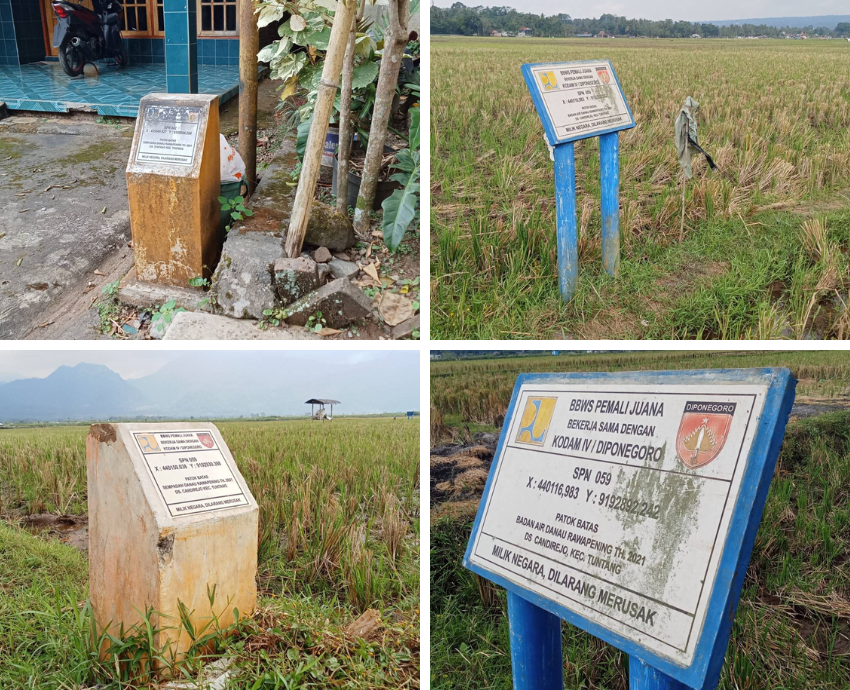
In 2023, Ramzy and Romadon, through their activity in Dinamika, began to report on and join local resident protests against land grabs by the military at nearby Rawa Pening lake.
This was seen as an overt attempt by the state to grab land that could be used to attract large-scale capital investment in regional tourism, resulting in the loss of land by local residents.
Their stance in solidarity with residents became a point of contention and radicalisation for them when some Dinamika editorial committee members argued that they should maintain a more formal “distance” (berjarak) from the residents and not take sides.
As part of their attempts to build solidarity with Rawa Pening residents, Ramzy, Romadon and others approached the local branches of national student organisations, as well as the student senate at the local Christian university and the student council at the state Islamic university. To their disappointment, only the student council from the state Islamic university and SMUD mobilised in support.
The Lake Rawa Pening solidarity campaign also brought them into contact with student activists from other provincial towns and cities, the Social Movement Institute (SMI), the Semarang branch of the legal aid institute and the provincial branch of the national environmental campaign group WALHI, in 2023.
That year, SMI invited the Salatiga activists to participate in its justice festival (festival keadilan), as part of a national solidarity campaign with human rights defenders Fatia Maulidiyanti and Haris Azhar, who had been charged with criminal defamation.
Ramzy used his credentials as a member of the Dinamika press council to formally report the military’s action in residents’ homes and places of livelihood at Rawa Pening to the legal aid institute’s agrarian and coastal environment division. From there he began to coordinate with activists from other campuses in Semarang, inviting them to participate in the festival.
Building new networks
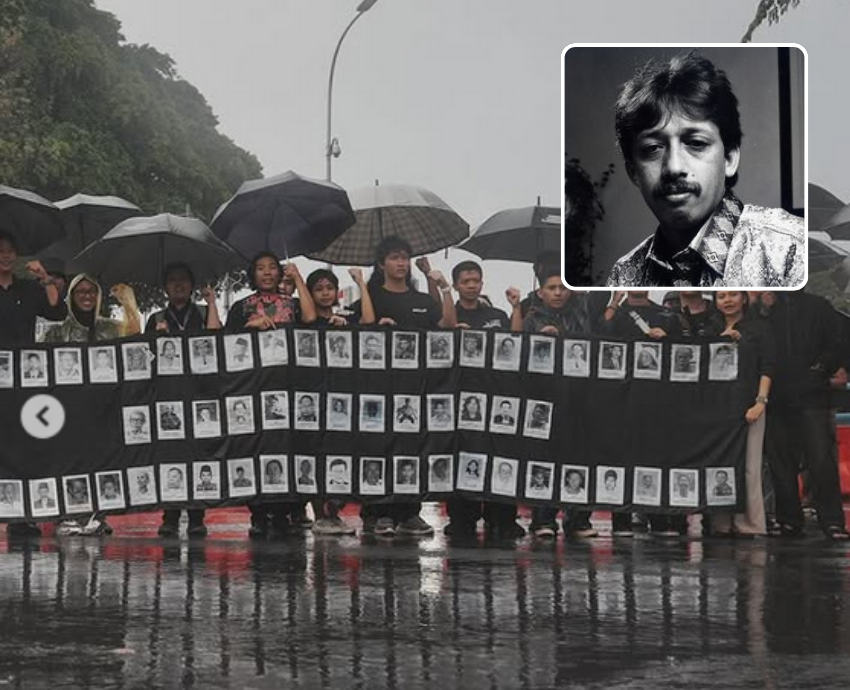
Building on these new political networks, Salatiga activists organised an event in September last year to mark the 20th anniversary of the murder of veteran human rights activist Munir. It was widely attended by political, social and community organisations from Salatiga and activists from Semarang.
This year, student activists from local university student press and student representative councils, as well as from the Cipayung group national student organisations in Salatiga, mobilised in local demonstrations, on August 29, as part of the nationwide protests that took place simultaneously in 200 towns and cities across the archipelago. An informal cross-campus forum was organised involving campus and non-campus activists.
This process has underpinned the establishment of new relationships of trust between individual student activists from different organisational backgrounds, including students from the Cipayung group of national student organisations, a group which has been criticised for its conservatising — sometimes reactionary — role in the national student movement.
Under the former Suharto military dictatorship, student organisations were allowed to organise under state supervision. In 1972, a declaration was made by the Islamic Students Association, Indonesian Islamic Students Movement, Indonesian National Students Movement, Indonesian Catholic Students Association and Indonesian Christian Students Movement in Cipayung West Java. This group is thereafter referred to as the Cipayung group.
Since then, the Cipayung group has played a mixed, yet important, role in society, variously supporting or opposing successive political regimes at local and national levels, with many of the member organisations actively involved in bringing down the dictatorship in 1998.
This group is viewed by national political leaders as an important training ground for future national politicians and during Jokowi’s presidency was actively groomed as a partner of government. Its member organisations and their leaders received active patronage from Jokowi’s administration.
This relationship was instrumentalised in many cases to effectively stifle organised student criticism of Jokowi, as national student leaders enforced organisational policies that redirected criticism to Jokowi’s ministers or effectively shut down criticism at local levels.
In the context of previous national mobilisations last year and early this year, some members of local branches of these national student organisations have played moderating and sometimes reactionary roles in the local student movement. Allegations against them include being paid by national political actors and local police intelligence officers to report on activists and redirecting student mobilisations into smaller multi-site actions that disrupt attempts to build large-scale collective mobilisations with clear political demands.
While activists remain wary of the formal student organisations that form part of this Cipayung group, they recognise it as a place where many students gather as a first point of social or political organisation.
Ramzy and Romadon view these recent mobilisations as signs of a nascent student movement that still tends to be spontaneous.
While students have critical ideas and are prepared to join mass student organisations, in large part, they do not yet see themselves as joining part of a wider political movement for transformative social change.
[Rebecca Meckelburg is a research fellow at the Institute for International Studies, Universitas Gadjah Mada and the Indo-Pacific research centre at Murdoch University.]