
NSA whistleblower Edward Snowden finally left Moscow's airport, where he had been stuck for weeks evading capture by the United States government, on August 1 after being granted political asylum for one year in Russia. Snowden had sought to apply for asylum in places such as Ecuador and Venezuela.
-
-
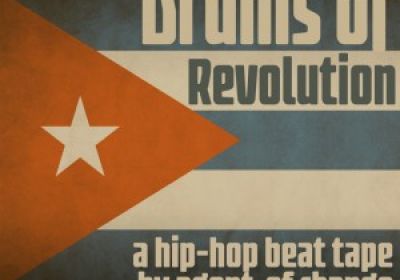
On July 26, radical hip-hop producer Agent of Change released a "beat tape" to mark the 60th anniversary of the start of the Cuban Revolution. Agent of Change, also known as London-based activist and writer Carlos Martinez, said: "The 18 hip-hop instrumentals - with a couple of feature verses from Fidel Castro and Nelson Mandela - celebrate Cuban culture, drawing influence and samples from Cuba’s diverse musical heritage."
-
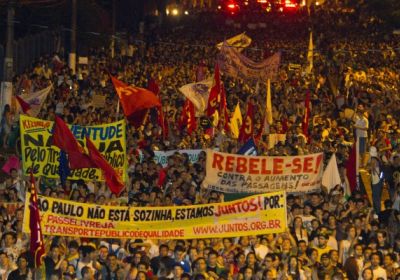 Former Brazilian president Lula, who helped found the ruling Workers’ Party (PT) and governed from 2003–2010, took his time to comment on the wave of protests that erupted in mid-June, bringing millions onto the streets. But when he finally gave an interview, he warmly welcomed the protests: “Brazil is living an extraordinary moment in the affirmation of its democracy. We are a very young democracy ... It’s only to be expected that our society should be a walking metamorphosis, changing itself at every moment.”
 -
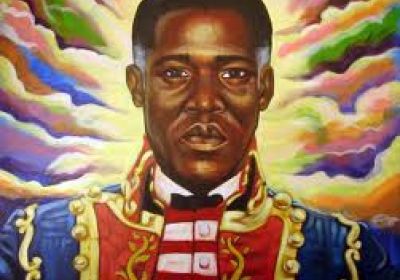 Toussaint Louverture: The Story of the Only Successful Slave Revolt in History; A Play in Three Acts CLR James, edited by Christian Hogsbjerg Duke University Press 2013 222 pp., $47.99 Hegel, Haiti & Universal History Susan Buck-Moss University of Pittsburgh Press 2009 176 pp., $89.99 “I was born a slave, but nature gave me the soul of a free man,” said Toussaint Louverture, the leader of the successful Haitian slave revolt of 1791 to 1804.
 -
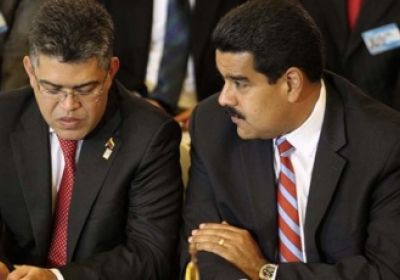 The conversations started in June between Venezuela and the United States have definitively ended, Venezuelan President Nicolas Maduro announced on July 20 at an event of the Strategic Regions of Integral Defense (REDI) in Cojedes state. “My policy is zero tolerance to gringo aggression against Venezuela,” Maduro said. “I'm not going to accept any aggression, whether it be verbal, political, or diplomatic. “Enough is enough. Stay over there with your empire, don't involve yourselves anymore in Venezuela.”
 -
Roger Burbach, the co-author of Latin America's Turbulent Transitions: The Future of 21st Century Socialism, wrote this open letter to NSA whistleblower Edward Snowden on July 15. It first appeared at www.futuresocialism.com -- where you can also order the book. * * *
-
 When Ecuador granted asylum to Assange in mid-2012, Sydney Morning Herald’s Peter Hartcher accused Assange of “hypocrisy” for accepting asylum from President Rafael Correa, “one of the world’s leading oppressors of free speech”. Annabel Crabb joined in, writing in the SMH: “A gazillion Assange Twitter fans [hailed] Ecuador and its president, Rafael Correa, as a hero of international free speech and human rights.
 -
 One has to hark back to 1968 in Mexico City, when thousands of students and workers marched against the Olympics, to find a sports-related demonstration that compares to the size and militancy of the mass anti-World Cup/Olympic protests taking place in Brazil. As in Mexico City, thousands of people in Brazil took to the streets — and outside of stadiums hosting Confederations Cup matches — raising slogans that connect the spending and austerity that surround these mega-events to a much deeper rot in the nation’s democratic institutions.
 -
 Venezuelan President Nicolas Maduro has offered asylum to Edward Snowden, the courageous whistle-blower who has exposed the vast NSA spying on every US citizen who uses a phone or the Internet, as well as people throughout the world. Bolivian president Evo Morales and Nicaraguan President Daniel Ortega followed suit. These three countries broke the diplomatic iron ring Washington sought to place around Snowden, who has been protected but in a sort of limbo in the transit area of Moscow’s international airport. Attack on Morales
 -
 With Venezuela’s inflation rate for May soaring to 6.1%, first quarter growth stagnating at 0.7%, and shortages afflicting a number of basic goods, speculation has been rife regarding the country’s economic future. Critics from the right and left have argued these are all signs that Chavismo (the name given to the radical project for change spearheaded by former president Hugo Chavez) has reached its limits.
 -
WL Central wrote on July 7: NSA whistleblower Edward Snowden has now been offered asylum in three American countries: Bolivia, Nicaragua, and Venezuela. He has applied for asylum in six additional countries, according to WikiLeaks. And his chances for reaching a safe haven are growing further because of US interference in the process, according to Michael Bochenek, director of law and policy at Amnesty International.
-
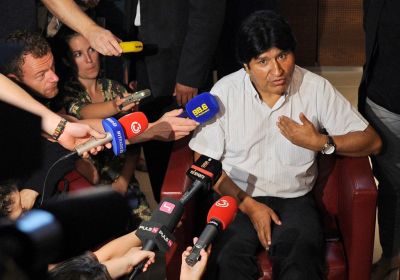 Imagine the aircraft of the president of France being forced down in Latin America on “suspicion” that it was carrying a political refugee to safety — and not just any refugee but someone who has provided the people of the world with proof of criminal activity on an epic scale.