
The governments of the United States, Europe and Canada are working furiously to help consolidate the conservative and rightist government that has come into office in Ukraine after the overthrow of the authoritarian regime of Victor Yanukovych 10 days ago.
The overthrow of the regime came about through a confluence of mass protests against its authoritarian rule and retrograde social and economic policies, and a very active intervention by right-wing and fascist political forces.
-
-
The armed group Basque Country And Freedom (ETA has made a significant step towards decommissioning the weapons used in its campaign for independence and freedom, Irish Republican News said on February 21. But the Spanish government immediately rejected the move. The decommissioning by ETA of some its cache of weapons and explosives, drawing a definitive line under decades of bloody conflict, was confirmed by an International Verification Commission.
-
Throughout March, the United Nations Human Rights Council (UNHRC) will be reviewing the human rights situation in Sri Lanka, among other countries, at it meeting in Geneva.
-
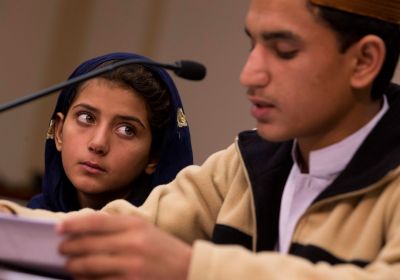
It stands to reason that the perpetrators of crimes against humanity have a vested interest in silencing those who speak out against them. So it is not surprising there has been an intensified campaign of repression in Pakistan against those speaking out against the US bombing campaign in Pakistan's north-west.
-
 The BBC's Today program is enjoying high ratings, and the Mail and the Telegraph are, as usual, attacking the corporation as left-wing. Last month, a single edition of Today was edited by the artist and musician PJ Harvey. What happened was illuminating.
 -
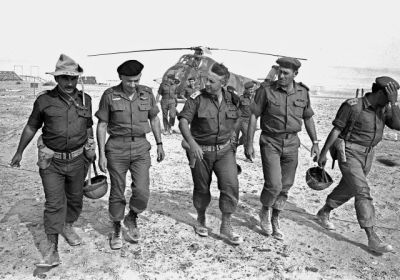 War criminal and former Israeli prime minister Ariel Sharon, who died on January 11, led an infamous Israeli army terror group in the 1950s. Called Unit 101 and nicknamed the “avengers”, it operated without uniforms. The unit countered Palestinian resistance with terror attacks. It carried out many outrages inside Israel and across its borders. In August 1953, Unit 101 attacked the refugee camp of El-Bureig in Gaza. About 50 refugees were massacred. In October 1953, Sharon’s unit attacked the Jordanian village of Qibya.
 -
 Salih Muslim is co-president of the Democratic Union Party (PYD), a Syria-based Kurdish party fighting for self-determination. The PYD is a sister party of the left-wing Turkish-based Kurdistan Workers Party (PKK). The party is the ruling force in the Kurdish areas of Syria and took over three enclaves with Kurdish majorities in 2012.
 -
Iraqi Prime Minister Nuri al-Maliki called on the people of Falluja to rise up on January 6 and drive out armed groups affiliated to al-Qaeda. News accounts reported that Falluja had “completely fallen” to the Islamist fighters. The Iraqi army was poised to retake the city, said Maliki. He asked Sunni tribes to help. Sunni fighters had already taken to the streets, the BBC said, not to help expel the Islamists, but to resist any assault by Maliki's forces.
-
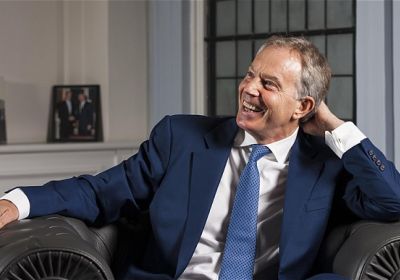 If you’re the sort of person who doesn’t like your kids mixing with problem families, the type who are always getting arrested, you wouldn’t want them going near Tony Blair, would you? Five times now he’s been the subject of a citizen’s arrest. This fits with what the police often say, that the vast majority of crimes are committed by a handful of repeat-offending troublemakers. Whenever he’s asked in interviews about the war that caused his problems, he gives an exasperated sigh and says: “Oh look, I mean, huh, we’ve been through this many times before.”
 -
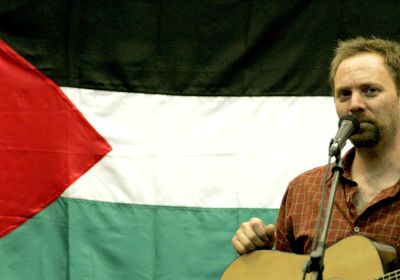
Fans of radical US singer-songwriter David Rovics will welcome his latest CD, If I had a Hammer, a compilation of three albums recorded last year and released in December.
-
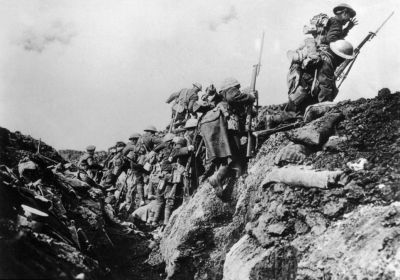 Now the centenary of 1914 has got going, we should do as British education secretary Michael Gove suggests and celebrate the First World War, instead of taking notice of “left-wing academics”, who complain it was a regrettable waste of life. But the other day, on the radio, they played an interview with Harry Patch, the last man alive who fought for the British in the war. Harry said: “Politicians who took us to war should have been given the guns and told to settle their differences themselves, instead of organising nothing better than legalised mass murder.”
 -
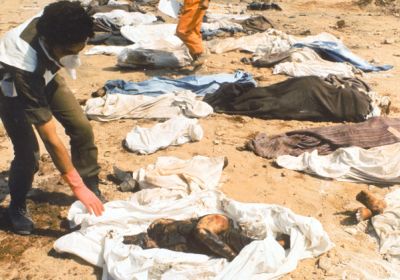 The tributes and praise from various world leaders, including US President Barack Obama and Swedish foreign minister Carl Bildt, for Israeli war criminal Ariel Sharon who died on January 11, are vile but sadly predictable. But probably the most distasteful of all comes from UN Secretary-General Ban Ki-moon who declared himself “saddened by the death of Ariel Sharon”.