-
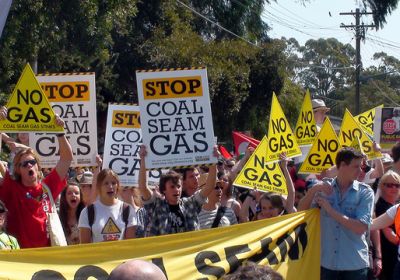
Stop CSG Illawarra released the statement below on July 23. The group campaigns for a Royal Commission into all impacts of coal seam gas mining; a moratorium on coal seam gas mining until the outcome of the Royal Commission; and a ban on fracking. * * * On July 21, the O’Farrell NSW government announced changes to coal seam gas rules. -
When you’re the world’s biggest resource corporation, and aim to gouge high profits for the next century from the world’s largest mine, you probably won’t care to let environmental considerations block your path. Add in a state government frantic to get investment dollars flowing, and the outlook for threatened species in the vicinity could be grim. BHP Billiton is due to decide early next year whether to spend an estimated $20 billion on a massive expansion of its Olympic Dam copper, gold and uranium mine near Roxby Downs, 560 kilometres north of Adelaide. -
The Environment Centre Northern Territory released a new document on July 20 that detailed several disastrous events over the recent wet season at the Ranger uranium mine in Kakadu national park. The document revealed ongoing seepage from the tailings storage facility at the mine. It also said the mine was unable to effectively deal with the millions of litres of contaminated water generated.
-
Shortly before noon on July 21, officers from the Australian Federal Police raided the Sydney office of Greenpeace Australia Pacific, confiscating material but making no arrests.
-
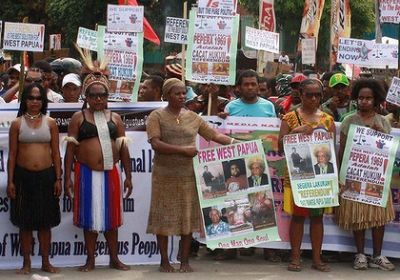
Footprints for Peace, an international grassroots group that organises walks, bike rides and runs around the world, invites families and people of all ages, background and cultures to come and support traditional owners in their opposition to uranium mining in Western Australia by taking part in the “Walk away from uranium mining” that begins in Wiluna on August 19 and finishes in Perth on October 28. -
Critics of the Gillard government’s proposed carbon price get daily coverage in Australia’s mainstream media. But some types of critic — those who want Australia to stay a polluter’s paradise — are heard the loudest. Other views, which say the carbon price plan is a dangerous diversion from real climate action, are mostly frozen out. Below are four green reasons to oppose the carbon price. 1. Emissions and fossil fuel use go up For a policy that is supposed to drive Australia’s carbon emissions down, the carbon price does a very bad job. -
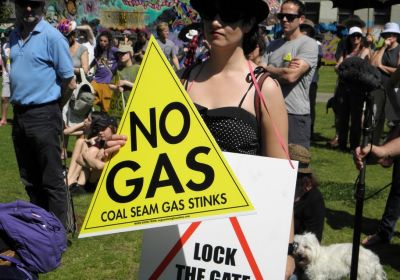
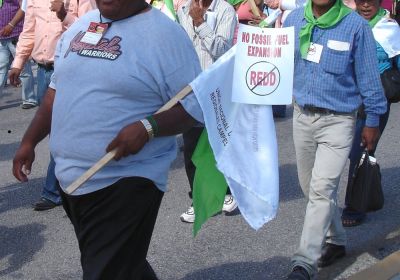
A group of about 40 protesters chanted “we can't eat coal, can’t drink gas, lock the gates” as they gathered outside Ipswich Civic Centre on July 21 to oppose the coal and coal seam gas industries. Inside, Prime Minister Julia Gillard addressed a business and community breakfast, co-sponsored by the Ipswich City Council.
-
Pablo Solon completed his term as Ambassador for the Plurinational State of Bolivia to the United Nations on June 30. As representative of a small and poor country, Solon has played a key role in perhaps the decisive political struggle of this century: the fight against climate change and the unjust economic system causing environmental and social crisis. On behalf of the Bolivian government led by indigenous President Evo Morales, Solon has pushed for the UN to enshrine the right to water as a human right, and led efforts to implement a Declaration of the Rights of Mother Earth.
-
Green capitalism is on a roll at the moment. On July 8, a group of New Zealand business leaders launched their “Pure Advantage” campaign with full-page ads in the daily papers headed: “Even if you don’t believe in climate change, there’s money to be made doing something about it.” This was followed by the classic: “There’s money in being green and we need to start turning Green Growth into wealth.” That says it all, really. -
In a new twist to Tasmania’s forest industry crisis, two wealthy environmentalists, Graeme Woods and Jan Cameron, have bought the Triabunna woodchip mill from notorious woodchipping company Gunns Ltd. Gunns had almost stitched up a deal with a pro-logging company called Fibre Plus (owned by Aprin) but this fell through due to problems obtaining finance. -
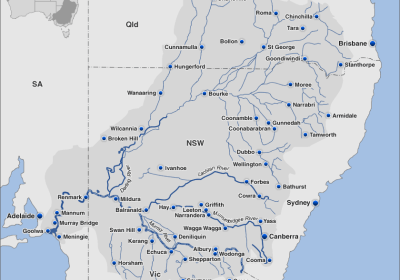
Coal seam gas drilling has been a hot topic in Australia over the past couple of years, interest fuelled by the US documentary Gasland. The land on top of the coal arc stretching from northern Queensland down to the southern Highlands of NSW is being slapped with exploration licences that progress to pilot wells at an alarming rate, especially in rural New South Wales. In NSW, there is no specific legislation covering coal seam gas, and yet exploration and wells are going ahead. -
Before they could have a face-to-face meeting with the Australian mining company company Lynas Corporation, a dozen resident activists from Kuantan, Malaysia, took a journey all the way to Sydney to launch a protest outside Lynas headquarters on July 5.