-
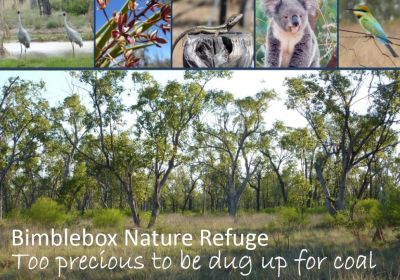
If you are thinking of challenging a mining development in the courts, be prepared to go through the financial wringer. You might think you have an open-and-shut case, that the federal government has shirked its responsibilities under environmental legislation. But if the finding goes against you, the government and the mining industry will see you bankrupt. -
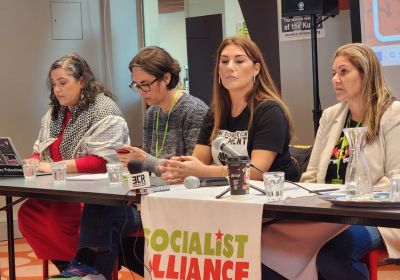
The Student Environment Action Collective (SEAC) of the University of Sydney hosted a public forum titled “Our Water, Our Land, Our Future” on April 19. The forum discussed the effects of coal seam gas (CSG) mining and the campaign against it in Sydney and NSW. Speakers included the NSW Farmers’ Federation’s Brianna Casey and Charles Thomas, along with Jacinta Green of Stop CSG Sydney.
-
Environmentalists seem to realise that they have some stake in a fight such as the Ecuador-Chevron lawsuit. That case, which Chevron has recently moved to an international arbitration panel to try to avoid a multibillion-dollar penalty handed down by Ecuadorian courts, is about whether a multinational oil corporation will have to pay damages for pollution, for which it is responsible. Most environmentalists figure that would be a good thing. -
No Fracking WAy held its first rally against fracking and unconventional gas extraction in the state on April 21. The demand was for a moratorium on unconventional gas until it could be proven safe for human health and the environment.
-
One of the big challenges facing Cuba as it designs climate change adaptation policies is the preservation of its coastal ecosystems against the predicted rise in sea level and increasingly catastrophic extreme weather events. With the country’s 5500 kilometre of coastline and 4000 cays and islets, almost everyone on the Cuban archipelago feels their life is tied to the sea in one way or another. “It’s lovely, but it is also dangerous,” said 78-year-old Teresa Marcial, who lives on the coast in Santa Fe, in the northern outskirts of Havana.
-
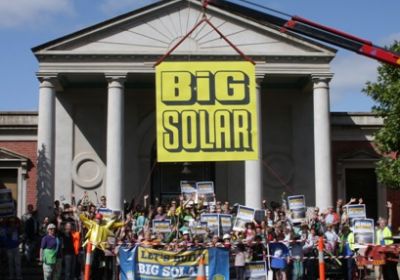
Right now, there is an opportunity to slash Australia’s carbon emissions by 5 million tonnes a year in one stroke. The city of Port Augusta in South Australia has all the right conditions to make it Australia’s first baseload renewable energy hub. The two coal-fired power stations at Port Augusta are getting old. Industry experts say they may be forced to close as soon as 2015. -
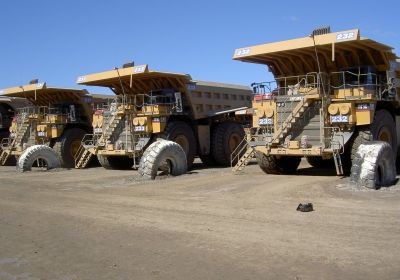
The Construction Forestry Mining Energy Union (CFMEU) has demanded that BHP Billiton surrender its lease on the Norwich Park coalmine, near Dysart in Central Queensland. The BHP Mitsubishi Alliance (BMA) combine announced early this month that it would shut down the mine because it was allegedly losing money. BMA has laid partial blame on the long-running industrial dispute with mineworkers in Queensland for losses at Norwich Park and other mines in the state.
-
Campaigners against the mining companies’ push to open up the Kimberley region in WA to vast gas and mineral exploitation told a public meeting on April 19 that this was the “Franklin Dam campaign of our time”. The forum “Saving the Kimberley: Our Land or Gasland?” was organised by Stop Coal Seam Gas, Sydney. -
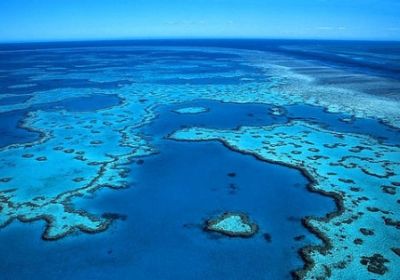
”No new coal! Save the Great Barrier Reef!" was the main theme of the rally held outside Queensland parliament on World Heritage Day, April 18. Six Degrees and Greenpeace Brisbane called the rally, which attracted about 50 people. The rally came after the April 12 announcement by deputy premier Jeff Seeney that Gladstone harbour, which is facing environmental destruction due to coal industry development, might be removed from World Heritage listing. -
Quit Coal crashes a Mantle Mining general meeting on April 16. One activist made it into the meeting to ask Mantle's directors how they justify trying to destroy Bacchus Marsh farmland for coal exports. The results are admittedly excruciatingly awkward to watch, but must-see viewing.
-
Hundreds of committed citizens of Keerrong and The Channon form a human map of our roads and creeks. The legal system and governments have failed us. Now we're taking a stand. We won't let gas miners contaminate our water, air and land with toxic chemicals.
-
Tintaya is an open-cut copper and gold mine 4000 metres high in the district of Yauri, Espinar province, southern Peru. It is a spectacle of modern industrial devastation that contrasts jarringly with the timeless beauty of the surrounding altiplano landscape. Finally, after years of aggravated environmental abuse, the mine's owner, Swiss-based Xstrata, will be investigated by Peruvian authorities. After the discovery of large deposits, a copper mine was established at Tintaya in the mid-1980s. Extractive operations were hugely expanded when BHP bought the site in 1996.