-
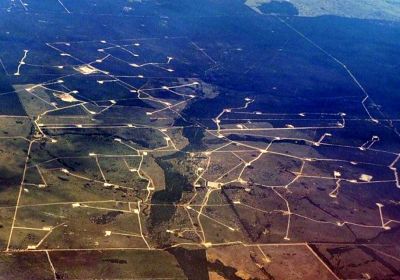
Queensland Natural Resources and Mines minister Anthony Lynham announced on April 18 that the government has banned underground coal gasification (UCG) in the state, arguing the environmental risks outweigh the economic benefits. He said the ban, which would apply immediately as government policy, would be legislated by the end of the year. Underground coal gasification involves converting coal to a synthesised gas by burning it underground. The syngas is processed on the surface to create products such as aviation fuels and synthetic diesel. -
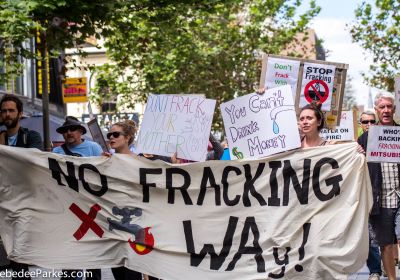
Concerned residents gathered outside Lismore City Council on April 19 as the NSW Planning Department briefed council on the Draft North Coast Regional Plan. Spokesperson for Gasfield Free Northern Rivers, Dean Draper said: “They should be offering a community briefing in Lismore so we can clearly send our message that this regional plan must be amended to remove the current references to CSG. As well as this removal we are demanding that the plan clearly spells out that there will be no unconventional gas exploration at all for the life of the plan. -
There is a joke in Australia that there will be a high-speed rail service linking the major cities on the Eastern seaboard that will run about once in every three years — whenever there is an election looming. Prime Minister Malcolm Turnbull has, like the previous Labor government, again floated the idea. -
Photo: TeleSUR.
International delegations from more than 20 different countries gathered with Honduran social movements on April 14 to demand justice for Berta Caceres, the environmentalist and indigenous activist assassinated in the Central American nation on March 3.
-
Five hundred Toronto-area supporters crowded into a west-end school auditorium March 29 to support the Leap Manifesto, for a “justice-based” energy transition to renewable economy.
-
The Sherpa are a Nepalese ethnic minority who have a reverent regard for the world’s highest mountain, Chomolungma — known in English as Everest.
-
Fifty years ago building worker activists took back control of their union, the NSW Builders Labourers Federation (BLF), from a leadership clique that ignored the members. Under the new leadership of , the re-energised BLF created high standards for workplace safety, decent pay, union democracy, accountable leadership, community engagement and, most famously, Green Bans.
-
More than 300 doctors have signed an open letter demanding the state government develop a plan to shut down the Latrobe Valley's brown coal power plants because of the health damage they cause the local community. The letter, organised by Doctors for the Environment, argues a transition away from brown coal-fired power — responsible for 85% of Victoria's electricity generation — is necessary because its pollution is responsible for local disease, and even death, and poses a broader health threat through its contribution to climate change. -
It is impossible to read Farmageddon: The True Cost of Cheap Meat without coming to the conclusion that the world's food and agriculture system is screwed.
-
At the edge of the south east, the Arctic is nebulous, but its ice shards are felt on the hands, and you can feel tingles of dim isolation in the wildness of Tasmania's oceans. Sequences and currents from Tasmania's Huon Valley rivers and Cygnet Bay dip to the deep-sea behind the pristine Bruny Island. The bio-network of inlets, bays and streams move lightly and serenely downwards with the humid vapour of the mountains. Sheltered water habitats protect rare crays, platypus, seals and southern right whales. -
As a sagging economy cruelled their electoral chances, right-wing parliamentarians and power-brokers in the South Australian Labor Party decided in late 2014 that it was time to ditch a once fiercely-defended point of policy. The party's remaining opposition to the nuclear fuel cycle would have to go. Labor Premier Jay Weatherill soon came on board, and by March last year the state's Nuclear Fuel Cycle Royal Commission was under way. -
Capitalism in the Web of Life: Ecology & the Accumulation of Capital By Jason Moore (2015) Verso Books Jason Moore’s book is a great new addition to our thinking about capitalist ecology. It is not an easy book — Moore draws on a wide range of ideas, in particular world-systems thinking and Karl Marx’s value theory, but it is well worth the effort of deepening our understanding in this vital area. Taking a cue from the title — it is capitalism “in” not “and” the web of life — one central theme is that capitalism and nature are co-produced.