
It usually takes archival digging, the golden gaffe or an ill-considered remark by those in power to admit that the United States has imperial ambitions.
An example was General Smedley Butler who, at his death in 1940, had become the most decorated marine in US history.
After retiring from active service, Butler was frank about his role. Professing to being a “racketeer” and “gangster for capitalism”, he went on to explain how “I helped make Mexico, especially Tampico, safe for American oil interests in 1914. I helped make Haiti and Cuba a decent place for the National City Boys to collect revenues in. I helped the raping of half a dozen Central American republics for the benefits of Wall Street.”
That was just a selection.
With President Donald Trump in power, we do not need a Butler to give the game away. The empire is out of the closet. While the “Donroe Doctrine” is intended to reprise the Monroe Doctrine, it offers nothing more than imperial rapacity, seizure under pretext.
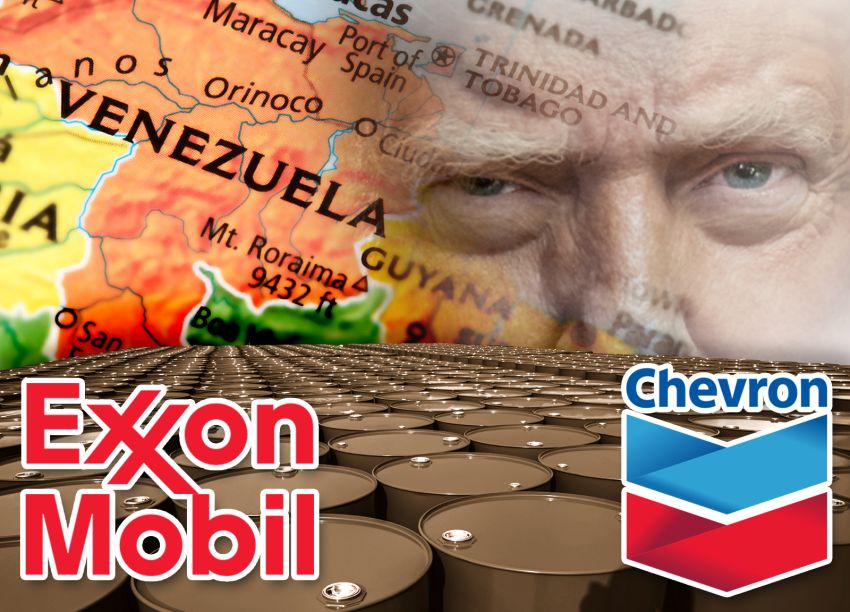
The January 9 meeting with two dozen oil executives at the White House to discuss the fate of the Venezuelan oil market showed Trump to be the proud procurer of corporate thieving under the cover of government protection.
Representatives from such veteran behemoths as ExxonMobil and Chevron were present to hear the president demand they invest handsomely in Venezuela’s oil infrastructure.
Problems with the oil itself — heavy, hard to refine and packed with sulphur, not to mention the questionable number of proven reserves — did not blight the conversation.
“American companies will have the opportunity to rebuild Venezuela’s rotting energy infrastructure and eventually increase oil production to levels never seen before,” Trump crowed. “Our giant oil companies will be spending at least $100 billion of their money.” In the course of this, Venezuela would “be very successful, and the people of the United States are going to be big beneficiaries”.
The choice of companies involved in the venture would, however, not be determined by free market wiles or any invisible hand. “We are going to be making the decision as to which oil companies can go in, which we will allow to go in.” They would mostly be American, naturally. Forget the Venezuelans, Trump said. “You’re dealing with us directly. You’re not dealing with Venezuela at all. We don’t want you to deal with Venezuela.”
Jeffery Hilderbrand, of the oil and gas producer Hilcorp Energy and a noted Trump donor, was full of gratitude, pleased with the implausible alibi Trump had offered for controlling and pilfering Venezuelan oil — finding imagined enemies who might do the same thing.
“Thank you for your great, tremendous leadership in protecting the interests in the Western Hemisphere,” Hilderbrand said. “The message that you have sent to China and our enemies to stay out of our backyard is absolutely fantastic … Hilcorp is fully committed and ready to go to rebuilding the infrastructure in Venezuela.”
Bill Armstrong, CEO of the Armstrong Oil and Gas company, also smacked his lips. “We are ready to go to Venezuela,” he declared. “In real estate terms, it is prime real estate. And it’s like West Palm about 50 years ago. Very ripe.”
Fracking executive and Trump supporter Harold Hamm was tickled by the possibility of adventure, seeing Venezuela as little more than a playground to roam and in and profit from. “It excites me as an explorationist.” The country was “exciting” with its abundant reserves, posing “challenges and the industry knows how to handle that”.
Chevron, which already has a presence in the country in partnership with the state-run oil company Petróleos de Venezuela SA, accounting for 240,000 barrels per day, expects to bolster its production by 50% over the next 18–24 months.
Those at Repsol are dreaming of tripling the current daily production of 45,000 barrels over the next few years.
But not all oil companies expressed the same level of confidence. Naked plunder comes with its challenges and logistical tangles, not least the touchy issue of Venezuelan sovereignty.
ExxonMobil CEO Darren Woods expressed concern that much will have to be done to make Venezuela an appropriate recipient of capital. One way was to ensure that whoever was in control in Caracas would be eternally reliable and amenable to US oil interests. “We have had our assets seized there twice and so you can imagine to re-enter a third time would require some pretty significant changes from what we’ve historically seen and what is currently the state.” As things stood, given “legal and commercial constructs and frameworks in place”, Venezuela was “un-investable”, he said.
Trump confirmed he will choke Venezuela by signing an Executive Order to prevent “the seizure of Venezuelan oil revenue that could undermine critical US efforts to ensure economic stability in Venezuela”.
The order prohibits US courts from seizing revenue collected from Venezuelan oil and relevant holds in US Treasury accounts. The customary justifications follow: to lose control of such funds would “empower malign actors like Iran and Hezbollah while weakening efforts to bring peace, prosperity, and stability to the Venezuelan people and to the Western Hemisphere as a whole”.
Were these funds to be tampered with, US objectives to stem “the influx of illegal aliens and disrupting the flood of illicit narcotics” would be compromised.
[Binoy Kampmark lectures at RMIT University.]