
Swift condemnation has followed the United States government’s January 3 military attacks on Venezuela, which killed at least 80 people and involved the kidnapping of President Nicolás Maduro and National Assembly deputy Cilia Flores, who is married to Maduro.
In a blatantly neocolonial move, Trump said that the US will “run” Venezuela until a “safe transition” is complete.
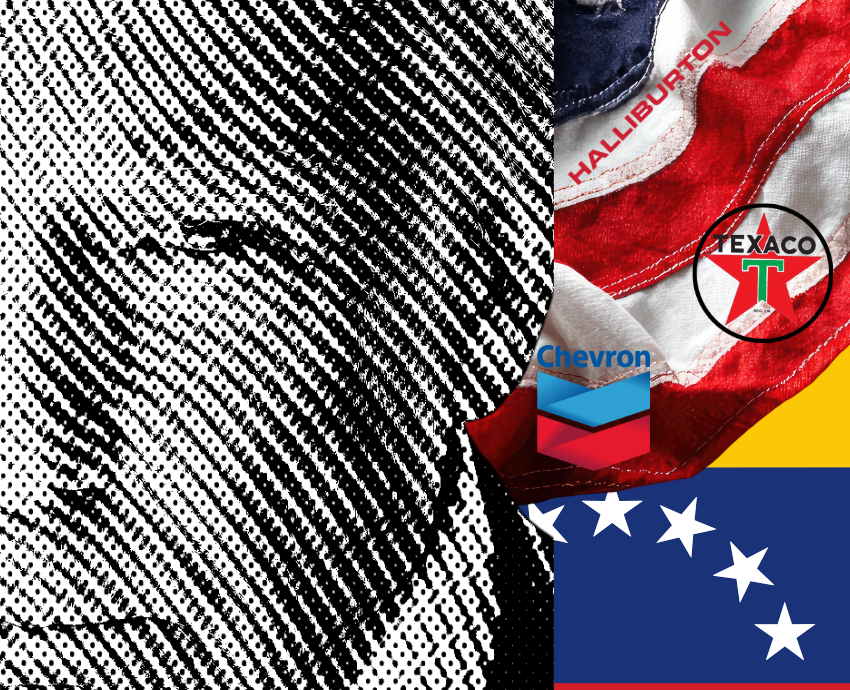
US ambassador to the United Nations Mike Waltz, speaking to a United Nations security council meeting on January 5, made clear the US’s imperialist ambitions for Venezuela: “You cannot continue to have the largest energy reserves in the world under the control of adversaries of the United States.”
The US government’s actions are in line with its National Security Strategy, which states: “We want a [Western] Hemisphere that remains free of hostile foreign incursion or ownership of key assets, and that supports critical supply chains; and we want to ensure our continued access to key strategic locations.
“In other words, we will assert and enforce a ‘Trump Corollary’ to the Monroe Doctrine.”
Under the Monroe Doctrine — the imperialist ideology that views Latin America as the US’s domain — the US has violently intervened militarily dozens of times in the region over the past two centuries.
In a January 4 press conference, Donald Trump threatened Cuba and Colombia. He said Cuba is “ready to fall”, while secretary of state Marco Rubio said that “if I lived in Havana and I was in the government, I’d be concerned”.
Cuban President Miguel Díaz-Canel said the US’s attacks represent “state terrorism against the Venezuelan people”. He condemned the US’s killing of at least 32 Cuban military personnel that were stationed in Venezuela at the time of the attacks and announced two days of national mourning.
Colombian President Gustavo Petro said the US’s attacks were an “assault on the sovereignty” of Latin America.
Later, Trump threatened Petro, saying he should “watch his arse” and that military action against Colombia “sounds good to me”.
The governments of Brazil, Chile, Colombia, Mexico, Uruguay and Spain released a joint statement on January 4 condemning the US’s military actions, which they said “constitute an extremely dangerous precedent for peace and regional security and place the civilian population at risk”.
“We reiterate that the situation in Venezuela must be resolved exclusively through peaceful means, by way of dialogue, negotiation and respect for the will of the Venezuelan people in all its expressions, without external interference and in full adherence to international law.
The statement said that only an inclusive political process led by Venezuelans can lead to “a democratic, sustainable solution that respects human dignity”.
“We express our concern regarding any attempt at governmental control, administration or external appropriation of natural or strategic resources, which is incompatible with international law and threatens the political, economic and social stability of the region.”
Brazilian President Luiz Inácio Lula da Silva that the US’s actions “crossed an unacceptable line”, drawing comparisons to “the darkest moments of [US] interference in Latin America and the Caribbean”.
Protests were held in cities across Brazil on January 5 against the US’s imperialist attacks and in solidarity with the Venezuelan people.
The Confederation of Indigenous Nationalities of Ecuador — the country’s most powerful social movement — released a statement on January 4 condemning the US’s military aggression against Venezuela: “The bombings and acts of warfare against Caracas [Venezuela’s capital] and other localities are illegal, cowardly and unjustified actions against a sovereign nation that has not attacked the United States or any other country.”
The statement rejected “all forms of foreign interventionism in Latin America” and said the attacks were driven by “geopolitical and economic interests linked to the control and plundering of the Venezuelan people’s natural resources, particularly oil and other strategic wealth”.
US aggression is a “direct threat” to the sovereignty and peace of all Latin America, the statement said.
In Italy, Giuliano Granato, national coordinator of the Power to the People party, told Peoples Dispatch that the US bombing was an “illegal and criminal act in violation of every rule of international law”.
“If Trump really cared about the fight against drug trafficking, he would not have pardoned the former president of Honduras, sentenced to 45 years in prison by a US court for drug trafficking,” Granato said.
“In reality, the US wants to return to seizing Venezuelan resources, starting with oil, followed by mineral resources.”
The Global Sumud Flotilla (GSF) — which tried to break the Israeli blockade of Gaza and deliver much-needed aid to Palestinians last year — condemned the US government’s attacks and highlighted its ongoing war against Venezuela: “These strikes also cannot be separated from the United States’ years-long blockade and sanctions regime against Venezuela, which has intentionally inflicted widespread civilian harm by restricting access to fuel, food, medicine, and basic economic life, constituting collective punishment under international law.”
US sanctions against Venezuela were responsible for the death of more than 40,000 people in 2017–18 alone.
GSF said the US’s blockade, maritime attacks on civilian vessels and assault on Caracas represent a “continuous pattern of unlawful force, prohibited under the UN Charter and customary international law”.
In Turkey, the Peoples Equality and Democracy (DEM) Party opposed the US intervention as a “clear violation of international law”, saying that it “opens an extremely dangerous door not only for Venezuela but for the entire world”. The DEM Party said it “stands by the Venezuelan people’s right to democracy, freedom and a dignified life”.
The World Council of Churches also condemned the attacks, saying “These actions set a dangerous precedent and example for others who seek to shrug off all constraints against the use of armed aggression and brute force to achieve political objectives.” It called for the urgent “cessation of such attacks, for respect for the principles of international law and sovereignty of States, for the resolution of disputes through dialogue and diplomacy rather than by armed violence, and for the United Nations and the Organization of American States to take swift action to ensure all members respect the relevant charters and conventions”.
The International Trade Union Confederation strongly condemned the US’s military aggression and violation of Venezuelan sovereignty and “called for the respect for the Venezuelan people’s right to self-determination and the immediate release of all those detained and a return to peaceful and democratic dialogue”.
The Socialist Party of Bangladesh condemned the attack, saying its “real objective” is “to seize Venezuela’s oil and mineral resources and to impose a forced regime change in alliance with reactionary oligarchic forces”.
“These objectives of US imperialism will never succeed, as history has repeatedly shown. Just as the outcomes for the US were disastrous in Vietnam, Iraq, Libya, Syria, Palestine and other parts of the world.”
The Malaysian Socialist Party condemned the US invasion, saying: “The United States has once again revealed its true face, a global bully driven not by human rights or democracy, but by an insatiable greed for oil and minerals. Venezuela’s only ‘crime’ in the eyes of Washington is its vast natural wealth, which the American empire now seeks to plunder by force.
“This is not an isolated incident but part of a long, brutal pattern: the US destabilises, invades, and installs puppet regimes across the world from Iraq and Libya to Latin America; leaving behind chaos, suffering, and broken nations.
“If the world remains silent today, no sovereign nation will be safe tomorrow. This is not just Venezuela’s fight from American imperialism. Either we unite to resist this aggression, or we risk neocolonial subjugation once again.”
In the Philippines, the Partido Lakas ng Masa (PLM) condemned the attacks, saying, “Trump pulled the trigger, but every administration before him loaded the gun”.
“This attack must be opposed by all who claim to stand for peace,” PLM said.
“Those on the Left who have disagreements with the Maduro government must set them aside and oppose imperialist aggression without qualification.
“The assault on Venezuela is part of a wider global escalation. The United States has attacked Nigeria, threatened Iran, and continues to arm Israel as it carries out genocidal violence against Palestinians while bombing Lebanon and Syria. The world is being driven toward a broader war.
“History shows where unchecked imperial aggression leads. The last time the world stood this close to catastrophe was when fascist powers invaded their neighbors with impunity. Those acts were rightly condemned as reckless and criminal. The same judgment applies today.”
In India, the Communist Party of India Marxist-Leninist (Liberation) condemned the “US imperialist war on Venezuela”, saying that it is “an open threat against every people in the region and across the world who strive to determine their own future free from imperialist dictates”.
“The same lies used to justify the invasion of Iraq, the seizure of its oil, and the devastation of its people are now recycled as so-called “narco-terrorism” to justify a regime-change operation against President Maduro and the plunder of Venezuela, a country with largest oil reserves in the world.”
The CPIML called on “all democratic and peace-loving forces worldwide to stand against this imperialist aggression and the attempts to impose a new order of colonial subjugation under the Trump regime”.
In Pakistan, the Haqooq-e-Khalq Party (People’s Rights Party) strongly condemned “the imperialist aggression of the United States against Venezuela, including the attack on its sovereignty and the abduction of its elected President”.
“The struggles of Venezuelan workers and peasants are inseparably linked to our own struggles against exploitation, land dispossession, militarisation, and neoliberal policies imposed by imperialist powers and their local allies,” HKP said.
“We reaffirm our commitment to internationalist solidarity and stand united with all peoples resisting imperialism, colonial domination, and economic exploitation.”