
Governments sustain power by weakening democratic debate and eroding principles of human rights and international law.
A government preoccupied with discipline, such as Anthony Albanese’s, likes to exercise control, expects conformity and, even in a democracy, finds it difficult to tolerate dissent. It is also stifling and cruel.
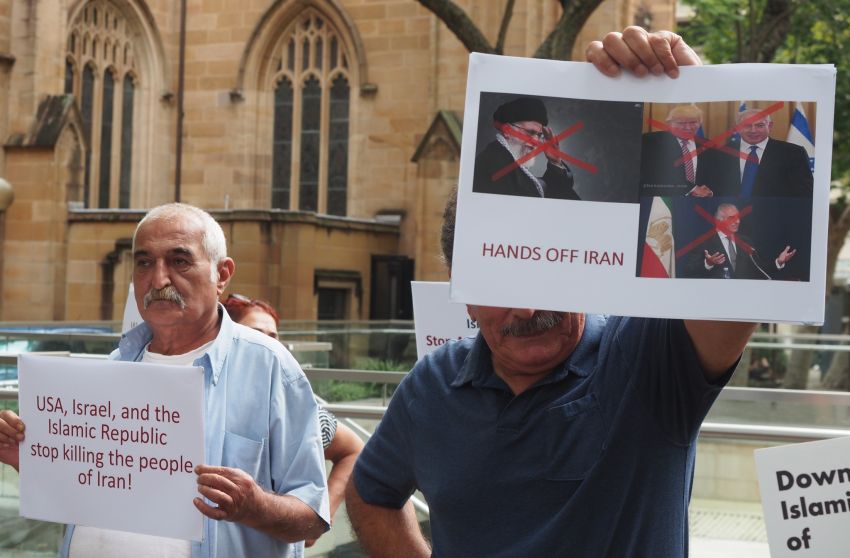
The prime minister’s response to the Israel-United States war with Iran is part of this consensus narrative.
Ready to believe whatever Benjamin Netanyahu or Donald Trump said, Albanese rushed to proclaim that Australia would support anything they decided to do. For years, his government has shown itself to be a loyal ally of Israel and the US’ genocide in Gaza.
After Trump raged about Iran attacking civilisation, some Labor MPs might have asked publicly what he meant by “evil” and what is his version of “civilisation”?
But conformity with the US does not allow such questions — especially as “civilised” Israel murdered close to 200 Iranian school girls.
Displays of cruelty to appear strong have added to the “consensus” even as Labor mutters mateship and, in the case of the PM, wants to encourage kindness by turning down the political temperature.
But that quality — kindness — needs exceptions, in particular concerning the women and their children marooned in the Syrian al-Roj camp. The PM rejected their desire to return to Australia because, he said as he recalled his mother’s advice: “If you make your bed; you lie in it.”
The consensus narrative demands that people who tell stories about making beds must pose as though they had never made a mistake in their lives.
The fascination with cruelty as a means of appearing strong is fomented by Opposition Leader Angus Taylor and his shadow minister for home affairs, who stand together and snarl that they will make it a criminal offence for anyone who helps these women return home.
Consensus means being as cruel as possible in order to appear kind?
Somewhat paradoxically, this narrative is being managed not by outspokenness, but by evasion.
Not everyone in the major parties is evasive. But, for the most part, letters to Labor MPs are answered by a robot-like reply and telephone calls go to a message bank.
For years, genocide has been a taboo word, even as news readers gave nightly apologies for pictures of slaughtered children. Consensus demanded loyalty to an ally even if its leaders had been judged war criminals.
Evasion is aided by pleas for social cohesion, that genius anaesthetic for putting possible dissenters to sleep.
As part of his social cohesion package, Albanese introduced his Combatting Antisemitism, Hate and Extremism Act. And because he found it reassuring to join a political consensus, and authoritarianism came naturally, NSW Labor Premier Chris Minns supported “cohesion” by introducing even more anti-protest laws.
Identity in a consensus view is strengthened by having enemies whom major opinion-makers say are not really Australians.
Mainstream media would have you believe that being middle of the road, and standing for as little as possible, lowers the political temperature.
To a cruel history of social policies, based on distinctions between the worthy and the unworthy, can be added new enemies — extremists, alleged antisemites, suspected Islamists, protesters for environmental protection and even campaigners for public housing. Do massive inequalities remain part of the consensus?
Confidence in a go-it-alone view about governing means casting aside respect for the principles of international law, even as the government proclaims it is an international citizen.
Australia did once sign on to the principles of the Genocide Convention, making it lawful to adhere to the International Court of Justice’s rulings.
Quick support for Israel and the US’ bombing of Iran was judged illegal not by Labor MPs but by NSW Greens Senator David Shoebridge.
Failure to identify the illegality of the Iran war had become inevitable, given cues from the Trump presidency that both the UN and international humanitarian law had passed their use-by date. Loyal ally Australia should stay on board.
Apart from stifling dissent and allowing cruelty, the consensus narrative encourages selfishness. It says retreat to a down-under corral. MAGA style, it’s wise to protect only your own interests. In pursuit of power, better to be greedy and don’t admit to being racist.
The alternative to a narrow, stifling consensus still lies in the post-World War II ideals that economic and social policy should favour altruism over egoism. Article 3 of the Universal Declaration of Human Rights says: “Everyone has the right to life, liberty and security of person”.
The Refugee Convention and the Rome Statute creating the International Criminal Court likewise affirm that all peoples are united by common bonds and a shared heritage.
In contrast, the present fearful, debilitating consensus that prevails in federal parliament (despite some courageous exceptions) is that loyalty to Israel and the US is imperative; that cruelty is a sign of strength; and that it’s wise to regret, but not resist, the breakdown of a world order.
By contrast, a generous democracy requires a human rights-based, questioning story. It would enhance the lives of everyone, including the PM and his ministers.
[Stuart Rees AM is professor emeritus at the University of Sydney and a recipient of the Jerusalem (Al Quds) Peace Prize. This article was first published at Pearls and Irritations.]