
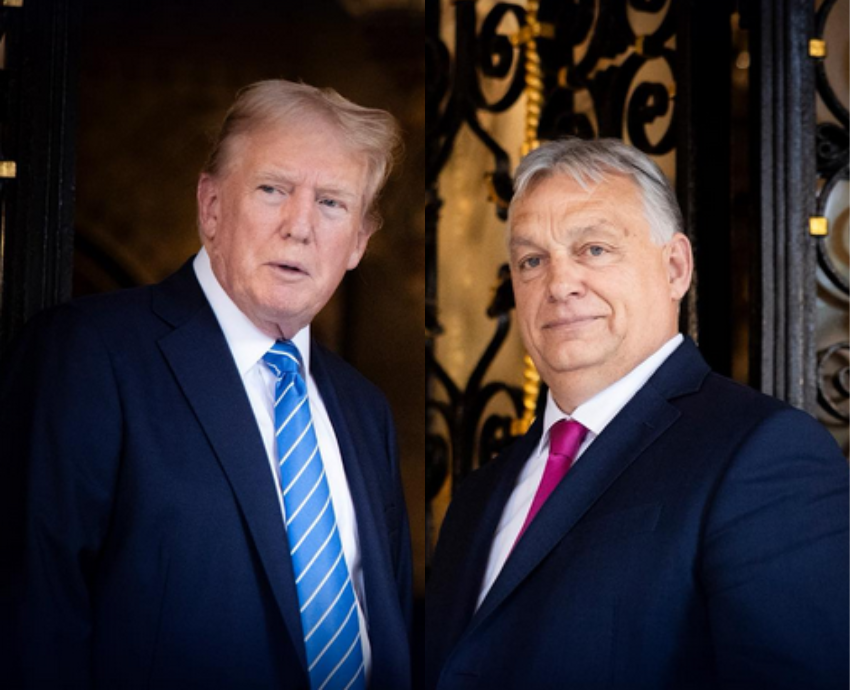
The April 13 defeat in a landslide of Viktor Orbán, Hungary’s neofascist president, constitutes more than a local or even a European event, for not only Russian President Vladimir Putin but also United States President Donald Trump openly supported Orbán, and thus shared in his defeat.
This is also the case despite the fact that the winning candidate, Peter Magyar, is most decidedly not a person of the left, as was seen in his warm phone conversation just a few days after the election with the genocidal Israeli leader Benjamin Netanyahu, or in his vow to continue most of Orbán’s anti-immigrant policies.
First and most important, Orbán’s Hungary has represented a kind of model of the new fascism at a global level.
To be sure, he continued (and sometimes radicalised) longstanding right-wing attacks on immigrant, feminist, LGBTIQ communities, as well as intellectuals, independent media and universities. But Orbán also broke new ground on the right. He played no small part in orchestrating a move by the global right toward an affinity with Putin’s Russia, as seen not least in his hostility to Ukraine. In this, Orbán was sometimes ahead of other far-right leaders and movements.
But what was truly distinctive about Orbán’s regime lay in how his populism was more than merely rhetorical.
Rather than simply deporting immigrants, especially those from predominantly Muslim countries, and promising that this would create jobs for “native” Hungarians as a result (as Trump has done), Orbán actually allocated large sums to social and economic aid to the population.
He sought to encourage large families in order to increase the birthrate of “native” Hungarians, offering large forms of aid to families who had three or more children and the like.
He even made overtures to the Roma minority via policies aimed at undercutting youth unemployment, though with mixed success, as these policies also touched off resentment by discouraging higher education.
Combined with other forms of massive social spending on education and healthcare aimed at working people, the Orbán model was one of a far-right but post-neoliberal social order.
Second, all this attracted attention, especially in the US. The Conservative Political Action Committee (CPAC), which has become a major ideological centre of the Trumpist Republican Party, hosted Orbán at its US meetings on several occasions. Moreover, CPAC held one of its meetings in Hungary in 2022, a seeming anomaly for an “America first” right-wing organisation.
Finally, Trump sent none other than US Vice President JD Vance to campaign for Orbán in the run-up to this year’s election. Orbán earned similar admiration from other far-right and fascist movements around the world as well. In short, Orbán’s Hungary was a sometimes mythic but, in political and ideological terms, a positive example for much of this sector.
Third, not only Orbán’s regime in Hungary, but most other right-wing and neofascist models, from the US to Türkiye and from India to Argentina and (formerly) Brazil, came to power claiming that they would be able to reverse stagnation and/or decline in the living standards of the population.
For more than a decade, Orbán’s regime claimed to have solved or at least begun to solve these problems and to have done so with an overwhelming degree of popular support for what he proudly termed an “illiberal democracy.”
Instead, as numerous left-wing observers are noting, Orbán was not able to do so on a long-term basis, any more than had “classic” neoliberalism or earlier, Keynesianism. Feminists are also noting that Hungarian women did not buy into his natalist policies; quite the contrary.
In sum, Orbán’s fall represents a stinging ideological defeat for global neofascist and far-right movements and parties.
This sector now lacks more than ever a positive model — even for its loyal followers — that could offer something more than a politics of hate based upon xenophobia, Islamophobia, misogyny, heterosexism and militarism.
[Republished from the International Marxist-Humanist, with the author’s permission.]