
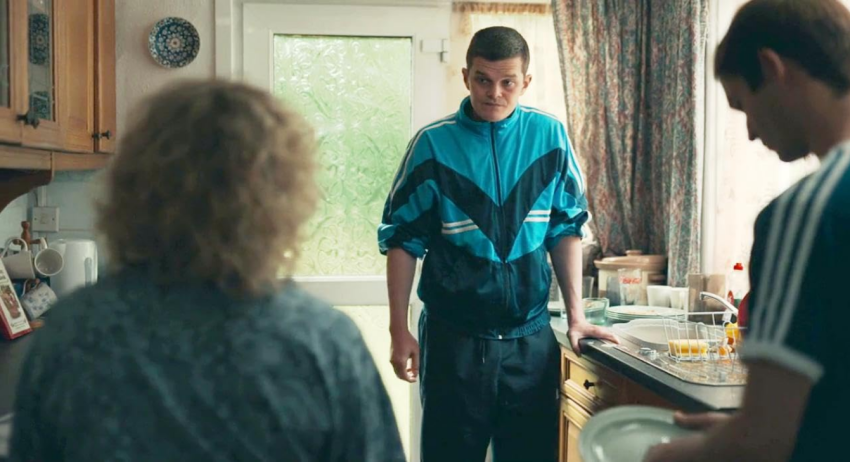
Kirk Jones’ film, I Swear, covering the life of Scottish Tourette’s Syndrome advocate, John Davidson, was nominated for an award at the British Academy Film Awards (BAFTAs) held on February 22.
Vocal and physical tics (involuntary and uncontrolled actions) are a feature of Tourette’s. During the awards ceremony Davidson ticked, causing him to shout a slur at Michel B Jordan and Delroy Lindo, two Black actors whose film Sinners was being recognised. Davidson was mortified by this and reached out to the film’s studio to offer his apologies.
This, however, did not stop people responding on social media with extreme hostility towards him over the incident, spreading lies and misinformation about Tourette’s in the process.
Davidson emphasised in a recent interview with Variety that his tics are not expressions of what he actually thinks or believes in that moment. “I have been physically beaten to within an inch of my life with an iron bar after ticking a comment to a young woman whose boyfriend and accomplice ambushed me,” he said.
Davidson ticked about 10 times during the BAFTAs. Only one tic reached the stage and was broadcast by the BBC. Davidson, aware of the risk of his condition being misunderstood, misinterpreted or weaponised against him, relied on a commitment from BAFTA that “any swearing would be edited out” of the broadcast.
While much has been made of Davidson’s condition (the term preferred by Davidson) and of Davidson himself, the BBC — which broadcast the awards — curiously escaped criticism (it was later forced to apologise).
There was a two-hour delay between the ceremony and the broadcast, so why didn’t the BBC edit out Davidson’s tic, in line with BAFTA’s assurances?
Meanwhile, the broadcaster did choose to edit out pro-Palestinian comments by British-Nigerian filmmaker Akinola Davies jnr on the night. Accepting the award for Outstanding Debut by a British Writer, Director or Producer, for his film My Father’s Shadow, Davies stressed the need for global solidarity and ended his speech with the words “Free Palestine”. That phrase never made it to the broadcast, but Davidson’s slur did.
Davidson has been recognised for helping young people with Tourette’s understand themselves in a hostile world. Did the BBC choose to air Davidson’s tic, opening him up to abuse and harassment, to distract from its attempt to censor pro-Palestinian expression?
Discussing the incident, Davidson recollected that there a microphone was placed close by him, despite the BBC knowing where he would be sitting. “With hindsight, I have to question whether this was wise,” he said.