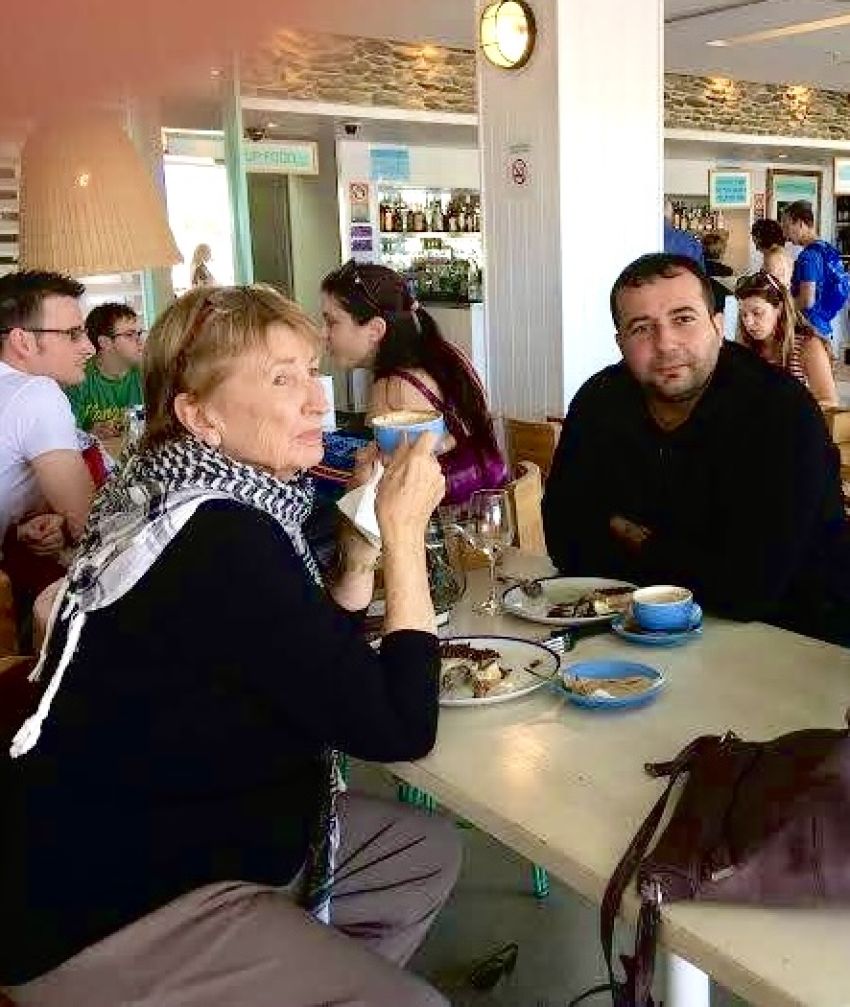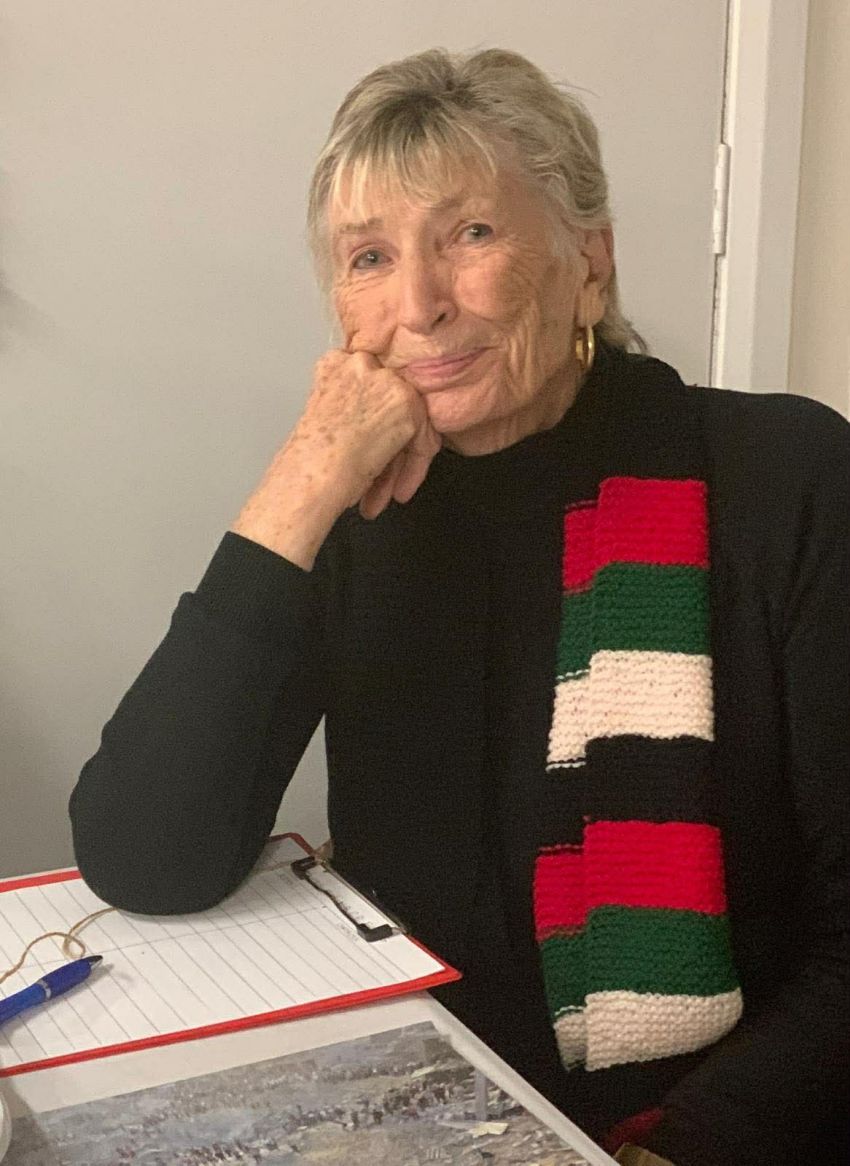
I was arranging to meet Caroline Graham at the end of this week. It felt simple, to meet, to talk, to continue what we had started.
But her final message changed everything. She wrote with calmness and deep gratitude to everyone who had shared the journey. She spoke about comrades, about collective work and about what she called our “small but effective ways”.
Between the lines, it was clear that she was saying goodbye.
That simple plan collapsed and the meeting I was preparing for became something else entirely. I was not ready for this farewell.
Caroline was not just an activist. She was one of the pillars of the Northern Beaches Committee for Palestine, someone who transformed solidarity from an idea into daily practice, from a slogan into something that touched people’s lives.
Her final words were not simply personal. They were part of a longer story, a life committed to action.
Ten years ago in April, we met her for the first time. Caroline came with a simple, but radical, idea: The children of Gaza do not only deserve to survive, but to live, to feel joy, and to feel that they belong in this world.
From that moment, we began turning that idea into reality. It was never easy. We faced blockade, delays, lack of resources, and endless complications.
But we did not stop.
The Nippers project was never just an activity. It was an act of reclaiming life in a place where people are expected only to endure.
It was not simply about swimming. It was about joy, discipline, and belonging. Its impact did not end at the shore.
Through the Northern Beaches Committee for Palestine, we were able to evacuate a family from Gaza who had been part of the program. Their survival is a reminder that even in the midst of loss, life can still be saved when solidarity becomes action. Caroline played a central role in making that possible.
In Gaza, where both body and spirit are under constant pressure, teaching children how to float, how to trust themselves and how to breathe freely becomes a political act.
Caroline understood this. She did not chase grand achievements. She believed in small moments; a child’s smile, a moment of joy, as proof that hope is still possible.
In the hardest times, when everything felt impossible, she brought us back to the first question: Why did we begin? She did not believe in words alone. She believed in action and lived that belief every day.
In Caroline’s last message to me, she wrote that the sea project in Gaza would not have existed without my role in it. I read those words as responsibility. What we built was never individual. It was collective, a network of commitment, trust, and a shared belief that solidarity must be lived, not just spoken.
Even in her farewell, Caroline did not place herself at the centre. She thanked others, gave everyone their due and asked us to continue. She chose to leave quietly, surrounded by her children, as she lived, with dignity, clarity and without noise.
In Gaza, children entered the sea and learned how to float, not only in water, but in a world that tries to drown them every day. Some of those children are no longer with us. We lost them in this genocide. Between loss and survival, the meaning of what we did becomes clear. This was never just a project. It was an attempt to pull life out of the heart of death.
And still, we continue. Continuing is no longer a choice. It is a form of resistance.
Today, April carries a different meaning. It is the month that brought us together and the month that took Caroline away.
But Caroline has not gone; she is here in this work, in every step we continue, in every attempt to create life in the midst of destruction.
Her words were not a farewell; they were passing on a responsibility to carry on, despite the pain.
We can honour Caroline by continuing this path and by proving, as she believed, that even the smallest acts, when rooted in sincerity, can change entire lives.