
For the first time ever, a NSW Police officer was found guilty in November last year for the death in custody of a First Nations person. Dunghutti teenager Jai Kalani Wright died in February 2022, a day after sergeant Benedict Bryant drove into Wright’s bicycle.
This shows it is possible to win justice for the families of deaths in custody — even if it takes years.
At least 618 First Nations people have been killed in custody since the 1991 Royal Commission into Aboriginal Deaths in Custody.
The highest number of deaths in 45 years took place over 2024–25, with 33 First Nations people killed in prisons, police custody and custody related operations.
Kumanjayi Dempsey, a 44-year-old mother of five, died in a Northern Territory watch house on December 27, just weeks after the NT Country Liberal Party government blocked United Nations human rights experts from its prisons, watch houses and youth detention centres.
NT Police claimed the death was the result of a “medical episode”, admitting there was no nurse on duty.
According to the Australian Institute of Criminology’s (AIC) real-time deaths in custody dashboard, there has already been at least one First Nations death in custody this year.
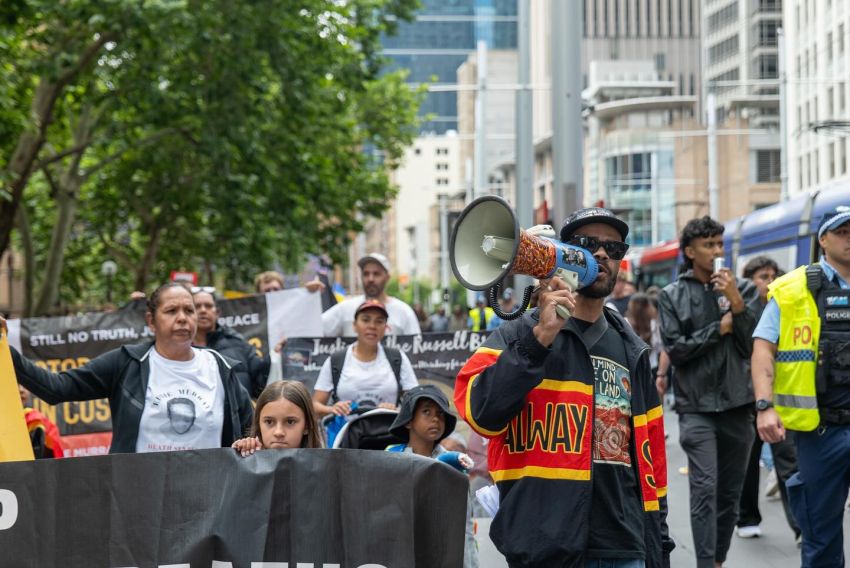
First Nations activists are leading the campaign to stop deaths in custody and for real accountability for those responsible.
Dunghutti activist Paul Silva has been fighting for justice for his uncle David Dungay jnr since he was killed at Long Bay Jail in December 2015. Even though the 2018 coronial inquest found that corrections officers had restrained Dungay jnr, and ignored his cries that he could not breathe, none of the five officers faced any disciplinary action.
Dungay jnr’s cries of “I can’t breathe” were chanted during the 2020 Black Lives Matter protests on Gadigal Country/Sydney, prompted by the United States police killing of George Floyd. Floyd had also cried out that he could not breathe, before he died due to police brutality.
Silva has issued a call to action on January 18 at Hyde Park on Gadigal Country to mark 10 years since Dungay jnr was killed. Silva said deaths in custody are not “unavoidable incidents”.
“They are the result of policies, neglect, racism and a justice system that continues to fail Aboriginal people,” Silva said on social media on January 2. “Families are still waiting for accountability. Recommendations from Royal Commissions and coronial inquests continue to be ignored. Lives continue to be lost.”
Of the 339 recommendations handed down by the 1991 Royal Commission, only one has been implemented — the tracking of deaths in custody by the AIC.
First Nations people make up 37% of the adult prison population, as of June last year, despite only making up about 3.8% of the total population. This is a rise of 10% — 1561 people — since June 2024.
A huge 60% of those aged 10–17 in detention are First Nations young people.
The Australian Institute of Health and Welfare found that First Nations youth were 21 times as likely to be in detention compared to non-Indigenous young people. Of those aged 10–13 in detention, almost 80% were First Nations.
At the same time, the Productivity Commission’s 2025 Report on Government Services showed the child removal system costs $6.6 billion a year, and the child prison system costs more than $1 billion.
Meanwhile, the Queensland Liberal National government and Victorian Labor government have introduced new laws for tougher sentences for child offenders. This will disproportionately impact First Nations children and other disadvantaged groups.
Gunnai, Gunditjmara and Djab Wurrung independent Victorian Senator Lidia Thorpe said: “The racist ‘tough on crime’ laws we’re seeing nationwide were always going to lead to more deaths.
“We warned that this would happen. When prisons are full, more of our people die. This is not about safety. It is about punishment, control, politics and power.”
The Blak Caucus’ January 18 protest is set to launch a new corruption inquiry into Aboriginal deaths in custody. It will also challenge the NSW Labor’s new anti-protest laws, which gave police powers to block public assembly applications for up to three months following a “designated terrorist incident”.
Silva told the ABC: “We do intend to march through the streets of Sydney, and we will do it appropriately on the day because we believe these laws are inhumane.”
“Allowing people to statically congregate in a park but not allowing them to take to the streets, I believe, is a form of oppression in relation to what we are trying to expose … in relation to scrutinising the government and authorities,” he said.
A challenge to these anti-protest laws has been launched in the NSW Supreme Court by Jews Against the Occupation ’48, Palestine Action Group and the Blak Caucus.
Blak Caucus is also organising an Invasion Day rally on January 26, the annual march that demands justice, sovereignty and land rights for First Nations people. NSW Police Commissioner Mal Lanyon has refused to rule out the protest ban impacting the march.
[Join the January 18 rally against deaths in custody on Gadigal Country/Sydney, 12pm at Hyde Park, and join your nearest Invasion Day protest.]