
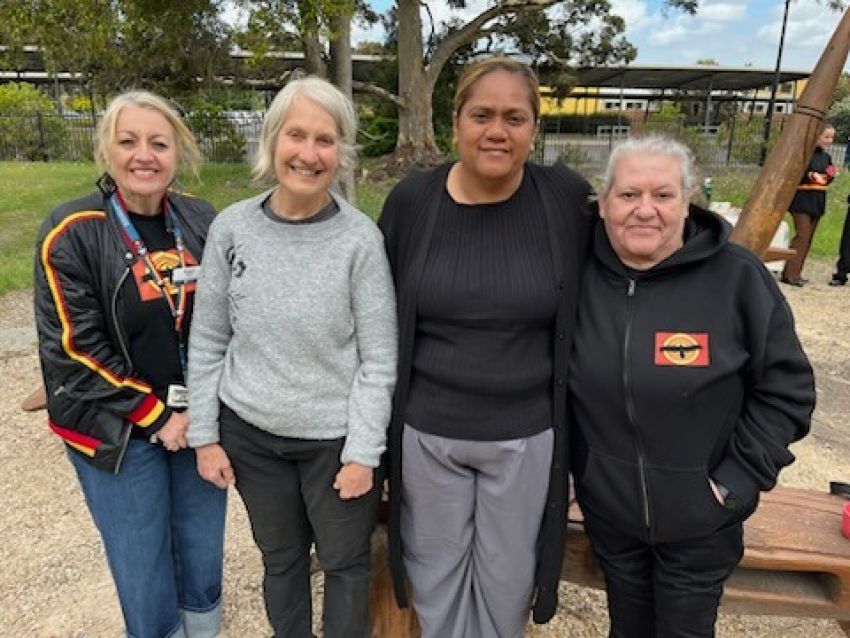
After a 15-year campaign by the Wurundjeri Woi-wurrung people, the Victorian Labor government handed back the Ballerrt Mooroop site on December 15.
The site was originally a school for First Nations students — the Ballerrt Mooroop College. Ballerrt Mooroop is Wurundjeri Woi-wurrung and means strong spirit.
I first connected with the Ballerrt Mooroop school community when they marched through Glenroy to protest the Victorian government’s plan to close it down. They organised an occupation of the school’s Gathering Place for most of 2011.
The community was devastated when the Victorian government expelled the students and closed the school in early 2012, without offering any alternative educational pathway.
A car crash in Coolaroo in 2012, in which some young people lost their lives, spurred on the campaign for the Ballerrt Mooroop site to become a First Nations Cultural Centre. One young person who died in this crash had been a Ballerrt Mooroop student.
The local First Nations community and supporters formed the Ballerrt Mooroop Working group to stop the government selling the site and have the land returned to the Wurundjeri Woi-wurrung.
Many people have been involved in the campaign which has been running for such a long time that some have passed away.
Aunty Margaret Gardiner, an elder from the Wurundjeri Woi-wurrung was involved from the beginning. She did a Welcome to Country when the Ballerrt Mooroop school was first established. Aunty Margaret was involved in the campaign to save the Ballerrt Mooroop site until she passed in 2022.
Aunty Margaret’s brother, Uncle Andrew Gardiner, continued her work and played a key role along with the Wurundjeri Woi-wurrung council in winning back the site.
Uncle Tom Slater passed away under the Spirit Tree, during the school occupation in 2011.
Uncle Gary Murray played a key role throughout the 15 years in involving different sections of the community in the campaign to save the site.
Aunty Barbara Williams, Mariella Teiuira and Dotty Bamblett played a key role throughout the school occupation, while also caring for their families. Aunty Barbara and Mariella were also involved in the Ballerrt Mooroop Working Group.
Many others, including Jason Castledine, Susannah Augustine, Chris Peterson, Sharon Firebrace and Cheryl and Klaus Kaulfuss, played key roles during the school occupation and afterwards.
In more recent years, Kim Kruger as co-chair of the Merri-bek Council’s First Nations Advisory Council has played a critical role in making sure that support for the Ballerrt Mooroop project kept growing. Some council staff have also played a big role in helping win back the Ballerrt Mooroop site.
Since I was elected to Merri-bek council in 2012, I have pushed council to keep supporting the Ballerrt Mooroop project.
While we congratulate the Wurundjeir Woi-wurrung and the local First Nations community on this victory, it is a reminder that that so little land has been returned to First Nations peoples in Victoria.
There are more than 40 First Nations’ massacre sites all over Victoria and yet less than 10 parcels of land have been handed back. Apart from the Ballerrt Mooroop site they include land for a Dja Dja Wurrung Cultural Hub in the Bendigo area in 2022; the Thornbury site was handed over to the Aboriginal Advancement League site in the late 1970s; the Lake Tyers community won the return of their land in the 1970s; and land was returned to the Framlingham community in the 1970s.
When you know the scale of the dispossession by the colonisers — and the subsequent genocide — the returned parcels of land are tiny.
[Sue Bolton is a Socialist Alliance councillor on Merri-bek council.]