-
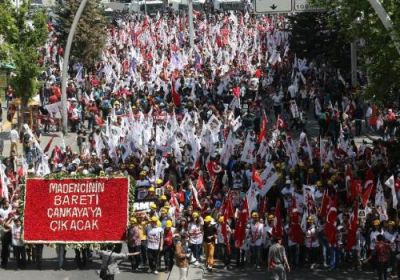
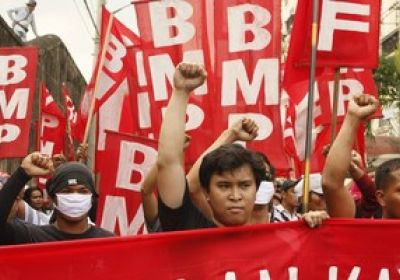
The March in March protests across Australia over March 15-17 were a resounding success – not just because of their size, focus and breadth. Just as significant is the fact that March in March tore apart the idea – seeded by the cynical rhetoric of John Howard's spin doctors in the wake of the invasion of Iraq – that protests don't work. This protest worked precisely because it brought between 80,000 and 110,000 people out of their homes and into the streets in a disparate yet united way against the Tony Abbott government's attacks. -
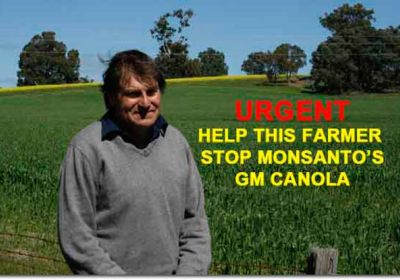
New Caledonia, a French-administered archipelago in the south-west Pacific, passed a law on February 13 banning the importation of genetically modified seeds for cereals and fruits. Vegetables, however, are exempt from the law. A proposal for mandatory labelling of GMO products is still to be approved by the Congress. -
More than five years since the global financial crisis, many OECD countries are still facing high rates of unemployment, losses in income and worsening social conditions. This was confirmed in the latest OECD social indicators report, Society at a Glance 2014, released on March 19. The reports says: "The financial upheaval of 2007-08 created not just an economic and fiscal crisis but also a social crisis ... Some 48 million people in OECD countries are looking for a job – 15 million more than in September 2007 – and millions more are in financial distress.
-
Images forge reality, granting a power to television and video and even still photographs that can burrow deep into people’s consciousness without them even knowing it. I thought that I, too, was immune to the repetitious portrayals of Venezuela as a failed state in the throes of a popular rebellion. But I wasn’t prepared for what I saw in Caracas this month: how little of daily life appeared to be affected by the right-wing protests, the normality that prevailed in the vast majority of the city. I, too, had been taken in by media imagery. -
"The solution to Qantas's problems is being framed as a choice between lifting the level of permissible foreign ownership or a public debt guarantee,” Chad Satterlee wrote in article in the Guardian on March 3. “There is another option: renationalisation". -
Marking one year since the untimely death of former Venezuelan president Hugo Chavez, eminent writer and film maker Tariq Ali gave a passionate memorial lecture in central London on February 20 at an event organised by the British Venezuelan Solidarity Campaign.
-
“Forgetting Fukushima makes it more likely that such a nuclear disaster could happen elsewhere,” said Tatsuko Okawara, one of the hundreds of thousands of victims of the Fukushima accident that began on March 11, 2011. The nuclear industry, however, is trying its hardest to make us forget. It is downplaying the impacts of the accident, ignoring the fact that the Fukushima reactors are still not under control and claiming that lessons have been learned. Nothing is further from the truth.
-
Jean-Luc Melenchon is co-president of France's Left Party and a member of the European parliament. Melenchon is also leader of the broader Left Front, involving other parties such as the French Communist Party, on whose ticket he won about 11% of the vote in the 2012 presidential elections. Below, Melenchon gives his perspective on the crisis in Ukraine ― from Russia's actions in Crimea, to the West's saber rattling, to the mass protests that brought down an unpopular government and the new regime, featuring fascist forces, that has taken its place. -
The dangers of global warming due to greenhouse gases in the atmosphere is well-established. But there is more damage done by the capitalist system of production, including the release of toxins into the atmosphere, water and the rest of the biosphere. Two notable examples have occurred in the first months of this year in the United States. In January there was a huge spill of 10,000 gallons of crude MCHM, a chemical mixture used in the coal production process, into the Elk River near Charleston, West Virginia. -
A New York judge has overruled the US$9.5 billion (A$10.5 billion) in compensation for toxic waste dumping that Chevron had been ordered to pay to Ecuadorian villagers. The oil company, the world’s third largest, was found guilty in 2012 by an Ecuadorian court of causing huge environmental damages in the Amazon Basin. At the time, it was the largest environmental damages lawsuit ever. Texaco oil company, which merged into Chevron Corporation in 2001, operated in the Sucumbios province of Ecuador, in the uppermost headwaters of the Amazon Basin, from 1964 to 1992. -
The older you get, apparently, the more you abandon the daft socialist ideas of your youth to become sensible and conservative. There will never be a greater retort to this miserable myth than the life of Tony Benn.
-
Modestly describing herself as “Australia's richest intellect”, Gina Rinehart has launched a new intervention into Australian politics that is calling for a cut in government spending and other measures to make private corporations “thrive”. True, she is not calling for an end to government subsidies to the mining industry. She is not calling for an end to corporate welfare and she's not calling for a reduction in wasteful military spending.