-
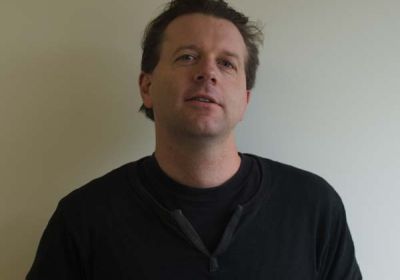
The Feminist Futures Conference is being organised for May 28-29 by the newly formed Melbourne Feminist Collective (MFC): a group of mainly young activists who were inspired by a similar conference they attended in Sydney last year. James Muldoon from the MFC told Green Left Weekly: “We are a non-aligned loose knit group of feminists who are keen to build on the movement’s past successes by focusing on shared goals and strategies for the future. “We are seeking to move beyond the old divisions by focusing on what unites us -
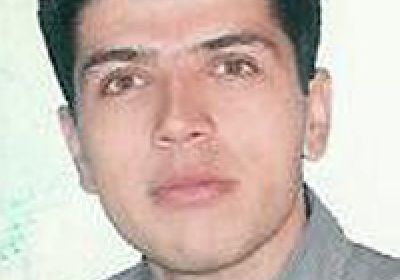
The Iran Solidarity Network (ISN) and Australia-Asia Worker Links held a meeting on May 7 to commemorate Iranian Kurdish activist Farzad Kamangar, who was executed last year. ISN member Afshin Nikouseresht told the meeting that Kamangar was a teacher, poet, author, human rights activist and unionist. He had campaigned around environmental issues, women's rights and poverty as well as union rights. He was arrested in 2006 and executed in 2010, accused of being a member of an armed Kurdish group — an allegation he denied. -
An audience of more than 600 people at a forum debate in Sydney on May 10 voted by a margin of 69% to 23%, that, "All drugs should be legalised." The forum was sponsored by Intelligence2, a project of the St James Ethics Centre. It heard arguments for and against the proposal and questions and comments from the audience. Dr Alex Wodak, president of the Australian Drug Law Reform Foundation, and a founder of Australia's first needle exchange, argued: "As a starting point, we must recognise that the ‘war on drugs’ has failed. Legalisation is the only answer. -
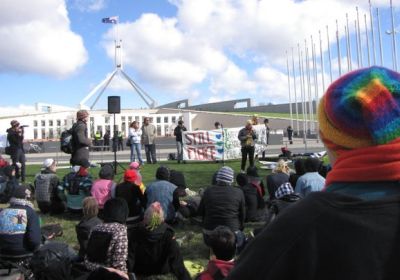
Australia’s first national rally of intersex, sex and/or gender diverse (ISGD) people saw 180 participants gather on the lawns of parliament house, Canberra, on May 11. Two buses of ISGD people and allies travelled from Sydney.
-
A tribute to the late Newcastle activist Peter Gray who made headlines as the person who threw his shoes at former Australian Prime Minister John Howard for his support for the invasion of Iraq. 2011 Resistance Conference, Sydney.
-
Independent journalist and blogger Antony Loewenstein speaking at the 2011 Resistance Conference in Sydney on May 6. Part 2 of 2.
-
The "Take the power back" conference of the socialist youth organisation Resistance was held at the Redfern Community Centre in Sydney on May 7-9. Below are videos of sections of talks given by some of the speakers.
-
Ravindran Munusamy, a youth activist with the Socialist Party of Malaysia opposes the Gillard Australian government's plan to send asylum seekers who come to Australia to Malaysia under a new deal with that country's government.
-
Matthew Cassel, former editor of Electronic Intifada, speaks on activist media and the Arab Spring at the 2011 Resistance Conference in Sydney Australia on May 7. See Resistance conference for more information. The conference was held in the Redfern Community Centre.
-
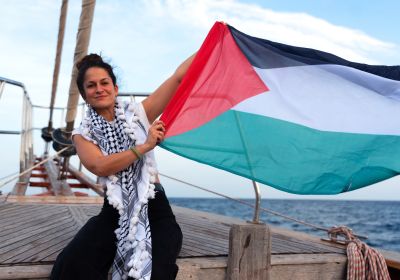
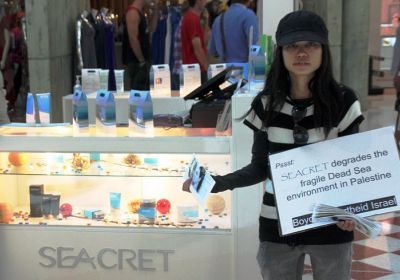
A dozen activists gathered at Carousel shopping centre on May 2 as part of a boycott, divestment and sanctions (BDS) action against cosmetics company Seacret. Friends of Palestine WA (FOPWA) called the action in support of the international BDS campaign called for by Palestinian civil society. The aim is to place pressure on Israel to adhere to international law and to end the illegal occupation of Palestine.
-
Forty refugee rights activists travelled by bus from Perth to Curtin Detention Centre in the remote Kimberley region of WA over the Easter long weekend. Several others joined the convergence at nearby Derby. This was the latest convergence on a refugee detention centre organised by the Refugee Rights Action Network (RRAN). Most refugee detention centres are located in remote locations to create a physical divide between refugees and the broader population. The convergence aimed to bridge this divide. -
The NATO attack on Libya was debated at a meeting sponsored by the Castan Centre for Human Rights Law in Melbourne on April 20. Don Rothwell, a law professor at the Australian National University, argued that the intervention is consistent with the doctrine of "responsibility to protect". This doctrine, adopted by the United Nations General Assembly in 2005, endorses outside intervention to protect people from genocide, crimes against humanity or war crimes carried out by their own government.