-
The Telecommunications (Interception and Access) Amendment Bill 2014, also known as the “data retention” bill, if passed, will be the third installment of sweeping powers granted to Australian intelligence agencies. It will mean that every move you make, every call you take, the government will be watching you. How does data retention impede the role of investigative journalists, political reporters and whistleblowers? 1: METADATA THEFT -
In February the Reserve Bank of Australia (RBA) reduced the cash rate to 2.25%, a rate it then maintained at its March meeting. While there has been a great deal of commentary on this in the mainstream press, especially in the Australian Financial Review, the left press (for lack of a better term) has been stunningly silent.
-
Blink and you might have missed it, but February 27 was the “Great Debate” between Luke Foley and Mike Baird. The media reported that Premier Baird handed Labor’s Foley his election slogan, because Baird has no plan B for infrastructure without the electricity sell-off to fund $20 billion in projects. -
“The findings of guilty are set aside and dismissed and appellant’s sentence is vacated.” With this statement on February 18 the United States Court of Military Commission Review (CMCR), found David Hicks innocent of a previous guilty plea of providing military support to terrorism. Speaking to Green Left Weekly, Hicks said: “I am not jumping up and down for joy. I am very tired by it all. Then there are the government’s and media’s attitude to it all. I am quite fed up with it all.” -
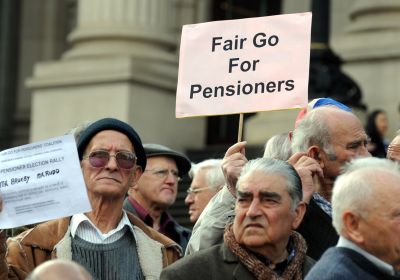
Health minister Sussan Ley’s announcement that the GP co-payment has been dropped was welcomed by Save Medicare Sydney (SMS).
-
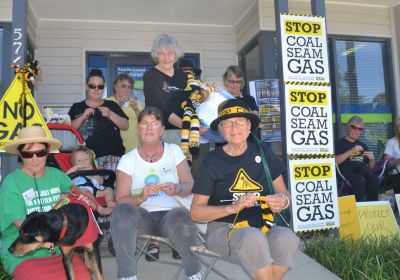
The onshore gas industry in south-east Australia is in trouble. Public opposition, low international oil prices and projected supply shortfalls have combined to cast doubt on the profitability of the industry. The international finance company Credit Suisse has indicated that the LNG (liquefied natural gas) export facilities at Gladstone in Queensland may fall short of meeting their export contracts in coming years, by up to 30%. -
Despite widespread public opposition, Prime Minister Tony Abbott and Education Minister Christopher Pyne are determined to get their higher education deregulation bill through the Senate.
-
“We will not be treated like slaves,” a refugee forced to live on Nauru said during a series of public protests held by refugees on the island. Hundreds of refugees living in the community, alongside asylum seekers still held in detention camps, have been holding a campaign of non-cooperation and protest since February 25. Children have boycotted class, refugees with jobs have begun a stay-away strike and many are refusing to talk to their case mangers.
-
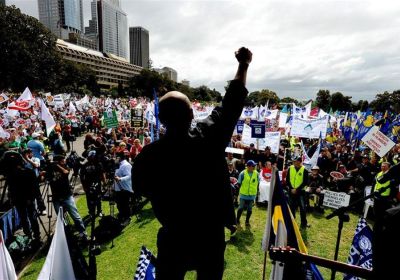
If Tony Abbott’s government has its way, new laws further empowering Australia's secret police to greatly expand their mass surveillance powers will be rammed through federal parliament by mid-March. But it will succeed only if the Australian Labor Party backs the Telecommunications (Interception and Access) Amendment (Data Retention) Bill. -
As the federal government lurches from crisis to crisis, the hand-wringing and finger pointing in the mainstream press continues. A piece by Murdoch mouthpiece Janet Albrechtsen published in the Australian on February 18, blames the Australian public. Titled “We, the people, are the threat to fiscal reform”, Albrechtsen continues the conservative mantra that argues that government budget debt is intergenerational theft. -
“Labor’s public transport policy lacks vision. It’s just more of the same — and follows the Liberals’ privatisation agenda”, John Coleman, Socialist Alliance candidate for the Legislative Council said. “Labor promised $1 billion for a small-scale light rail project to run from Parramatta to Homebush, matching the Liberals’ promise. But while any money spent on public transport rather than roads is money well spent, Labor’s policy doesn’t address the real problems. -
Frack Free Tasmania held a public meeting on February 18 at Sustainable Living Tasmania to warn about possible exploration for shale oil and gas in the island state. The current moratorium on fracking in Tasmania is due to end on March 31. The government put out an issues paper which received 157 submissions, 90% of which were opposed to fracking being allowed in the state. The government responded to the review on February 26 by extending the moratorium until 2020.