Venezuela and the Bolivarian Alliance of the Americas (ALBA) have backed Ecuador against “threats” from Britain, after Ecuador granted WikiLeaks founder Julian Assange diplomatic asylum in the Ecuadorian embassy in London on August 16.
ALBA is an anti-imperialist bloc of eight nations that includes Ecuador, Venezuela, Cuba and Bolivia.
Swedish authorities want to extradite Assange from Britain to investigate allegations against him of sexual assault.
-
-
The article below was abridged from Correo Del Orinoco International.
-
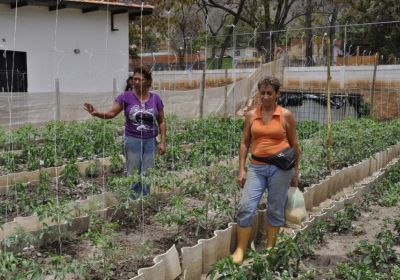
Arriving in Caracas, Venezuela’s capital, the first thing you notice is the extensive swathes of mountainside covered with poorly built, crowded, ad-hoc homes ― known locally as the barrios.
-
Thousands of peasant workers took to the streets of Caracas on July 26 to hand over a list of programmatic suggestions to the government and show their support for Venezuelan President Hugo Chavez.
-
Operation Miracle, a humanitarian social program created by the governments of Cuba and Venezuela, has made it possible to carry out over 1 million eye surgeries in the South American nation over the last eight years, the Cuban News Agency said. “We’re operating some 5000 patients a week, the same amount of patients who benefited annually in Venezuela before the beginning of the program,” said national coordinator Manuel Pacheco, cited by the Venezuelan News Agency. Operation Miracle began in July 2004, taking care of patients with few economic resources who had eye problems.
-
Mission Culture, a social program that aims to transform cultural education in Venezuela, celebrated its seventh anniversary on July 10, the state-run Venezuelan News Agency (AVN) said. The program was created on July 10, 2005, by the government of President Hugo Chavez. It has since trained more than 12,000 people in different areas of the arts to foster a renewal of popular creativity.
-
Paraguay’s new government, which came to power in a “parliamentary coup” that removed elected President Fernando Lugo, has cut relations with Venezuela after accusing it of meddling in Paraguay’s internal affairs. However, several Latin American diplomats and media sources have cast doubt on the allegations. Paraguay's foreign ministry announced the withdrawal of its ambassador to Venezuela and declared Venezuela’s envoy to Asuncion a “persona non grata” due to “serious evidence of intervention … in the internal affairs of the Republic of Paraguay” by Venezuelan officials.
-
Venezuela suspended oil shipments and withdrew its ambassador from Paraguay as part of a regional wave of condemnation against the ouster of leftist Paraguayan President Fernando Lugo on June 22. “We are absolutely not going to support this state coup, not directly, neither indirectly,” Venezuelan President Hugo Chavez said on June 24.
-
Despite much speculation in the international media regarding the health of Venezuelan President Hugo Chavez, a mass gathering of supporters accompanied him on June 11 as he registered his candidature for the October 7 presidential elections. Chavez used the opportunity to address the issue of recent tests he had undergone after his cancer treatment. “Everything came out absolutely fine, I feel very well” said Chavez, Venezuela Analysis reported the next day. -
The Venezuelan government has strongly denounced the “Human Rights Report” published by the US State Department on May 24. Venezuela's Attorney-General Luisa Ortega Diaz said the US lacks the moral authority to issue human rights reports on other countries. “How can they be issuing reports if the United States is the world’s leading military power and the protagonist of the principle wars that shake the planet?” she said on Venezuelan state channel VTV.
-
Some years ago, travelling on the presidential plane of Venezulea's left-wing President Hugo Chavez of with a French friend from Le Monde Diplomatique, we were asked what we thought was happening in Europe. Was there any chance of a move to the left? We replied in the depressed and pessimistic tones typical of the early years of the 21st century. Neither in Britain nor France, nor anywhere in the eurozone, did we see much chance of a political breakthrough. Then maybe, said Chavez with a twinkle, they could come to our assistance.
-
Much of the world’s population continues to pay for the global financial crisis with their jobs, homes, education and health. Bankers continue to award themselves millions of dollars in bonuses, such as the British bank Barclay’s chief executive, who last year earned US$26.9 million. The Venezuelan government, however, has raised the percentage of net profits banks must grant in credit to national social programs. In doing so, it is demonstrating to the rest of the world what a regulated and socially oriented banking system could look like.