
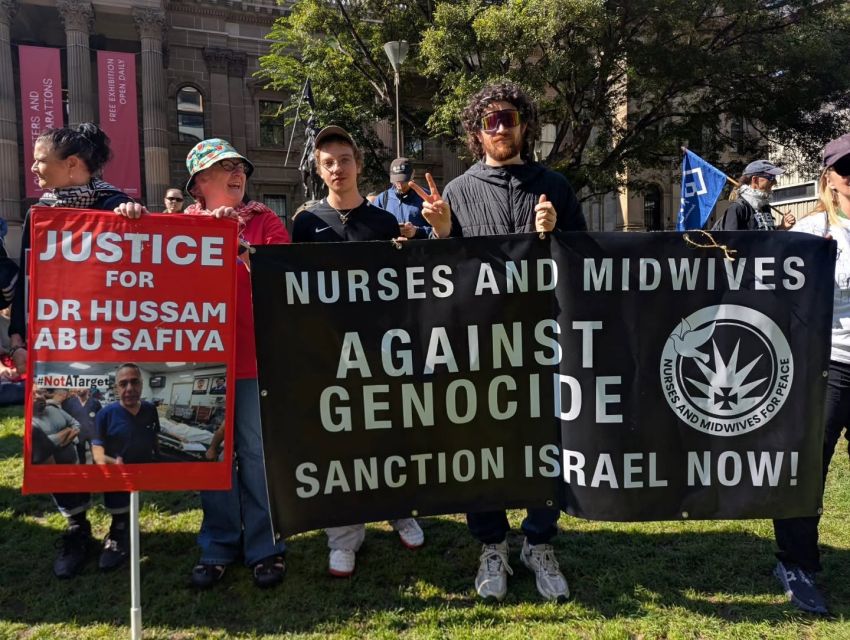
The Australian Health Practitioner Regulation Agency (AHPRA), Australia’s healthcare watchdog, has adopted the controversial International Holocaust Remembrance Alliance (IHRA) definition of antisemitism, prompting a backlash from healthcare workers and organisations that fear being targeted for lawful advocacy.
AHPRA, the authority responsible for regulating 16 health professions, announced its decision on June 17 jointly with Jillian Segal, the Special Envoy to Combat Antisemitism.
AHPRA, which governs doctors, nurses, psychologists and pharmacists, said it was “committed to working with the Special Envoy and partners to eliminate antisemitism from the health system, because everyone should feel safe when accessing care”.
Failure to register and maintain accreditation with AHPRA, which includes compliance with an established code of conduct, can lead to suspension and prohibition.
Segal has been campaigning for the Labor government to impose the controversial IHRA definition throughout statutory bodies. This is despite the IHRA’s definition of antisemitism being not only widely contested but rejected by human rights organisations, on the grounds it conflates criticism of Israel with antisemitism.
Jewish activists and international law experts alike say that conflating Zionism with Jewishness produces the kind of antisemitism it purports to address. It also weaponises the community it purports to protect. According to the Australian Human Rights Institute, the IHRA definition has attracted “wholly justified criticism”.
AHPRA has further disclosed that it is “reviewing its Vexatious Notifications Framework in response to concerns about the weaponisation of the notifications process and is establishing an advisory panel of practitioners — including those with lived experience of notifications underpinned by antisemitism — to inform improvements to systems and processes”.
Evidence suggests concerns about vexatious complaints are warranted. The Guardian reported in August last year that the Royal Australian College of General Practitioners complained to AHPRA that its members were being unjustly subjected to investigations initiated from complaints about them expressing concern about the deteriorating genocide in Gaza.
Dr Stephen Parnis, a former emergency physician and vice-president of the Australian Medical Association, who publicly opposed Israel’s genocide of Palestine, inferred he had come under heavy pressure and decided to step down from a board position. “I have exercised my right as an individual to comment on matters in the public domain based on my own views and conscience,” Parnis said, adding that he did not purport to represent the medical insurance provider.
More recently, cardiologist Professor Peter MacDonald, who was suspended from his post at St Vincent’s Hospital, pending an investigation, has again been the target of a campaign.
He was scheduled to give a prestigious lecture at the Surgical Forum in July, but was suddenly cancelled by the University of Melbourne. MacDonald was forced to stand down for seven weeks last year, before the complaint against him by doctors associated with the Australian Zionist Healthcare Alliance was dismissed following an independent investigation.
Healthcare for Palestine reported on July 3 that more than 2000 healthcare professionals and organisations have signed an open letter to AHPRA requesting clarification and consultation on the IHRA adoption decision.
The Medical Association for the Prevention of War described AHPRA’s decision as “inappropriate, ill-conceived and divisive”.
The Australian Palestine Advocacy Network called on AHPRA to revoke the decision, stating: “Healthcare workers have a moral, professional and democratic right to criticise any state or government that commits human rights abuses, and any attempt to intimidate, censor or silence them for doing so must be met with righteous condemnation.”
Meanwhile, the British Medical Association voted on June 23 in favour of scrapping the IHRA definition of antisemitism in the National Health Service.
[You can sign Healthcare for Palestine’s open letter here.]