
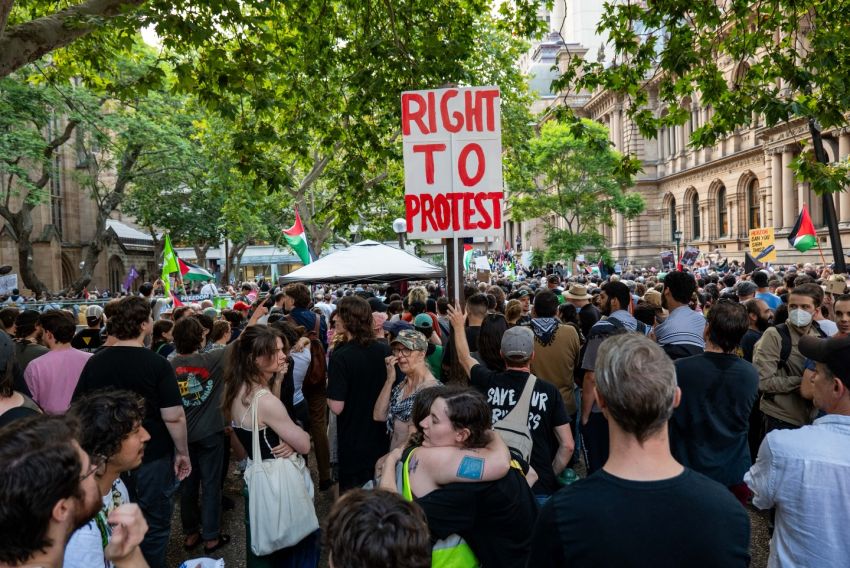
Anne Twomey, a constitutional lawyer at the University of Sydney, is concerned that the plethora of new state and federal laws to combat hate are having an adverse impact on free speech.
This is what she told the New South Wales parliamentary inquiry looking at measures to combat far-right extremism on February 19.
Twomey told the committee that while some people will feel “visceral anger” that their right to express themselves had been curbed, the “real risk” is when people feel they have to use other means, such as violence, to get their message across. Twomey is not alone in identifying this risk.
The NSW parliamentary inquiry is considering laws that might prevent a repeat of last year’s November 8 neo-Nazi rally outside NSW parliament, along with new laws introduced afterwards that seek to crack down on such protests. There is also the question of whether all these new laws are necessary.
Laws against far-right individuals are not the only new criminal measures NSW Labor is contemplating.
The inquiry into banning some political slogans recommended Labor prohibit the phrase “Globalise the intifada”. NSW Premier Chris Minns is determined to ban it, alleging the pro-Palestine movement created the conditions for the terrorist attack at Bondi. In fact, “Globalise the intifada” has not been a popular chant at anti-genocide rallies.
The NSW inquiry also contemplated prohibiting the popular chant “From the river to the sea” in public as well.
The Crimes and Summary Offences Amendment Bill 2025 contains laws to curb neo-Nazi behaviour in public. The bill seeks to repeal the offence of displaying a Nazi symbol, under section 93ZA of the Crimes Act 1900 (NSW) and replace it with the new offence of displaying Nazi symbols or otherwise engaging in conduct supporting Nazi ideology.
Such acts near a Jewish site of significance could carry up to two years’ imprisonment. Undertaking the same act elsewhere would attract one year in prison.
Another provision repeals section 93ZAC of the Crimes Act. This NSW Greens amendment, in February last year, sought to introduce a sunset clause that ends the offence of publicly inciting hatred on grounds of race contained in section 93ZAA of the Crimes Act after three years.
Twomey said as there is already an incitement to hatred offence on the books, which should rule out a prohibition on a specific phrase because it is hateful, because it is already covered. She said opening up the ability to legislate against phrases said in public is unwarranted.
The alleged need to overhaul the Nazi symbol offence is weaker since federal Labor passed hate group laws in January.
The push for new laws restricting free speech is connected to government attempts to silence opposition to Israel’s genocide in Gaza under the guise of “combating antisemitism”.
The first laws aimed at combatting rising antisemitism, at the NSW and federal level, were sparked by the so-called antisemitism crime wave in Gadigal/Sydney and Naarm/Melbourne, much of which was later shown to be a hoax staged by organised crime. Both pieces of legislation were passed in February last year.
The 2025 federal hate crime bill contained new criminal offences of threatening force or violence against groups, their members or property. A group is “distinguished by race, religion, sex, sexual orientation, gender identity, intersex status, disability, nationality, national or ethnic origin or political opinion”. These crimes carry up to five years’ prison, or seven years if the impact is assessed as more serious.
Mandatory minimum sentences were also rolled out for a range of terrorism offences. In the same month, Minns ban unauthorised protests near places of worship and enacted an unconstitutional move-on power to accompany it.
He also passed laws that include the aggravated offence of publicly displaying a Nazi symbol on or near a synagogue and an aggravated offence of graffitiing a place of worship.
The third major law that was passed was the 93ZAA offence of publicly inciting hatred on ground of race, which currently has a sunset clause. The federal Labor government also sought to pass a version of this crime in January, but the outcry against eroding freedom of speech and criminalising speech was so loud it was dropped.
Instead, Labor went on to pass two “combatting antisemitism” bills on January 20, one of which installed a hate group regime, which allows the ASIO boss, with ministers in tow, to declare a group a hate group to outlaw it and trigger offences to criminalise its members if it has engaged in, or advocated, politically motivated or communal violence, or there might be a risk of this.
Meanwhile, the Minns government enacted the public assembly restriction declaration (PARD) law last Christmas Eve, following the Bondi shooting. It permits the NSW Police Commissioner to ban street protests for up to 90 days in a designated PARD area, following an incident being declared terrorism-related.
[Paul Gregoire writes for Sydney Criminal Lawyers, where this article was first published.]