
While the United States-Israeli war against Iran and Lebanon has distracted world attention, Israel has intensified its genocidal attack against Palestinians in the Gaza Strip and the West Bank.
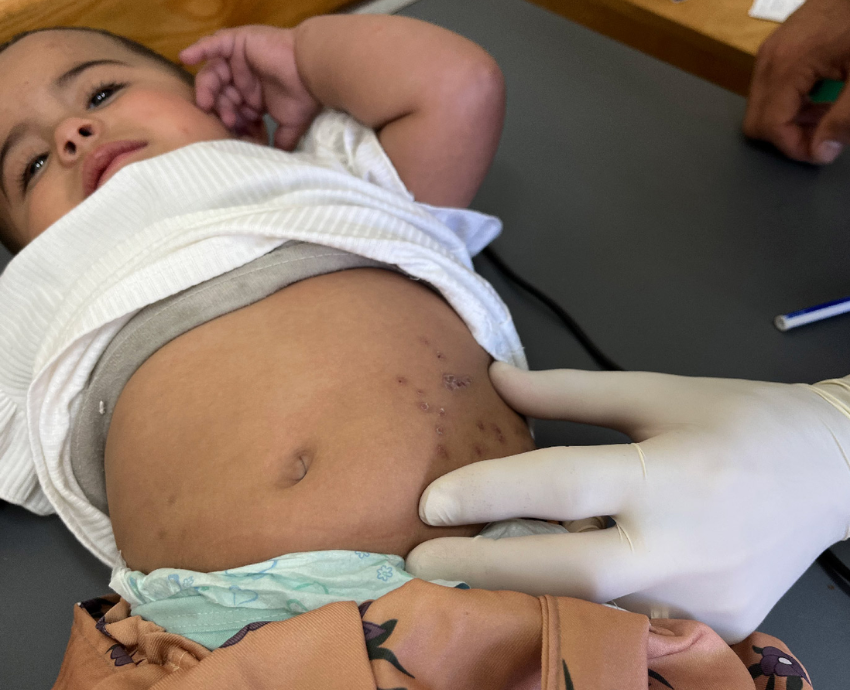
DemocracyNow! reported on May 7, that on top of Israel’s continuing bombardment and destruction, Gaza faces the collapse of its public health infrastructure, amid infestation and disease, while Israel blocks reconstruction and limits aid.
Israel now controls two-thirds of the Gaza Strip. Palestinians have been herded into the remaining areas and the IDF continues to murder them. Since last year’s ceasefire went into effect, Israel has killed more than 837 Palestinians.
In one example, an Israeli airstrike in Gaza City, on May 6, killed the son of Khalil al-Hayya, Hamas’s chief negotiator with Israel. Israel has killed four of al-Hayya’s sons since 2018.
The previous week, an Israeli drone strike killed 9-year-old Adil al-Najjar. A family spokesperson told DN! Adil was part of a group “collecting cardboard so we could bake. They want to eat. They want to drink. His father is blind …. he leans on his children.
“A little child. He did not damage a tank. He did not make missiles …. Isn’t it shameful that we bury our children every day in front of us?”
Eyad Amawi, coordinator of the Gaza Relief Committee (GRC), told DN! host Amy Goodman that the situation on the ground in Gaza can be described as “the collapse of every essential condition required for human survival: water, food, health, dignity, shelter, safety, everything”.
The GRC has issued a report based on accounts from workers on the ground about the spread of infection and collapse of public health. Amawi said the report found that more than 59% of Palestinians in Gaza suffer from insufficient water and more than 55% are uncertain whether the water they consume is safe or not. About 94% of families report that their food is spoiled. Rodent infestation has become widespread inside shelters.
Amawi said the number of aid trucks allowed into Gaza through the single crossing point has been severely reduced, and does not meet basic needs.
This includes materials like “cement and iron and some basic materials to help us to resume our partially normal life and fixing the sewage network and water network and fixing infrastructure to prevent this environment from causing infectious disease,” he said. Israel claims these materials have a “double use” as military materials as justification for restricting them.
The number of urgent medical evacuations out of Gaza has been cut to only 12% of those in need.
“What we are witnessing is the systematic use of deprivation and public health collapse as instruments of collective punishment over our people.”
West Bank
Meanwhile, the May 4 New York Times reported that “extremist settlers acting with seeming impunity have intensified their attacks on Palestinians across the Israeli-occupied West Bank. Their campaign of violence and intimidation is emptying out entire villages and leaving countless Palestinians fearing what each nightfall might bring.”
Iran Yaron, an anthropologist who has spent years studying Israel’s radical nationalist groups, including long stretches with extremist settlers, told the NYT: “It’s a chance to escalate pogroms on Palestinians while the world is distracted [by the US-Israeli war] … Their goal is to expel Palestinians from their lands and make then their own.’’
The Israeli government says that it aims to expel all Palestinians from all the territory it rules. Israel does not refer to the West Bank as occupied territory, but as “Judea and Samaria” — part of ancient Israel.
Israel has created settlements across the West Bank since 1967. These areas are officially considered part of Israel, and the settlers Israeli citizens. A web of roads connects the settlements, isolating Palestinian regions. A new road is being constructed to connect the settlements with Jerusalem.
The Israeli police force in the West Bank is under the jurisdiction of the extremist politician Itamar Ben-Gvir, Israel’s national security minister, who “made his name as a lawyer defending settlers who had attacked Palestinians” reported the NYT.
The NYT report included accounts from Palestinians in the West Bank who had suffered brutal attacks by settlers, including Moatasem Odeh, who witnessed his son Amir being fatally shot and who was stabbed repeatedly and beaten unconscious.
“We are helpless,” he said “and they know it.”
Masked men sexually assaulted Jordan Valley villager, Suhaib Abualkebash, and brutalised his extended family.
In Deir Dibwan, east of Ramallah, Odeh Awawdeh was fatally shot when he tried to stop settlers from stealing his family’s sheep, according to family members and local authorities.
Thaer Hamayel was shot dead fending off Israeli settlers raiding his village, Khirbet Abu Falah.
Maleeha Al-Omari, who was standing outside her home just steps from where Hamayel was gunned down, said: “I’m afraid of being in my house, and I am afraid of what will happen if I leave it.”
“No one protects us from the settlers,” she said. ‘We are on our own.”
Coupled with the Israeli war against Lebanon and the US-Israeli war against Iran, the Israeli escalation in Gaza and the West Bank, we see an US-Israel axis of evil in the Middle East.