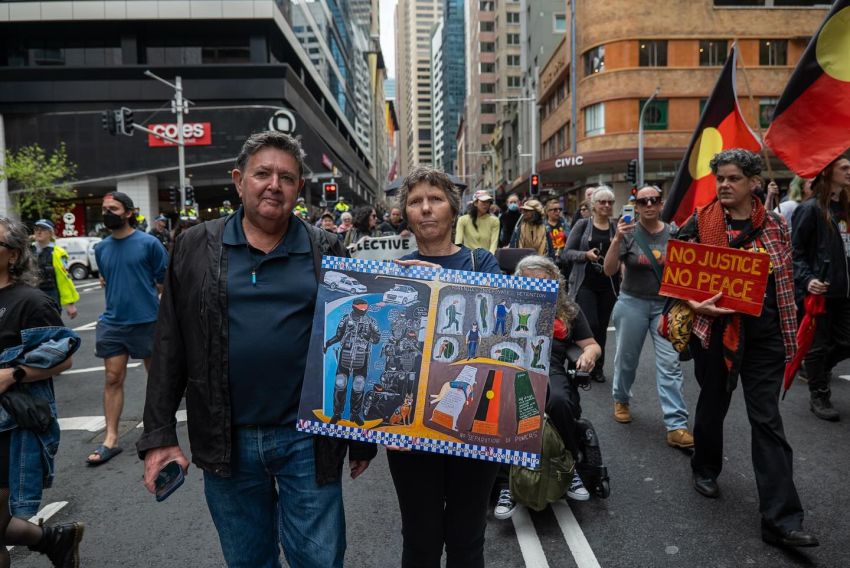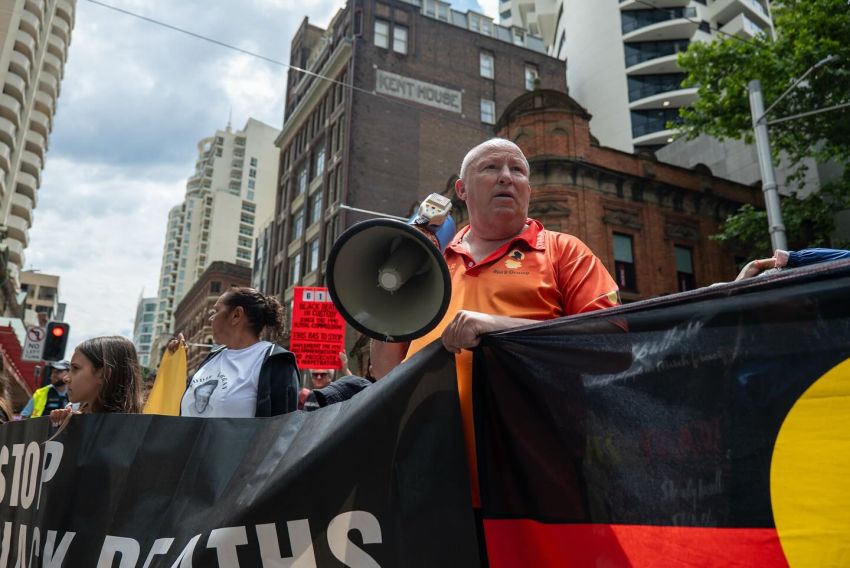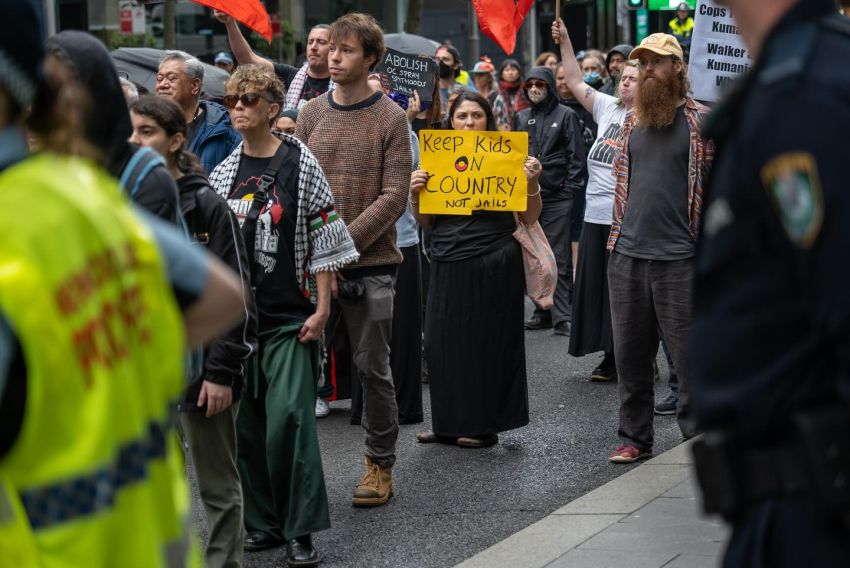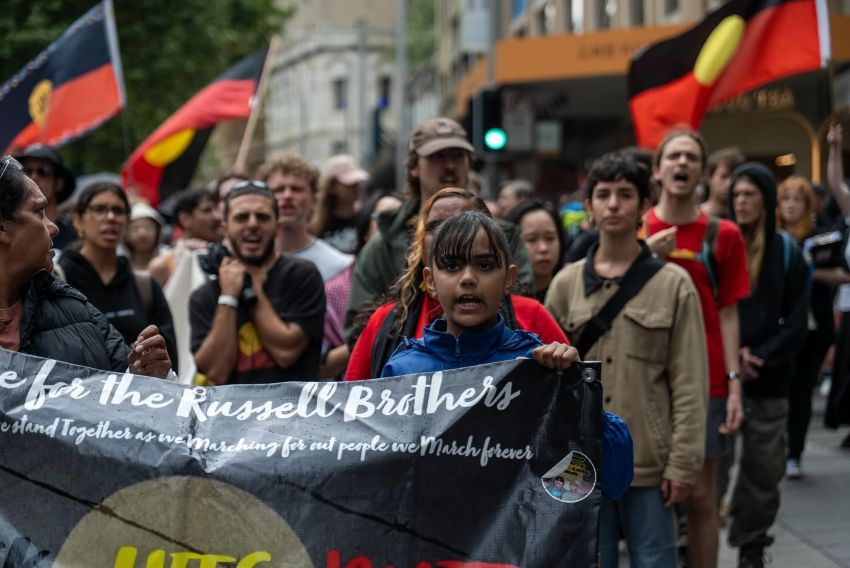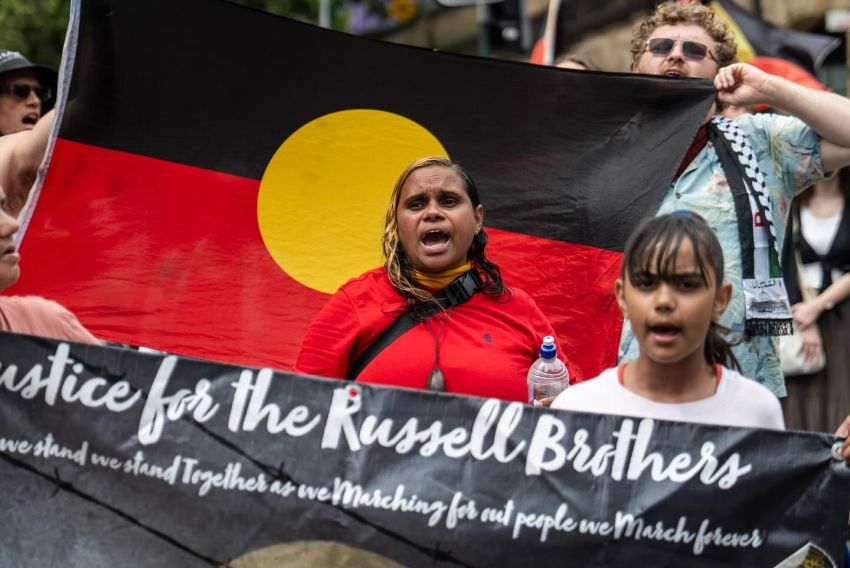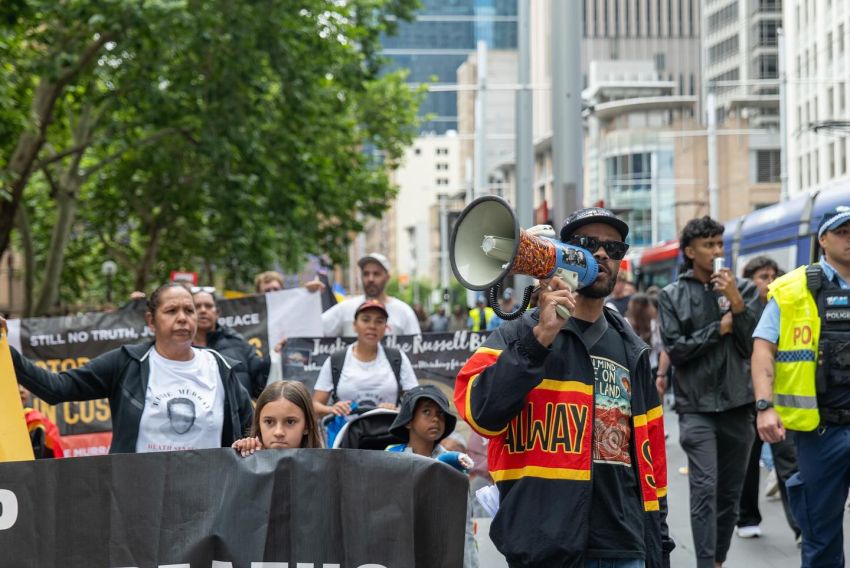
Blak Caucus called a rally on November 1 to highlight the urgent need to deliver justice to those grieving their loved ones who died at the hands of NSW Police.
Dunghutti activist Paul Silva, who chaired the rally, told the crowd that the system needs to change.
“More than 600 souls” had died at the hands of police, Silva said. “Their stories lost to cells and chains. Their cries ignored by those in power. Their deaths dismissed as just remains. But we will remember everyone — each face, each breath, each name. Their blood still stains the broken system. And that system still bears the blame.”
He called out their names, including Eddie Murray, Jai Kalani Wright, Edward Russell, Stanley Russell, Kumanjayi Walker and Kumanjayi White. First Nations activists Kyah Patten, Uncle Dave Bell, Vicky Fernardo, Darlene Patricia and Gloria Duffin addressed the rally.
Among those remembered was Collin Burling, whose partner Taite Collins gave an emotional account of what had happened.
On July 15, at 2am, police were called to the Solander Waterloo public housing estate, allegedly to deal with someone undergoing a mental health crisis. But they assaulted and killed Burling while his partner looked on.
This terrible incident came after police chased a 48-year-old man to death while riding an E-bike near the Waterloo public housing estate in March.
Silva talked about the police murders of three Aboriginal men, in and around Waterloo, over the last 20 years. They include TJ Hickey in 2004 and Patrick Fisher in 2018, both of whom were chased by police to their deaths.
Sixteen-year-old Dunghutti youth Jai Wright was riding a motorbike in 2022 in South Eveleigh and was chased by police to his death.
Glebe public housing tenant Jesse Deacon was shot dead in the Franklyn street estate in 2023. Police showed up instead of an ambulance, following a report he was self-harming. Deacon’s mother Judy organised a march on July 19 to remember the murder of her son.
The Blak Caucus rally demanded an end to police killings and said first responders for those undergoing mental health crises needed to be appropriately trained.
Collins told Green Left that his partner Burling had complained about a gas leak in his tower building in early June and called firefighters to test the air. “We were both getting headaches from this awful smell”, he said.
“Collin called the firefighters again on the morning of his murder because he and I could smell it again. The firefighters called the ambulance and police after diagnosing Collin as having a drug-induced psychosis.”
But, as he told the rally, that was not true.
The campaign calling on NSW Labor to fund mental health responders being called, not police, in certain circumstances, is bearing fruit. It is consulting about a new model for mental health emergencies, which is open until November 16.
[You can take part in the survey — New model for responding to mental health emergencies in the community — here.]