-
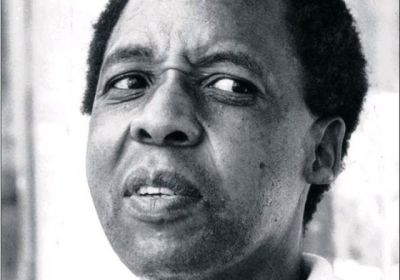
The article below is abridged from the statement released by South Africa's National Union of Metalworkers of South Africa to mark the 20th anniversary of the assassination of Chris Hani. When Hani was gunned down by a wihte supremacist on April 10, 1993, he was a leader of the South African Communist Party (SACP) and the African National Congress (ANC).Aged 50 when he was killed, Hani was a veteran of the anti-apartheid struggle. He joined the ANC Youth League aged 15 and became a leader of the ANC's armed wing. -
Three-and-a-half months ago, the walls upstairs at the Church of the Prophecy in Far Rockaway, a low-income coastal neighborhood of New York City, were covered with maps of where help was most needed. The church was a hub for the Occupy Sandy relief effort after Hurricane Sandy hit last October, established by Occupy Wall Street activists to help communities rebuild. -
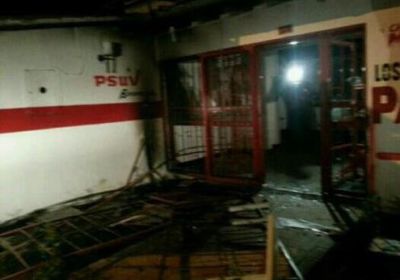
The Australia-Venezuela Solidarity Network released this statement on April 17. *** The Australia-Venezuela Solidarity Network joins with all those voices for democracy and peace to call for an immediate end to the opposition-initiated violence now occurring in Venezuela. On April 14, a majority of Venezuelans voted for the United Socialist Party of Venezuela’s (PSUV) presidential candidate, Nicolas Maduro. In doing so, they voted to continue the Bolivarian revolution previously led by Hugo Chávez. -
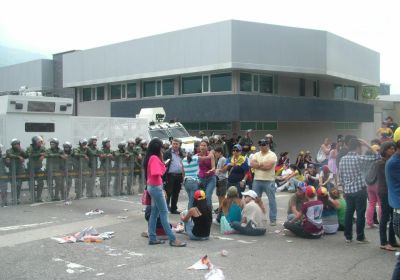
In the aftermath of Venezuela's April 14 presidential elections that was won by the candidate of the Boliviaran revolution, Nicolas Maduro, the right-wing opposition has refused to respect the result and is carrying out a campaign of often-violent street protests. -
The Real News interviews Venezuela Analysis founder Gregory Wilpert on Venezuela's April 14 elections, in which the candidate of the Bolivarian revolution Nicolas Maduro beat the right-wing opposition candidate Henrique Caprilles by more than 300,000 votes.
-
The room erupted into cheers when the election results were announced. For hours, the city of Merida's most ardent supporters of socialist presidential candidate Nicolas Maduro had gathered in the local offices of the United Socialist Party of Venezuela (PSUV). However, after a few moments, the closeness of the numbers sank in. At the time of writing, the National Electoral Council (CNE) had announced that with 99% of votes counted, the PSUV's Maduro won with 50.6%. His closest rival, Henrique Capriles, received 49.1%; giving Maduro a slim 1.5% victory. -
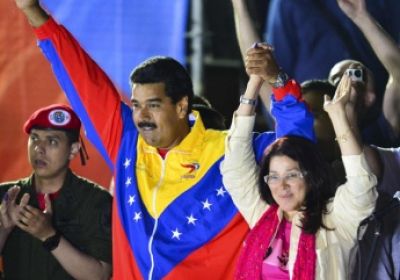
Nicolas Maduro, the candidate for the Unitede Socialist Party of Venezuela, has won the Venezuelan presidential election with 50.66 percent of the vote against 49.07 percent for opposition candidate Henrique Capriles Radonski. Maduro gave a victory speech immediately after, while Capriles initially refused to recognize the results. The “first bulletin” results were announced by the president of the National Electoral Council (CNE), Tibisay Lucena, at around 11:20 p.m. Venezuelan time, with 99.12 percent of the votes totaled, enough to give Maduro an irreversible victory. -
In a quirk of history, Margaret Thatcher died a little more than one month after Hugo Chavez. Thatcher was a figurehead for the global class war in the 1980s and '90s known as “neoliberalism”. Chavez was a figurehead for the struggle against it and the alternative starting to be built in Latin America over the past decade.
-
In the week leading up to Venezuela’s April 14 presidential elections, whistle-blowing website WikiLeaks published a classified cable indicating that US-based aid organisations were working to overthrow the government and defend US corporate interests in the Andean country. -
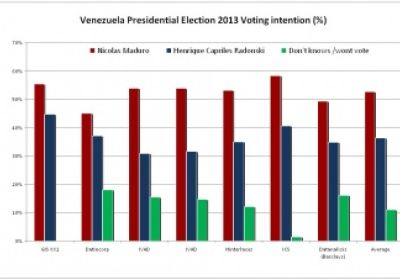
The results of Venezuela's presidential elections in a few weeks may well predictable, with polls showing socialist candidate Nicolas Maduro well ahead of his right-wing opponent. But we are going through a fragile, vulnerable period, with a future that is less predictable. These elections, as the start of the era of the Bolivarian revolution without its historic leader Hugo Chavez, have special characteristics and factors that go beyond the vote. Unity and leadership -
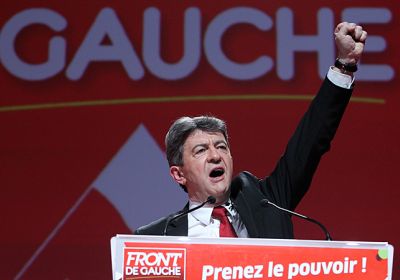
At the third national congress of the Left Party (Parti de Gauche) held in Bordeaux from March 22 to 24, France’s newest and fastest-growing socialist group seemed to come of age. Only four years old, the Left Party was born after its leading figure, Jean-Luc Melenchon, long-time leader of left currents in the Socialist Party (SP), abandoned it after the tendencies in the SP opposing neoliberal austerity mustered only 19% support at its 2008 congress. -
US International Socialist Organisation member Brian Jones speaking at the opening night of Marxism 2013. This snippet from his speech deals with the hypocrisy and current contradictions in US capitalism including the fights by teachers for justice in education.