
Guatemala: UN says corporate positioning of river 'ecocide'
The United Nations said 23 species of fish and 21 species of birds, reptiles and mammals in Guatemala's Pasion River have been affected by contamination caused by industrial African oil palm production, TeleSUR English said.
-
-
 Internationally renowned US intellectual Noam Chomsky told Mexican newspaper La Jornada on July 20 that it was because Washington was becoming increasingly isolated from “their own backyard” of Latin America, that the US decided to normalise relations with Cuba. Chomsky said the fourth Summit of the Americas of 2012 in Colombia was a major turning point for the US. It saw itself, along with Canada, completely marginalised from all the crucial issues being debated — including Cuba.
 -
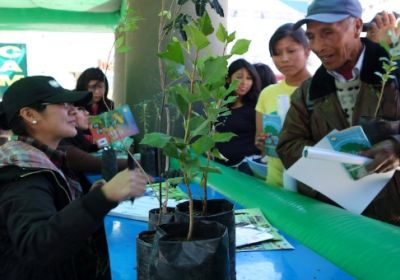 When Bolivian President Evo Morales announced in May that his government was allowing oil and gas drilling in national parks, mainstream and progressive media outlets alike were quick to condemn his supposed hypocrisy on environmental issues. Writing for the Associated Press, Frank Bajak argued that although Morales is known internationally for his outspoken campaigning on climate change, at home he faces constant criticism from conservationists “who say he puts extraction ahead of clean water and forests”.
 -
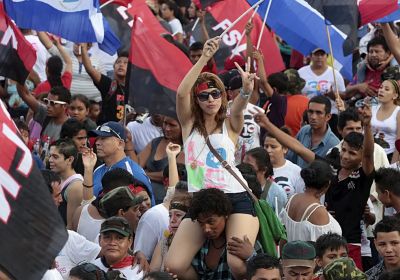
Showers off Lake Xolotlan sprinkled the huge crowds massed on July 19 for the 36th anniversary of the triumph of Nicaragua's popular revolution over the murderous tyranny of the Anastasio Somoza dictatorship in 1979. The revolution was led by the Sandinista National Liberation Front (FSLN).
-
 Unveiling of monument to Juana Azurduy.
Bolivia's Morales unveils indigenous resistance statue in Argentina
Unveiling of monument to Juana Azurduy.
Bolivia's Morales unveils indigenous resistance statue in Argentina
-
 Colombian Indigenous refugees in Ecaudor.
Migrant rights bill says 'no one is illegal'
Ecuadorian National Assembly deputy Esteban Melo said that under a new migration bill presented to the Ecuadorian National Assembly on July 16, “No human being will be considered illegal”.
Colombian Indigenous refugees in Ecaudor.
Migrant rights bill says 'no one is illegal'
Ecuadorian National Assembly deputy Esteban Melo said that under a new migration bill presented to the Ecuadorian National Assembly on July 16, “No human being will be considered illegal”.
-
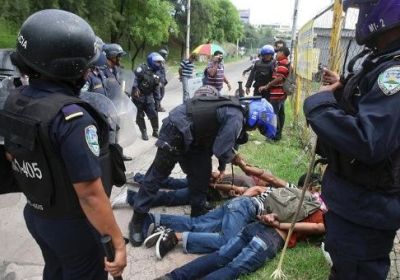
Allegations of human rights abuses have sky-rocketed in Honduras alongside a rise increase in militarisation in the violence-plagued Central American country.
-
 Supports of the 'no' vote celebrate in Athens on the night of July 5.
Leaders of Latin American left-wing governments have congratulated the Greek government and its people after Greece's historic July 5 referendum. Voters rejected debt austerity proposals by Greece's European lenders.
Venezuelan President Nicolas Maduro said: “The ‘no’ vote in Greece is a victory against the financial terrorism carried out by the International Monetary Fund (IMF).”
Supports of the 'no' vote celebrate in Athens on the night of July 5.
Leaders of Latin American left-wing governments have congratulated the Greek government and its people after Greece's historic July 5 referendum. Voters rejected debt austerity proposals by Greece's European lenders.
Venezuelan President Nicolas Maduro said: “The ‘no’ vote in Greece is a victory against the financial terrorism carried out by the International Monetary Fund (IMF).”
-
 Tens of thousands of Hondurans took to the streets in torch-lit marches on June 26 for the fifth week straight of Friday night protests.
Marchers demanded the resignation of President Juan Orlando Hernandez and an independent investigation into the multi-million dollar corruption scandal embroiling the government.
Tens of thousands of Hondurans took to the streets in torch-lit marches on June 26 for the fifth week straight of Friday night protests.
Marchers demanded the resignation of President Juan Orlando Hernandez and an independent investigation into the multi-million dollar corruption scandal embroiling the government.
-
 The United Socialist Party of Venezuela (PSUV) is held its primaries on June 28. Photo: TeleSUR.
The latest study from polling firm Hinterlaces shows that 62% of Venezuelans want the ruling United Socialist Party of Venezuela (PSUV) to stay in government.
The United Socialist Party of Venezuela (PSUV) is held its primaries on June 28. Photo: TeleSUR.
The latest study from polling firm Hinterlaces shows that 62% of Venezuelans want the ruling United Socialist Party of Venezuela (PSUV) to stay in government.
-
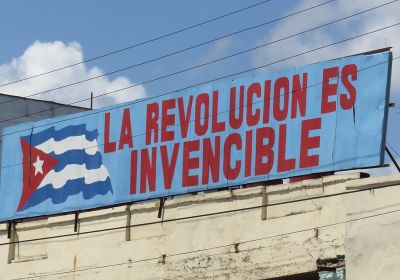
The US and Cuban governments announced on July 1 the official restoration of formal diplomatic ties by reopening embassies in each country.
-
 Cuba is a world leader in healthcare. Photo: socialmedicine.org.
Cuba became the first country in the world to be recognised by the World Health Organization (WHO) for officially eliminating mother-to-child transmission of HIV and syphilis on June 30.
“This is a major victory in our long fight against HIV and sexually transmitted infections, and an important step towards having an AIDS-free generation” said Margaret Chan, WHO Director-General.
Cuba is a world leader in healthcare. Photo: socialmedicine.org.
Cuba became the first country in the world to be recognised by the World Health Organization (WHO) for officially eliminating mother-to-child transmission of HIV and syphilis on June 30.
“This is a major victory in our long fight against HIV and sexually transmitted infections, and an important step towards having an AIDS-free generation” said Margaret Chan, WHO Director-General.