Vice-President Nicolas Maduro congratulated Ecuadorian President Rafael Correa for his “gigantic” victory in Ecuador’s presidential and parliamentary elections on February 17. Correa received 57% of the vote, achieving a strong lead ahead of the runner-up, banker Guillermo Lasso who got 24.06% of the vote. “We’re very happy, and we’ve communicated our congratulations from the whole people of Venezuela, from our president Hugo Chavez, to President Rafael Correa,” Maduro said.
-
-
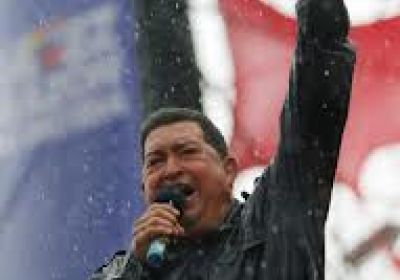
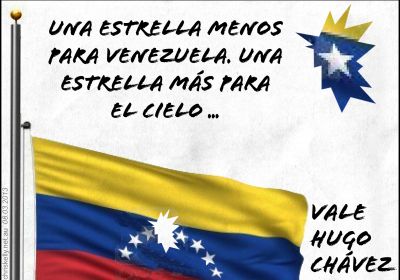
Venezuelans rallied in support of their president, Hugo Chavez, on February 18 after his surprise return from treatment in Cuba. In the early morning, Chavez had announced on Twitter he had arrived in Caracas after more than two months of cancer treatment in Havana. Chavez tweeted: “We’ve arrived once again to the Venezuelan Homeland. Thank you God! Thank you beloved people! We’ll continue treatment here.” Upon his return, Chavez was taken to the Dr Carlos Arvelo military hospital in Caracas, where he will continue treatment. -
Ecuadorian President Rafael Correa was re-elected in the first round of the country's February 17 presidential poll. Preliminary results released with 30% of the votes counted gave Correa 58% of the votes, compared with 24% for the runner-up, right-wing banker Guillermo Lasso, ABC.net.au said on February 18.
-
Several hundred people attended a night of solidarity with Cuba at the Uruguayan Club in western Sydney on February 9. The event, organised by the Committee in Solidarity with Cuba, Western Sydney, raised funds to help pay for repairs to the widespread damage caused to homes and infrastructure by cyclone Sandy last year. It featured entertainment by a variety of cultural groups from the Latin American community.
-
The doctrine of national security imposed by the United States on Latin America, which fostered the dictatorships of the 1970s and '80s, is making a comeback in Honduras. A new law is combining military defence of the country with police strategies for maintaining domestic order. The law created the National Directorate of Investigation and Intelligence (DNII), a key agency in the security structure that does not appear to be accountable to any other body, and does not appear to be under democratic civilian control.
-
It started in Colombia in 2000, moved on to Mexico in 2008 and now rages in Central America. Since the beginning of the century, the US-backed “war on drugs” has progressively spread throughout the northern part of Latin America, leaving tens of thousands of lost lives in its wake. An in-depth investigative piece published by the Associated Press explains how this so-called “war” ― which relies on US funding, training, equipment and troops ― has grown in recent years to become “the most expensive initiative in Latin America since the Cold War”.
-
There has been much speculation in the international media over the future of Venezuela in light of the poor health of Venezuelan President Hugo Chavez. The Venezuelan government reported on February 4 that Chavez's recovery in Cuba, from a cancer-related operation in December, was proceeding well. -
The international media totally misreads the Venezuelan people on President Hugo Chavèz (currently battling serious illness) argues Professor Miguel Angel Nuñez, an adviser to Chavèz on agro-ecology, in an interview with Green Left TV. The interviewers were Jim McIlroy and Coral Wynter, authors of Voices from Venezuela. Filmed and edited by Peter Boyle.
-
The illness of Venezuelan President Hugo Chavez has created uncertainty over the future direction of his government, and specifically its commitment to revolutionary change and socialism. Throughout the 14 years of his presidency, the key to Chavez’s political success was the constant deepening of the process of change, which invigorated the rank-and-file of his movement.
-
Representatives from Venezuela's National Institute of Statistics (INE) have revealed that the 14th National Census of Population and Housing, conducted during 2011, showed significant cuts to poverty levels during the previous 10 years. In 2001, 11.36% of the population were measured to be suffering from extreme poverty. President of the INE, Elias Eljuri, said the 2011 census showed that only 6.97% did, a cut of nearly half in a decade. Other conclusions included a rise in life expectancy, from 74.5 years to 79.5 years.
-
Venezuelan ecosocialist Miguel Angel Nuñez, an adviser to Chavèz on agro-ecology, discusses one of the big challenges for the revolution "How can the revolution be liberated from the oil economy" in an interview for Green Left TV. The interviewers were Jim McIlroy and Coral Wynter, authors of Voices from Venezuela. Filmed and edited by Peter Boyle.
-
Katu Arkonada, a researcher at the University of the Cordillera in La Paz, Bolivia, gives a 2012 balance sheet of Bolivia's achievements and challenges. It was translated from Spanish with additional notes by Richard Fidler and is reprinted from Bolivia Rising. ***