
The U.N. Sustainable Development Solutions Network has released its World Happiness Report for 2013.
-
-
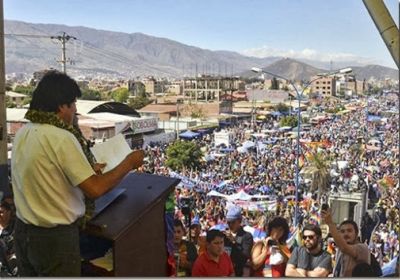 Washington’s refusal to allow Venezuela's President Nicolás Maduro to over-fly its colony of Puerto Rico on September 19 attracted little attention in the North American and European media. But in Latin America this arrogant gesture drew immediate outrage. It recalled the July 2 denial by four European countries — France, Italy, Spain and Portugal — of landing and refuelling rights and passage through their airspace to Bolivia’s president Evo Morales while he was returning home from a trip to Moscow.
 -
Ecuador’s foreign ministry announced on September 20 that the US has seemingly denied visas to a delegation set to travel to the United Nations General Assembly in New York, RT.com said the next day. The Ecuadorians were planning to present their case in an ongoing dispute against Chevron-Texaco. The ministry said the visas for the five Ecuadorian nationals were returned by the US Embassy in Quito “without any explanation”.
-

During a visit to New York for the United Nations General Assembly, Ecuador’s foreign minister Ricardo Patino joined independent media outlet Democracy now! on September 23 to discuss his government’s involvement in two closely watched environmental legal battles.
-
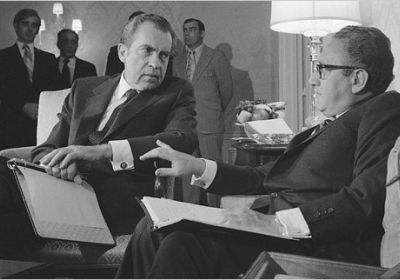 The most important anniversary of the year was the 40th anniversary of September 11, 1973 — the crushing of the democratic government of Chile by General Augusto Pinochet and Henry Kissinger, then US secretary of state. The National Security Archive in Washington has posted new documents that reveal much about Kissinger's role in an atrocity that cost thousands of lives. In declassified tapes, Kissinger is heard planning with President Richard Nixon the overthrow of left-wing President Salvador Allende. They sound like Mafiosi thugs.
 -
Bolivian President Evo Morales plans to file a lawsuit against the US government for crimes against humanity, RT.com reported on September 20. Morales criticised the US for its intimidation tactics and fear-mongering after a plane carrying Venezuelan President Nicolas Maduro was blocked from entering US airspace.
-
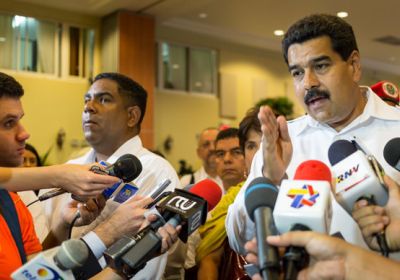 Venezuela has rejected the United States’ version of events in the dispute over Venezuelan President Nicolas Maduro’s passage through US airspace on September 19. The diplomatic fallout reached media attention when Venezuelan foreign minister Elias Jaua told reporters that Maduro had been denied permission to fly through US airspace. Venezuelan officials said the presidential flight was prohibited from passing over Puerto Rico, a US colony in the Caribbean. Maduro considered changing the flight path to reach Paris, France.
 -
Venezuelan President Nicolas Maduro announced on September 10 that a Venezuelan Armed Forces plane would carry humanitarian aid to Syrian refugees in Beirut, Lebanon. The initiative came out of a resolution from the political council of the anti-imperialist bloc Bolivarian Alliance for the Peoples of Our America (ALBA) meeting in Caracas. The plane will bring blankets, medicine, and food. Established by Venezuela and Cuba in 2004 as an alternative to US domination, ALBA now involves eight nations from the region
-
 Venezuelans rallied to condemn fascism on September 11, marking the 40th anniversary of the United States-backed coup d’etat in Chile that ousted left-wing president Salvador Allende. The rally began at Plaza Salvador Allende at the Central University of Venezuela (UCV) and marched through the city centre to Llaguno Bridge. On the bridge is a memorial to those killed during the 2002 US-backed coup that temporarily removed former Venezuelan president Hugo Chavez from office. Chavez was restored by an uprising by loyal soldiers and the poor.
 -
Thousands of striking teachers seized two of Mexico City's central thoroughfares on a march to the president's residence on September 11 after losing their battle to block new educational reforms less than 24 hours earlier. The teachers disrupted the centre of the city for at least the 14th time in two months, decrying a plan designed to break union control of Mexico's education system and, they say, damage education in Mexico's poor south in the process.
-
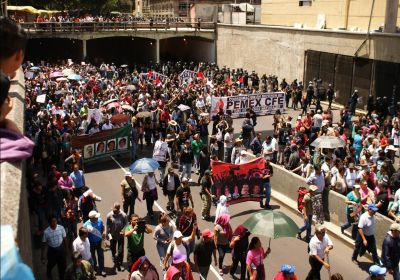 Striking Mexican teachers from a dissident union leading popular resistance to the government’s neoliberal reform agenda in recent weeks. Despite enduring relentless media hostility, the teachers' strike is now starting to broadened out to merge with protests against plans to hand over key national assets, such as Mexico’s state-owned oil industry, to the profit-hungry multinationals.
 -
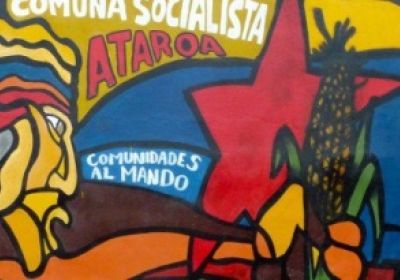 In a national census held over September 7 and 8, 1150 communes registered in a national census, exceeding expectations. The communes are forms of “popular power” in Venezuela that unite representatives of local communal councils across a regional area. Community councils in Venezuela are grassroots bodies where local residents manage public funds and undertake projects promoting community development. Communes, meanwhile, are formed by groups of community councils, and can take on larger scale projects and public works.