-
-
Thirty Venezuelan military officers, including several generals, have been arrested for alleged conspiracy to overthrow President Nicolas Maduro, a leading national newspaper has reported. The information, reported by Ultimas Noticias, was attributed to “high level sources” in Miraflores presidential palace. Most arrested were from the Venezuelan Air Force, however a few officers from the National Guard, Navy and Armed Forces were included.
-
A new investigation by the Associated Press into a project of the United States government-funded US Agency for International Development (USAID) project to create a Twitter-style social media network in Cuba has received a lot of attention. -
The election of Luis Guillermo Solis on April 6 as president of Costa Rica, with 77% of the votes, represents the end of a historical period and opens the door to unprecedented opportunities for the left. Solis, representing the Citizens Action Party (PAC), crushed the remnants of the Party of National Liberation (PLN), a party that he once served as general secretary. -
El Salvador's Legislative Assembly approved the Social Development and Protection Law on April 3. The law was presented by President Mauricio Funes last year to ensure the groundbreaking social services initiated by his administration continued. These programs are designed to address the needs of historically abandoned and excluded sectors. The law mandates a “legal framework for human development, protection and social inclusion that promotes, protects and guarantees the fulfillment of people’s rights”.
-
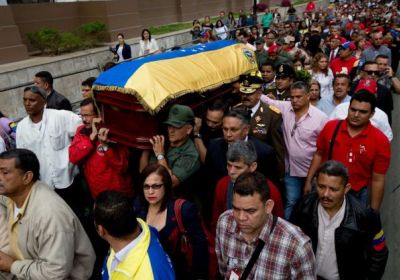
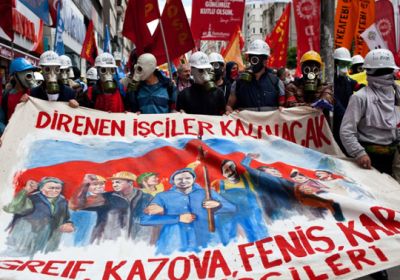
The violent anti-government protests that shook Venezuela in February have again thrust the issue of the pace of change into the broader debate over socialist transformation. Radical Chavistas, reflecting the zeal of the movement’s rank and file, call for a deepening of the “revolutionary process”. Moderate Chavistas favour concessions to avoid an escalation of the violence. -
The Venezuelan people have marked the 12th anniversary of the right-wing military coup on April 11, 2002, that briefly ousted former President Hugo Chavez. In an historically unprecedented event, the coup was overturned within 48 hours by a mass uprising of the people and soldiers loyal to the Bolivarian revolution. This year’s anniversary occurs in the context of one of the most intense right-wing destabilisation campaigns since the dramatic days of 2002. -
Venezuelan President Nicolas Maduro has approved Bs40 million (about $6.75 million) in funding for an environmental mission, and announced the creation of a national ecosocialist school. During a meeting of Venezuela's environmental movement, Maduro called on students and young people to join in state-sponsored environment rehabilitation projects.
-
April marks the 50th anniversary of the US-backed military coup d’etat in Brazil. The coup kicked off a brutal 20 military dictatorship. Military coups followed in Bolivia, Chile, Uruguay and Argentina. With the support of the US government and Paraguay, under dictator General Alfredo Stroessner, the region's regimes organised Operation Condor, a political repression and terror campaign to suppress opposition. -
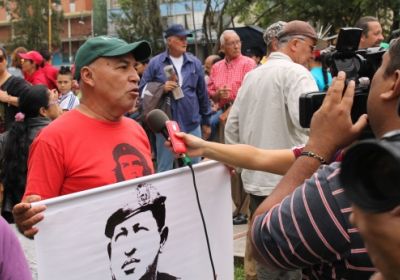
As they are prone to do, the private media have invented a new thing. In both English and Spanish, they are calling it the colectivos. They are meant to be irrational, cruel, grotesque armed motorbike riders who “enforce” the revolution in Venezuela and are responsible for most of the violence afflicting the South American nation, which has left more than 30 people dead since February. The opposition barricaders are presented as the innocent victims of these collectivos, who apparently work with the National Guard and have the support of President Nicolas Maduro's government. -
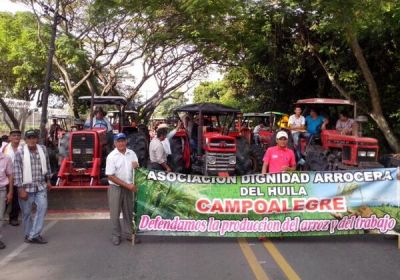
Via Campesina is a global organisation of peasants and one of the largest and most significant international social movements. The statement below in solidarity with Venezuela’s revolution and peasants was released by its International Coordinating Commission of Via Campesina International, which met in Managua, Nicaragua on March 29. *** -
Newly re-elected President Michelle Bachelet has reaffirmed her election promise to introduce free tertiary education in Chile — one of the demands of the country’s powerful student movement. In elections in December, the New Majority coalition of centre-left parties won a majority in both the Chilean Congress and Senate. Bachelet, the New Majority candidate, was elected president. On March 11, Bachelet began her second term as president, having served as president from 2006-2010. She replaced right-wing president Sebastian Pinera.
Latin America & the Caribbean