-
The Chinese philosopher Lao Tzu is reputed to have said: “If you do not change direction, you may end up where you are heading.” This sums up the problem we face from human-caused climate change. A “climate scoreboard” published by Climateinteractive.org calculates the impact of the current commitments by the world’s governments to cut carbon emissions. It estimates that if the promised emissions cuts are carried out in full, the earth would still warm by about 4°C by 2100 — far above the maximum warming of 1.5°C needed to maintain a safe planet. -

A poll by Roy Morgan Research several days into the Fukushima nuclear crisis found that 61% of Australians oppose the development of nuclear power in Australia, nearly double the 34% who support it. The growth in support for nuclear power over the past five years has been totally erased — and then some. There was undoubtedly growing support for nuclear power until Fukushima, but the issue had been the subject of a great deal of hype and spin. -
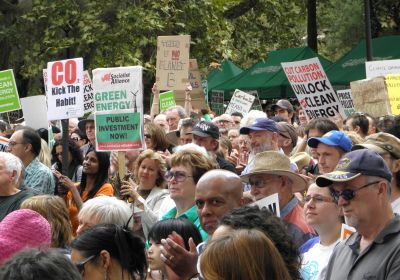
More than 200 people took to Adelaide’s streets on March 26 in the first March for Survival. Organised by the Climate Emergency Action Network (CLEAN) the protest called on people to support victims of the recent floods, cyclones and bushfires and to demand serious emission cuts (60% of 1990 levels by 2020) and 100% renewable energy by 2020. CLEAN’s John Rice introduced the rally. “For me the enduring image of these disasters is that of the Lockyer Valley and the foundation slab of a house which was swept away, taking the entire family inside,” he said. -
Manufacturer BlueScope Steel has been at the forefront of the campaign against the carbon price proposed by Labor and the Greens. Chief Executive Paul O'Malley has argued it could spell “the end of steel manufacturing in Australia”; something the Opposition Leader Tony Abbott agreed with during a recent tour of BlueScope's steelworks in Port Kembla. Both have said that a price on carbon would threaten the company's profitability and therefore force operations offshore in search of cheaper labour. -
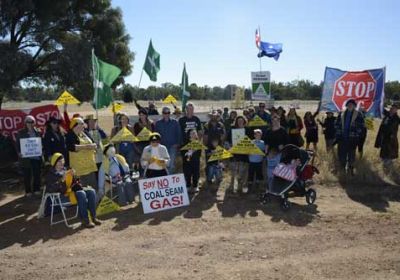
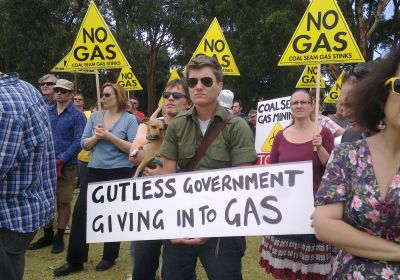
Residents of Queensland’s Western Downs and their supporters have witnessed arrests, police harassment and some exciting victories over the past week in their fight to prevent coal seam gas expansion on the Tara estate, near Chinchilla. During a protest organised by Lock the Gate Alliance on March 29 Friends of the Earth campaigner and Queensland Greens co-founder Drew Hutton was arrested and charged with impeding the construction of a coal seam gas pipeline. Mr Hutton refused bail conditions and faced 30 days prison, but was soon released on unconditional bail.
-
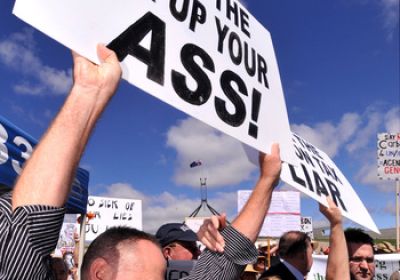
Two days before a March 23 rally against the government’s proposed carbon price took place in Canberra, Liberal MP Dennis Jensen told reporters gathered outside parliament house why he opposed the policy. He held up a piece of charcoal and dropped it to the ground. “Does anyone know what that is? Charcoal, also known as carbon,” he said. “If you notice when I let it go, it doesn't float into the air.” -
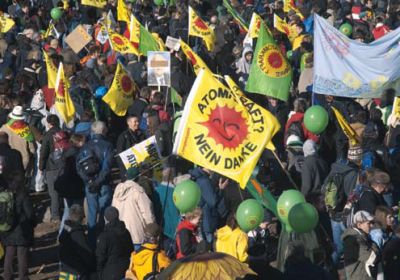
The largest anti-nuclear protests in German history were held on March 26. About 250,000 people marched in Germany’s four largest cities. Under the slogan “Fukushima Warns: Pull the Plug on all Nuclear Power Plants”, more than 120,000 took to the streets of Berlin, 50,000 in Hamburg, 40,000 in Koeln and upward of 40,000 marched in Muenchen. In state elections held the next day, the German Greens won a historic victory in Baden-Wuerttemberg. They will form Germany’s first-ever Green-led government. They also tripled their vote in elections in Rheinland-Pfalz. -
About 8000 people demonstrated for urgent action on climate change in Sydney's Belmore Park on April 2 in a powerful counter-mobilisation to a 2000-strong climate deniers rally led by right-wing radio shock jocks Alan Jones and Chris Smith from Radio 2GB held in Hyde Park. The climate deniers rally was a repeat of a similar-sized rally held in Canberra a week earlier and is part of an attempt to build a right-wing populist Tea Party-style movement as exists in the US. The climate change activists rally was organised by the internet-based group GetUp! -
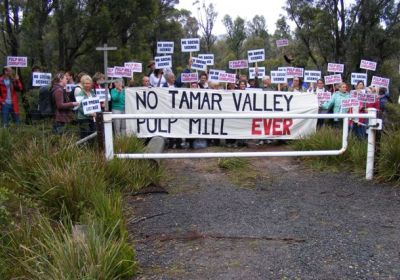
Environment Tasmania (ET), the Australian Conservation Foundation (ACF) and The Wilderness Society (TWS) launched television and radio advertisements on March 30 that call for an end to logging in native forests. The ads feature University of Tasmania biologist Peter McQuillan, who says: “We need government to implement the agreed forest solution”. -
If there were an Olympics for climate amorality, Australia’s capitalists would be hauling in the medals. Just consider this quote from Queensland coal baron Clive Palmer in the December 15 Australian: “The Galilee Basin overall has got 100 billion tonnes of thermal coal, so it’s a great reservoir for Queensland in the future, so you’d be crazy not to develop it.” And it’s not just coal, but any greenhouse-polluting fuel that can be can be dug or drilled from the landscape or seabed. Take Australia’s natural gas industry, poised now for a vast expansion. -
Campaigners won a stunning victory on March 21 when the WA Environmental Protection Authority (EPA) announced that there is “adequate information to demonstrate that Vasse Coal Management’s coalmining proposal is environmentally unacceptable”. EPA Chairperson Paul Vogel said: “In effect, this is an EPA ‘no’ to the proposal.” The proposed Vasse coalmine was to have been 15 kilometres from the popular tourist destination, Margaret River. Internationally renowned as a wine-growing region, Margaret River is in the south-west of Western Australia. -
What's the best mix of electricity supply sources for Australia in the context of growing scientific and public concern about climate change? Energy efficiency and conservation provide the first part of the answer — they can provide large, quick, cheap greenhouse emissions reductions.