
Representatives from the Latin American and Caribbean governments that make up the Bolivarian Alliance of the Peoples of Our Americas (ALBA) met in Bolivia on November 17-18 to coordinate their battle plan ahead of the international climate change summit in Durban later this month.
ALBA unites eight countries, including the radical governments of Venezuela, Bolivia, Cuba, Ecuador and Nicaragua. It helped lead the fight at the 2009 Copenhagen summit against attempts by rich nations to impose their anti-environmental plans.
-
-
The statement below was released by Friends of the Earth International on November 16 and is reprinted from www.foe.org. * * * Friends of the Earth International is inspired and energised by the unfolding of world-historic, transformative events. From the popular uprisings in Northern Africa and the Arabian Peninsula to the indignados of Europe, from the encampments of the #occupy movement to the student movements in Latin America and Britain, people from all over the world are calling for economic and socio-political justice.
-
More than 100 people filled Leichhardt’s Palace Cinema on November 24 for the Sydney premiere screening of Growing Change: A Journey Inside Venezuela’s Food Revolution. The documentary, made by filmmaker and solidarity activist Simon Cunich, examines the global food crisis that leaves hundreds of millions of people in hunger and is rapidly depleting the soil fertility on which long-term food security depends.
-
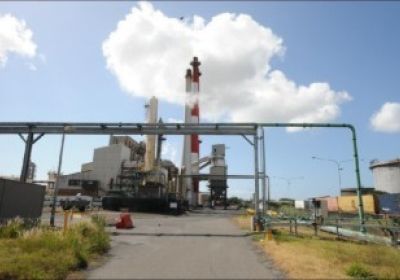 After ammonia gas leaked from Orica’s Kooragang Island chemical plant on November 9 and made two people four kilometers away very ill, the Environment Protection Authority ordered the plant to shut down. But because Orica is its major supplier, the Hunter’s coal industry has as little as three to four weeks of explosives in stock. The largest Hunter mining company, Coal & Allied, told the November 22 Newcastle Herald it had cut production due to the explosives shortage.
 -
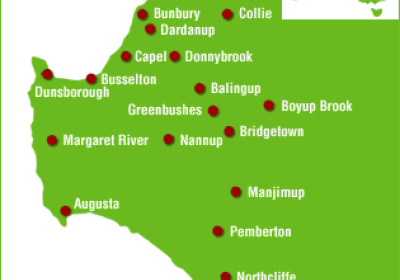 A “controlled burn” by the Department of Environment and Conservation (DEC) got way out of control in south-west Western Australia on November 23, turning into a raging bushfire that destroyed thirty homes and was still not under control days later. Suburbs affected include Gnarabup and Prevelly. Hundreds of people have been evacuated from their homes.
 -
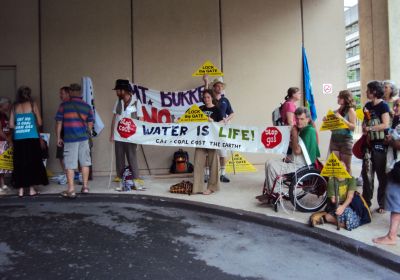 “People are joining up to the Lock the Gate Alliance all over the country,”, Lock the Gate president Drew Hutton told a rally of about 100 outside Brisbane’s Sofitel Hotel on November 24. The rally was called to protest at the annual general meeting of coal seam gas (CSG) company LNG Ltd. The company’s AGM took place inside the hotel. Hutton said: “The Lock the Gate Alliance is now moving to ‘Block the Gate’. We are calling on groups all over Australia to blockade wherever CSG companies are setting up, against the wishes of the farmers and landholders.
 -
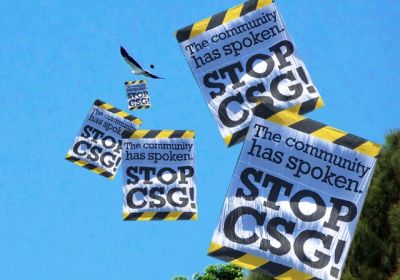 Stop CSG Illawarra released the statement below on November 23. * * * This week the Planning Assessment Commission granted approval to a 16th coal seam gas (CSG) borehole in the Illawarra. Stop CSG Illawarra spokesperson Jess Moore responded: “It is now abundantly clear who [Premier Barry] O’Farrell represents. It’s not communities, and the concern we express for our water, environment and health; it’s the CSG industry.
 -
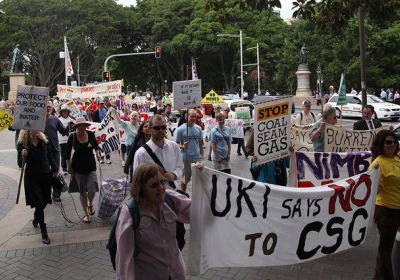 Two hundred people rallied outside NSW parliament on November 23 and handed over 20,000 petitions that call for a moratorium on coal seam gas (CSG) mining, a royal commission into the industry's impacts on communities and the environment and a ban on fracking. Coalition Premier Barry O'Farrell promised before the last election that his government would convoke a parliamentary debate on any issue upon receiving at least 10,000 petitions.
 -
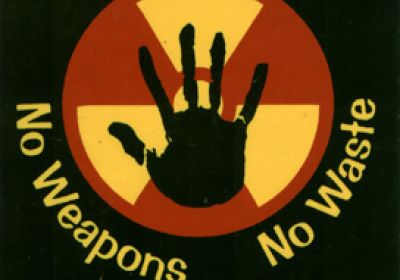 The Socialist Alliance released the statement below on November 16. * * * "PM Julia Gillard's policy backflip on the sale of uranium to India, a non-signatory to the Nuclear Non-proliferation Treaty (NPT), is yet another sorry betrayal of ALP policy on the mining and export of uranium," said Socialist Alliance national convenor Peter Boyle. "This will become yet another reactionary bi-partisan policy, in a parliament dominated by two big parties for the corporate rich.
 -
Anti-tar sands activists in the United States and Canada have been seeking to stop the Keystone XL pipeline, built to transport oil from the Athabasca tar sands in north-east Alberta, Canada, to refineries in the United States. Mining the Athabasca tar sands is one of the most environmentally destructive practices on the planet. Bill McKibben posted the message below on November 10. It is abridged from www.tarsandsaction.org. * * * Um, we won.
-
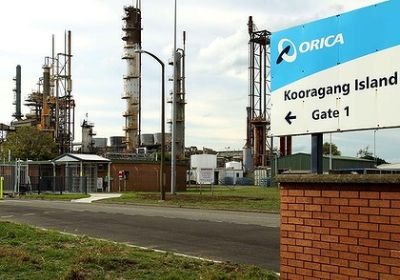 Two people were hospitalised with breathing difficulties in the Newcastle suburb of Mayfield East on November 9. NSW Fire and Rescue crews identified the cause as ammonia gas blown from the Orica chemical plant five kilometres away on Kooragang Island. The Environment Protection Authority ordered the entire Orica site to be closed. A Fire and Rescue spokesperson said an estimated 900 kilograms of the gas had escaped over about an hour.
 -
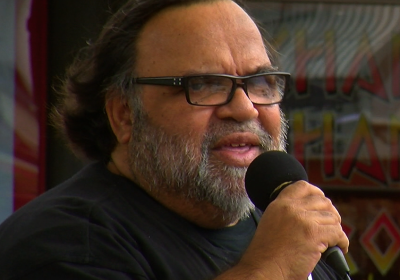 November 19 marks the seventh anniversary of “the police murder of Mulrunji Doomadgee on Palm Island”, says Sam Watson, a prominent Queensland Murri leader and Socialist Alliance member. In Brisbane, supporters of Aboriginal rights will rally that day to demand governments implement all 339 recommendations of the 1991 Royal Commission into Black deaths in custody. Watson told Green Left Weekly: “It is important that Aboriginal people and their supporters mark this solemn day with a rally and march to continue our urgent call for justice for all Aboriginal deaths in custody.